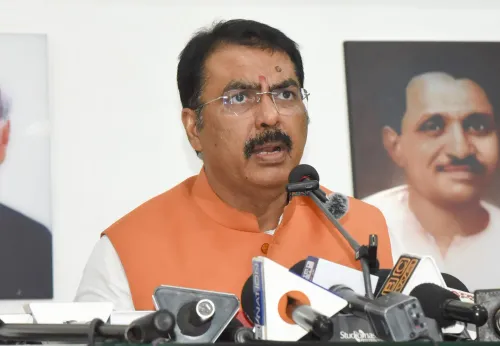
Nishikant Dubey alleges Nehru ordered Mookerjee's arrest to crush Art 370 opposition
Synopsis
On the 72nd anniversary of Dr Syama Prasad Mookerjee's arrest, BJP MP Nishikant Dubey alleged on X that Nehru ordered the detention to crush opposition to Article 370, claimed a cover-up over Mookerjee's death in a Kashmir jail, and accused Nehru of instructing officials to 'ruthlessly crush' the nationwide agitation — part of a sustained BJP campaign targeting the Congress's historical legacy.
Key Takeaways
BJP MP Nishikant Dubey alleged on 11 May that Jawaharlal Nehru ordered the arrest of Dr Syama Prasad Mookerjee on 11 May 1953 for opposing Article 370 .
Dubey claimed Mookerjee died under "mysterious circumstances" in a Kashmiri jail and that Nehru "covered up" the matter — allegations not independently verified.
The BJP MP alleged Nehru issued written instructions to Kailash Nath Katju to "ruthlessly crush" the agitation and ban participating organisations.
Dubey also alleged Nehru ordered a halt to publications of newspapers Pratap and Milap .
These form part of a series of historical allegations Dubey has levelled against the Nehru-Gandhi family , including claims over the Somnath Temple inauguration.
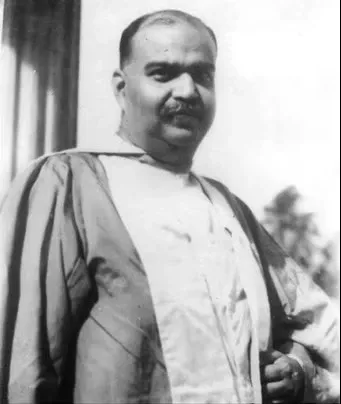
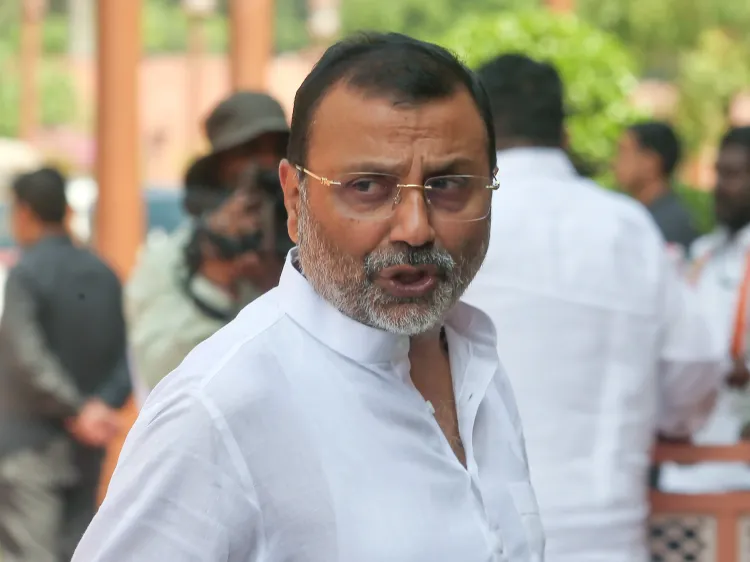
Bharatiya Janata Party (BJP) Member of Parliament Nishikant Dubey on Monday alleged that former Prime Minister Jawaharlal Nehru had ordered the arrest of Bharatiya Jana Sangh founder Dr Syama Prasad Mookerjee for opposing Article 370 and the permit system required to enter Kashmir. The allegations were made on the 72nd anniversary of Mookerjee's arrest on 11 May 1953, a date the BJP MP described as "a dark chapter in Congress's history."
What Dubey Alleged on X
Taking to social media platform X, Dubey wrote: "A Dark Chapter in Congress's History 56. May 11, 1953: On this very day, Nehru ordered the arrest of our mentor - the founder of the Bharatiya Jana Sangh - Dr. Syama Prasad Mookerjee, for opposing Article 370 and the permit system required to enter Kashmir." He further claimed that Mookerjee had formally informed Nehru of his planned agitation, and that Nehru subsequently issued orders to Sheikh Abdullah and Kailash Nath Katju to carry out the arrest.
The 'Mysterious Death' Claim
Dubey alleged that Mookerjee died under "mysterious circumstances" while incarcerated in a Kashmiri jail, and that the matter was subsequently "covered up" by Nehru. These are longstanding allegations made by BJP leaders and have not been independently verified. Mookerjee died on 23 June 1953 while in detention — a death that remains a subject of political contestation between the BJP and the Congress to this day.
Alleged Instructions to 'Ruthlessly Crush' Agitation
The BJP MP further claimed that before departing on a 12-day foreign tour, Nehru had given written instructions to Katju to "ruthlessly crush" the nationwide agitation and ban the organisations spearheading it. Dubey also alleged that Nehru ordered a complete halt to the publication of Pratap and Milap — described as two leading newspapers of that era. "The hands of the Nehru family are stained with blood and deceit," Dubey said in his post.
Pattern of Allegations Against Nehru-Gandhi Family
This is not the first time Dubey has targeted the Nehru-Gandhi family with historical allegations. On 22 April, he reiterated claims accusing them of conspiring to "turn India into a Muslim nation." He has also alleged that Nehru attempted to obstruct the inauguration of the Somnath Temple and wrote threatening letters to then-President Rajendra Prasad. Sharing what he described as a government note dated 22 April 1951, Dubey claimed Nehru had apologised to Pakistan's Prime Minister Liaquat Ali Khan over the Somnath Temple issue and made a similar apology in Parliament. These claims have not been independently corroborated.
Context and Political Significance
The allegations come amid a broader BJP campaign to highlight what the party frames as the Congress's historical decisions on Kashmir and national integration. Mookerjee's opposition to Article 370 and the separate permit system for entering Kashmir has long been a touchstone for the BJP, which abrogated the article in August 2019. Dubey's posts are part of a series he has been running, labelled as chapters in "Congress's History," targeting the legacy of Jawaharlal Nehru ahead of and following key political milestones. The Congress has not issued a formal response to Monday's allegations.
Point of View
Serialised BJP campaign to reframe Nehru's legacy as one of suppression and cover-up, timed to historical anniversaries for maximum resonance. The Mookerjee narrative is particularly potent for the BJP because it connects a founding ideological martyr to Kashmir, Article 370, and press freedom in a single thread. What mainstream coverage often misses is that these allegations are decades old and have been contested by historians; the novelty is the platform and the frequency. With the BJP having already abrogated Article 370 in 2019, this is less about policy and more about delegitimising the Congress's historical record ahead of electoral cycles. The Congress's silence in response is itself a strategic choice — engaging risks amplifying a narrative it cannot easily counter on emotional grounds.
NationPress
25 Sept 2026
Frequently Asked Questions
What did Nishikant Dubey allege about Nehru and Syama Prasad Mookerjee?
BJP MP Nishikant Dubey alleged that former Prime Minister Jawaharlal Nehru ordered the arrest of Bharatiya Jana Sangh founder Dr Syama Prasad Mookerjee on 11 May 1953 for opposing Article 370 and the Kashmir permit system. He further claimed Mookerjee died under mysterious circumstances in a Kashmiri jail and that Nehru covered up the matter.
When and how did Syama Prasad Mookerjee die?
Dr Syama Prasad Mookerjee died on 23 June 1953 while in detention in Kashmir. His death has long been a subject of political controversy, with BJP leaders alleging foul play and a cover-up, claims that have not been independently verified.
What is Article 370 and why did Mookerjee oppose it?
Article 370 granted the erstwhile state of Jammu and Kashmir a special autonomous status within India, including a separate permit system for Indian citizens wishing to enter the region. Mookerjee opposed both provisions, arguing they created a state within a state and undermined national integration. The article was abrogated by the BJP government in August 2019.
What other allegations has Dubey made against the Nehru-Gandhi family?
Dubey has previously alleged that Nehru attempted to obstruct the inauguration of the Somnath Temple, wrote threatening letters to then-President Rajendra Prasad, and apologised to Pakistan's Prime Minister Liaquat Ali Khan over the issue. He has also accused the Nehru-Gandhi family of conspiring to 'turn India into a Muslim nation.'
Has the Congress responded to Dubey's allegations?
As of the time of reporting, the Congress had not issued a formal response to Dubey's 11 May allegations regarding Mookerjee's arrest and death.