Government Launches Outreach for Duty Deferment Scheme to Accelerate Import Clearances
Synopsis
The Central Board of Indirect Taxes and Customs has initiated a hybrid outreach program aimed at the Duty Deferment Scheme, benefiting eligible manufacturer importers by expediting their import clearance process. This innovative scheme fosters liquidity and aligns with the 'Make in India' initiative.
Key Takeaways
Duty Deferment Scheme allows duty payments to be delayed for eligible importers.
Applications can be submitted entirely online via the AEO portal.
Eligibility includes filing a certain number of EXIM documents and compliance with GST.
Scheme aligns with the 'Make in India' initiative to boost domestic manufacturing.
Reduces dwell time, enhances liquidity, and improves supply chain efficiency.
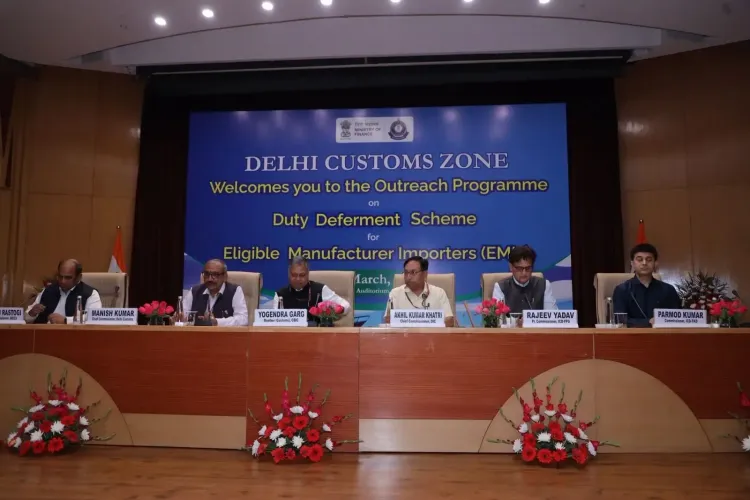
New Delhi, March 28 (NationPress) The Central Board of Indirect Taxes and Customs organized a hybrid outreach initiative focused on the Duty Deferment Scheme aimed at eligible manufacturer importers to expedite import clearances, as stated in an official announcement on Saturday.
According to the Ministry of Finance, this scheme enables qualified manufacturer importers to clear their goods without making upfront duty payments, allowing them to settle duties on a monthly basis.
Customs officials, trade body representatives, industry leaders, and other key stakeholders actively participated in the event, discussing both the advantages and mechanics of the scheme.
The session featured an in-depth presentation, followed by an interactive segment to address inquiries from the trade and industry sectors.
Approved applicants will have access to this facility across all Customs formations from April 1, 2026, until March 31, 2028. The scheme is open to MSMEs and manufacturer importers possessing a valid IEC. Eligibility criteria include having filed a minimum of 25 EXIM documents in the previous financial year (10 for MSMEs), compliance with GST with no outstanding returns, demonstrated financial stability, and a clean compliance record.
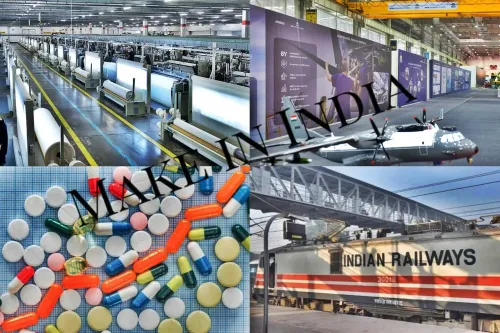
This initiative aligns with the government's 'Make in India' campaign, aiming to enhance domestic manufacturing by improving liquidity and expediting cargo clearances.
Applications can be submitted online via the AEO portal (www.aeoindia.gov.in), which has been operational since March 1, 2026. This process is entirely digital, eliminating the need for any physical interaction.
Yogendra Garg, Member (Customs) at CBIC, stated that the scheme employs a trust-based approach to facilitate quicker clearances and reduce dwell times. He underscored that the initiative aims to bridge the trust deficit and foster a more efficient and collaborative compliance environment.
Some of the key benefits include enhanced liquidity for manufacturers, quicker clearances, reduced dwell times, improved import planning and inventory management, strengthened payment discipline, increased global competitiveness, and greater supply chain efficiency.
“The CBIC is dedicated to cultivating a transparent, efficient, and globally competitive trade ecosystem through facilitation, technology, and trust-based compliance,” the statement concluded.
aar/na
Point of View
This outreach program signifies a proactive step by the government towards enhancing the ease of doing business in India. By streamlining import clearances, it not only boosts domestic manufacturing but also strengthens the overall economic framework, aligning with national interests.
NationPress
10 Oct 2026
Frequently Asked Questions
What is the Duty Deferment Scheme?
The Duty Deferment Scheme allows eligible manufacturer importers to clear goods without upfront duty payments, enabling them to pay duties on a monthly basis.
Who is eligible for the Duty Deferment Scheme?
Eligibility includes manufacturer importers and MSMEs with a valid IEC, a minimum of 25 EXIM documents filed in the previous financial year (10 for MSMEs), GST compliance, financial solvency, and a clean compliance record.
When can approved applicants utilize the scheme?
Approved applicants can use the Duty Deferment Scheme from April 1, 2026, until March 31, 2028.
How can applications be submitted?
Applications can be submitted online through the AEO portal, which has been operational since March 1, 2026.
What are the main benefits of the scheme?
Key benefits include improved liquidity, faster clearance times, better import planning, and enhanced global competitiveness.