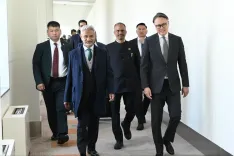
Jaishankar visits Mongolia, South Korea June 22-25 to deepen strategic ties
Synopsis
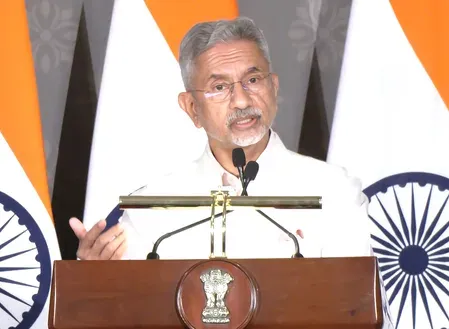
EAM Jaishankar's four-day sweep through Ulaanbaatar and Seoul — capped by a keynote at the Jeju Forum — signals India's sharpening focus on the Indo-Pacific's technology and strategic architecture, with semiconductors, AI, and critical minerals topping the Seoul agenda just weeks after South Korean President Lee Jae Myung's state visit to New Delhi.
Key Takeaways
Jaishankar is on an official visit to Mongolia ( 22-23 June ) and South Korea ( 24-25 June 2026 ).
In Ulaanbaatar , he will meet Mongolian Foreign Minister B.
Battsetseg to review bilateral cooperation rooted in ties dating to 24 December 1955 .
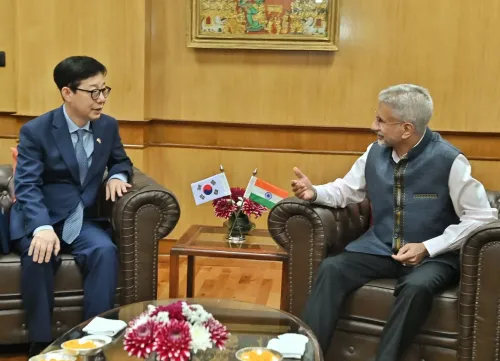
In Seoul , talks with Foreign Minister Cho Hyun will focus on semiconductors , AI , critical minerals , and the India-Korea CEPA review.
Jaishankar will deliver the keynote address at the Jeju Forum for Peace and Prosperity on 25 June 2026 .
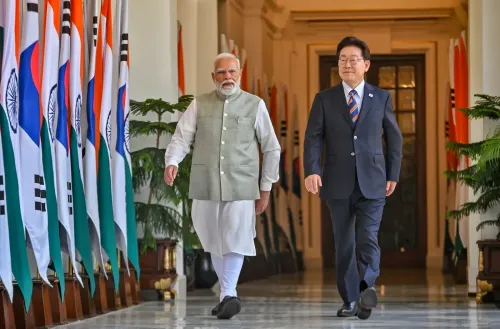
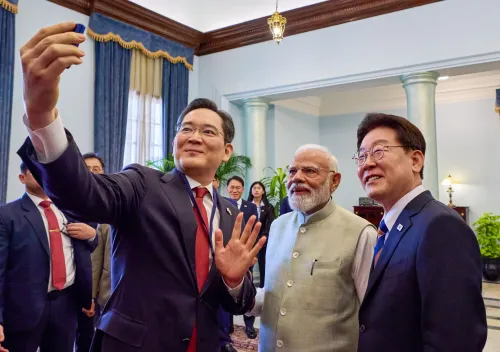
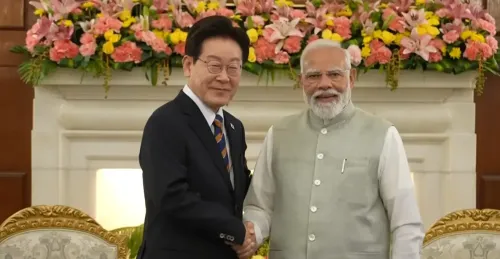
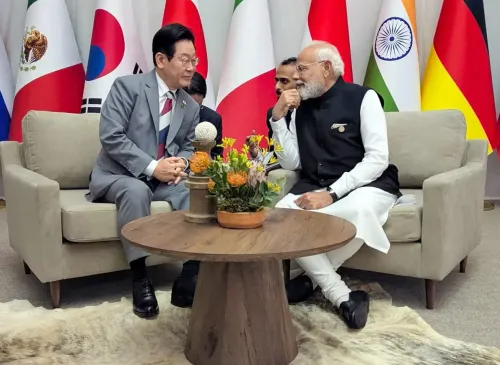
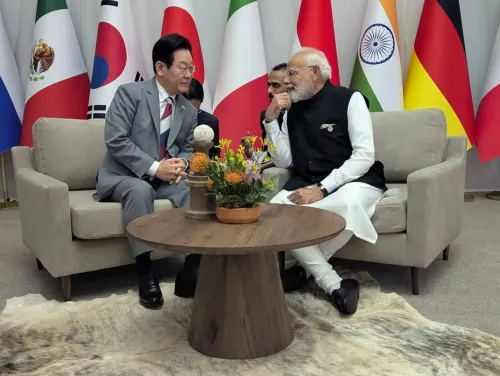
The visit advances the India-Republic of Korea Joint Strategic Vision road map, following South Korean President Lee Jae Myung 's state visit to India in April 2026 .
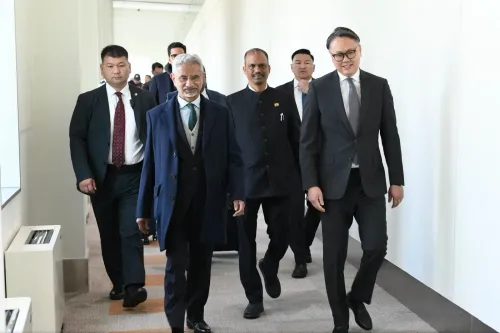
External Affairs Minister S. Jaishankar departed on 22 June 2026 for a four-day official visit to Mongolia and the Republic of Korea, spanning 22 to 25 June, with the twin objectives of reinforcing bilateral partnerships and advancing cooperation in strategic, economic, and technological domains. The Ministry of External Affairs confirmed the itinerary in a statement on Monday.
Mongolia Leg: Reviewing Bilateral Cooperation
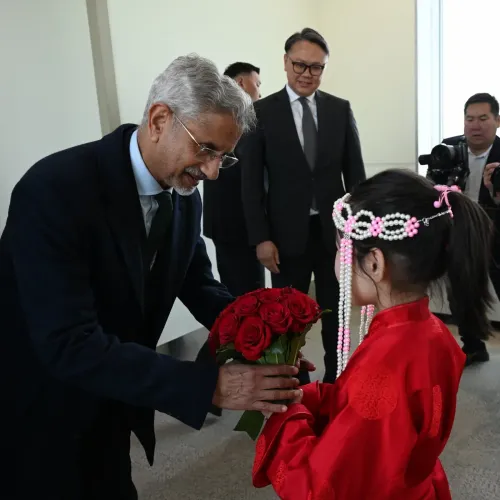
Jaishankar will spend 22 and 23 June in Ulaanbaatar, where he is scheduled to meet Mongolian leadership and hold formal discussions with counterpart Foreign Minister B. Battsetseg. The agenda is expected to centre on reviewing the full spectrum of bilateral cooperation and reinforcing the long-standing ties between the two nations.
India and Mongolia established diplomatic relations on 24 December 1955. Mongolia opened its embassy in New Delhi the following year, and India set up its resident mission in Ulaanbaatar in 1971. The relationship is rooted in shared cultural, spiritual, and democratic values, and has expanded steadily across political, economic, and cultural spheres over seven decades.
This visit follows Jaishankar's meeting with Mongolian President Khurelsukh Ukhnaa during the latter's state visit to India on 13 October 2025 — an interaction described at the time as a significant step toward deepening bilateral engagement.
South Korea Leg: Semiconductors, AI, and the Joint Strategic Vision
Jaishankar will travel to Seoul on 24 June and hold discussions with Republic of Korea Foreign Minister Cho Hyun. Key areas of engagement are expected to include cooperation in semiconductors, Artificial Intelligence, critical minerals, and emerging technologies — sectors that have acquired heightened strategic importance amid global supply chain realignments.
The two sides are also expected to review progress under the India-Korea Comprehensive Economic Partnership Agreement (CEPA), assess supply chain resilience efforts, and discuss enhanced defence cooperation. The discussions build on the India-Republic of Korea Joint Strategic Vision road map, which received fresh impetus following South Korean President Lee Jae Myung's state visit to India in April 2026.
Jeju Forum Address
On 25 June, Jaishankar will deliver the keynote address at the Jeju Forum for Peace and Prosperity in Jeju, one of the region's prominent multilateral platforms for dialogue on security and economic cooperation. The address is expected to articulate India's Indo-Pacific positioning at a moment of heightened geopolitical flux.
Broader Significance for India's Indo-Pacific Strategy
The visit is the latest in a series of high-level diplomatic engagements aimed at consolidating India's partnerships across the Indo-Pacific. Mongolia, landlocked between Russia and China, holds strategic value for India as a democratic partner in a contested neighbourhood. South Korea, meanwhile, is an increasingly critical node in India's technology and defence diversification calculus.
Analysts note that the timing — coming amid intensifying US-China technology competition and ongoing supply chain restructuring — lends additional weight to the semiconductor and critical minerals agenda in Seoul. With both visits concluded, New Delhi will be watching for concrete deliverables, particularly on the CEPA review and any joint statements on emerging technology collaboration.
Point of View
And another high-level visit without a concrete upgrade risks becoming diplomatic ritual rather than economic substance.
NationPress
22 Jun 2026
Frequently Asked Questions
Where is EAM Jaishankar visiting and when?
External Affairs Minister S. Jaishankar is visiting Mongolia on 22 and 23 June 2026, followed by South Korea on 24 and 25 June 2026. The four-day trip is aimed at strengthening bilateral partnerships in strategic, economic, and technological sectors.
What is on the agenda for Jaishankar's South Korea visit?
Discussions with South Korean Foreign Minister Cho Hyun are expected to cover cooperation in semiconductors, Artificial Intelligence, critical minerals, and emerging technologies. The two sides will also review the India-Korea CEPA, supply chain resilience, and defence cooperation under the Joint Strategic Vision road map.
What is the Jeju Forum and why is Jaishankar speaking there?
The Jeju Forum for Peace and Prosperity is a prominent multilateral dialogue platform in South Korea focused on regional security and economic cooperation. Jaishankar will deliver the keynote address on 25 June 2026, providing an opportunity to articulate India's Indo-Pacific policy at a high-profile regional venue.
How long have India and Mongolia maintained diplomatic relations?
India and Mongolia established diplomatic relations on 24 December 1955, making it a relationship spanning over seven decades. Mongolia opened its embassy in New Delhi the following year, and India set up its resident mission in Ulaanbaatar in 1971.
How does this visit relate to recent high-level diplomatic activity?
The South Korea leg follows President Lee Jae Myung's state visit to India in April 2026, which produced the Joint Strategic Vision road map that Jaishankar's Seoul talks are expected to advance. The Mongolia visit follows Jaishankar's meeting with Mongolian President Khurelsukh Ukhnaa during the latter's India visit on 13 October 2025.