Eastern Railway inaugurates ₹25 lakh biogas plant in Kolkata on Swachh Bharat Diwas
Synopsis
Eastern Railway didn't just observe Swachh Bharat Diwas — it operationalised it. A ₹25 lakh biogas plant at Kolkata's Narkeldanga RPF barracks will convert 250 kg of daily organic waste from Sealdah station and B.R. Singh Hospital into clean cooking fuel, yielding the equivalent of up to 110 LPG cylinders a year and 73 tonnes of organic manure — a replicable model that could spread across Indian Railways.
Key Takeaways
Eastern Railway inaugurated a biogas plant at Narkeldanga RPF barracks, Kolkata on 2 October 2026 , on Swachh Bharat Diwas .
The plant was built at an estimated cost of nearly ₹25 lakh under ER's Environment & Housekeeping Management initiative.
It will process 250 kg of organic waste daily , generating 8–10 m³ of biogas — equivalent to 90–110 LPG cylinders annually .
Feedstock will be sourced from Sealdah station , the Narkeldanga railway colony , and B.R.
A nutrient-rich slurry by-product of about 73 tonnes per year will be used as organic manure, reducing chemical fertiliser use.
ER plans to replicate the model at other stations and colonies; a similar plant already operates at the Liluah Workshop .
Eastern Railway (ER) inaugurated a biogas plant under its Sealdah Division in Kolkata on 2 October 2026, marking Gandhi Jayanti and Swachh Bharat Diwas with a concrete step toward green energy. Built at an estimated cost of nearly ₹25 lakh, the facility is designed to convert organic waste into clean cooking fuel for railway personnel, as part of ER's Environment & Housekeeping Management initiative.
Where It Was Inaugurated and Who Led the Event
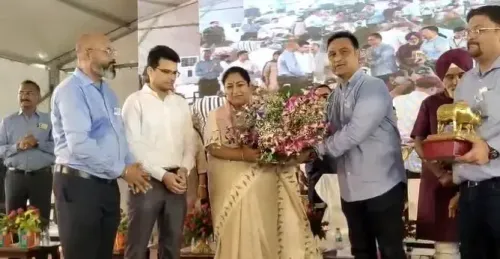
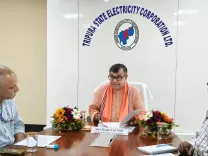
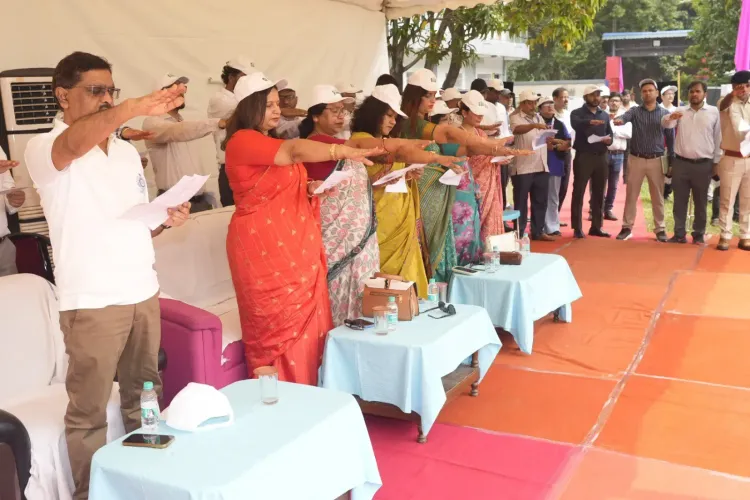
The plant was inaugurated by ER General Manager Gitika Pandey at the Narkeldanga barracks of the Railway Protection Force (RPF). Officials described the inauguration as a significant milestone in the railway zone's push toward a cleaner, more sustainable future. Shibram Majhi, Chief Public Relations Officer (CPRO) of Eastern Railway, said the plant reflects the zone's strong commitment to waste-to-energy solutions and reducing dependence on fossil fuels.
How the Plant Works
The facility is engineered around a structured five-step mechanism: waste collection, shredding, aerobic and anaerobic digestion in a two-chamber tank, filtration with smart metering protected by a relief valve, and finally a booster pump that raises gas pressure before deployment. Segregated vegetable and food waste — sourced directly from Sealdah station, the Sealdah railway colony at Narkeldanga, and B.R. Singh Hospital — will serve as feedstock.
Capacity and Output
The plant is designed to process 250 kg of organic waste daily, generating approximately 8–10 m³ of methane-rich biogas each day. On an annual basis, this translates to the equivalent of roughly 90–110 domestic LPG cylinders. The biogas will be piped directly to the kitchen of the RPF barracks, replacing conventional fuel. Notably, the process also yields a nutrient-rich slurry by-product estimated at 73 tonnes per year, which will be used as organic manure for local plantations, cutting dependence on chemical fertilisers.
Circular Economy Model and Replicability
Officials highlighted that the transparent, smart-meter-monitored model prevents the open dumping of methane — a potent greenhouse gas — while lowering carbon dioxide emissions overall. Eastern Railway already operates a biogas plant at its Liluah Workshop, and plans are in place to expand such installations to other stations and colonies across the zone. This positions the initiative as a scalable circular-economy blueprint within Indian Railways' broader green agenda.
The Swachh Bharat Context
The inauguration on Swachh Bharat Diwas, observed annually on Gandhi Jayanti, underscores a deliberate alignment with the Centre's flagship cleanliness mission. This is the latest in a series of environment-focused gestures by railway zones on 2 October, a date increasingly used to demonstrate institutional commitment to sustainability. With Indian Railways among the country's largest institutional consumers of energy, waste-to-fuel projects at this scale carry both symbolic and operational weight.
Point of View
But the real value lies in the model, not the money. If the five-step, smart-meter-monitored process at Narkeldanga can be standardised and replicated across the hundreds of stations and colonies ER operates, the cumulative impact on organic waste diversion and fossil fuel displacement could be substantial. The alignment with Swachh Bharat Diwas is deliberate optics, but the circular-economy logic — waste-in, fuel and manure out — is sound. The test will be whether the expansion commitment translates into a published rollout plan with targets, or remains a good-news story without a follow-through mechanism.
NationPress
2 Oct 2026
Frequently Asked Questions
What is the Eastern Railway biogas plant inaugurated on Swachh Bharat Diwas?
It is a waste-to-energy facility set up by Eastern Railway at the Narkeldanga RPF barracks in Kolkata, inaugurated on 2 October 2026. Built at a cost of nearly ₹25 lakh, it converts 250 kg of organic waste daily into 8–10 m³ of methane-rich biogas for use in the RPF barracks kitchen.
Where does the biogas plant source its organic waste from?
The plant draws segregated vegetable and food waste from three sources: Sealdah station, the Sealdah railway colony at Narkeldanga, and B.R. Singh Hospital. This ensures a steady and locally available feedstock supply.
What is the annual output of the biogas plant?
The plant is expected to produce the equivalent of roughly 90–110 domestic LPG cylinders annually. It also generates about 73 tonnes per year of nutrient-rich slurry, which will be used as organic manure for local plantations.
Who inaugurated the Eastern Railway biogas plant?
ER General Manager Gitika Pandey inaugurated the plant at the Narkeldanga RPF barracks in Kolkata on 2 October 2026, on the occasion of Gandhi Jayanti and Swachh Bharat Diwas.
Will Eastern Railway set up more biogas plants at other locations?
Yes, Eastern Railway has announced plans to expand the model to other stations and colonies. A biogas plant already operates at the Liluah Workshop, and the Narkeldanga facility is positioned as a replicable template for the wider railway network.