Election Commission of India Enforces MCC in Five Polling Regions
Synopsis
The Election Commission of India has mandated the strict enforcement of the Model Code of Conduct across five regions ahead of the upcoming Assembly elections. This initiative aims to ensure fairness and impartiality during the electoral process.
Key Takeaways
Strict enforcement of the Model Code of Conduct is now in effect.
Complaints about violations can be reported via a dedicated Call Centre or C-Vigil application.
Over 5,173 flying squads and 5,200 surveillance teams are deployed for monitoring.
Political parties must adhere to regulations to ensure fair elections.
The SUVIDHA module facilitates the allocation of public spaces for political events.
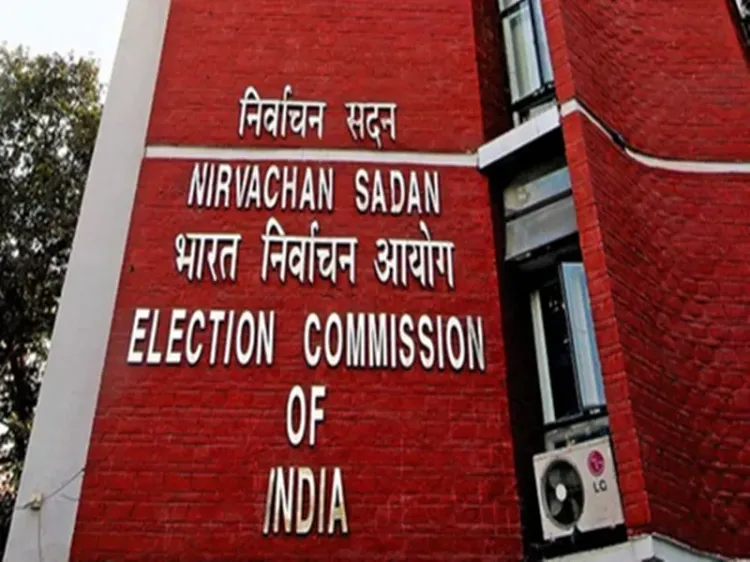
New Delhi, March 16 (NationPress) The Election Commission of India (ECI) announced on Monday that it will enforce the Model Code of Conduct (MCC) rigorously, following the declaration of Assembly elections in four states and one Union Territory.
Just a day prior, the electoral body revealed the timeline for the elections in Assam, Kerala, Puducherry, Tamil Nadu, and West Bengal.
In line with the announced schedule, notifications were issued today by the Election Commission and published in the official gazettes of Assam, Kerala, and Puducherry.
After the poll schedule was made public, the ECI instructed the Chief Secretaries and Chief Electoral Officers of the relevant states and Union Territories to ensure the swift implementation of the MCC.
The MCC will also pertain to the Central government concerning any announcements or policy changes impacting these states and the Union Territory.
"The Commission has mandated strict adherence to guidelines regarding the removal of defacement from government, public, and private properties; the prohibition of using official vehicles or government accommodations by any political party, candidate, or associated individual; and the ban on advertisements funded by public money," ECI stated in a release.
"Respect for citizens' privacy is paramount, meaning no demonstrations or picketing should occur outside private residences. Additionally, land, buildings, or walls should not be utilized for flags, banners, or posters without the consent of the owner," the statement added.
The Election Commission has also set up a complaint monitoring system to allow citizens and political entities to report breaches of the MCC.
A dedicated Call Centre, reachable at 1950, has been established for the public and political parties to file complaints with the relevant District Election Officer or Returning Officer.
Moreover, citizens and political parties can report violations via the C-Vigil app, accessible through the ECINET platform.
To facilitate prompt action, over 5,173 flying squads have been deployed across the states and the Union Territory, ensuring that complaints are addressed within 100 minutes.
Additionally, more than 5,200 Static Surveillance Teams are on hand to oversee activities throughout the election period.
The poll body has reminded political parties of their responsibilities during elections, noting that they must inform police authorities in advance about public gatherings and processions to ensure appropriate traffic management and security arrangements.
Parties are also required to adhere to any prohibitory orders and secure the necessary permissions for the use of loudspeakers and other related facilities.
"Ministers are prohibited from combining their official duties with election campaigning or utilizing government resources for campaign activities," the Commission emphasized.
The Election Commission further clarified that officials at all levels are to remain neutral while enforcing the MCC, ensuring fair treatment for all political parties.
Authorities have been instructed to prevent any misuse of official resources and to conduct meetings, processions, and voting arrangements fairly while maintaining law and order and safeguarding the integrity of the electoral process.
The Commission also announced the activation of the SUVIDHA module on the ECINET platform, allowing political parties to apply for the use of public spaces such as maidans and helipads, which will be allocated on a first-come, first-served basis.
Point of View
The Election Commission's rigorous enforcement of the Model Code of Conduct signals a commitment to fair elections and democratic integrity. This proactive approach aims to maintain order during a crucial period in the political landscape.
NationPress
2 Oct 2026
Frequently Asked Questions
What is the Model Code of Conduct?
The Model Code of Conduct is a set of guidelines issued by the Election Commission of India to regulate the conduct of political parties and candidates during elections, ensuring free and fair elections.
How can citizens report violations of the MCC?
Citizens can report violations through the dedicated Call Centre at 1950 or via the C-Vigil application available on the ECINET platform.
What are the responsibilities of political parties during elections?
Political parties must inform police about public meetings, comply with prohibitory orders, and obtain necessary permissions for using loudspeakers and other facilities.
What measures are in place to ensure compliance with the MCC?
The ECI has deployed flying squads and static surveillance teams to monitor activities, address complaints promptly, and ensure impartial enforcement of the MCC.
What is the significance of the SUVIDHA module?
The SUVIDHA module allows political parties to apply for the use of public places for their events, ensuring a structured approach to space allocation during elections.