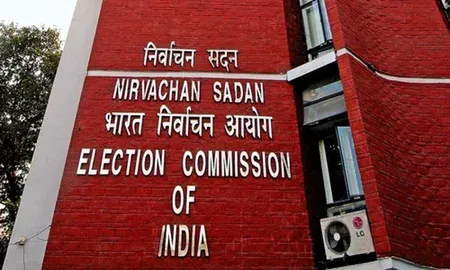
ECI issues by-election notifications for MP, Gujarat, Bihar; polling on July 30
Synopsis
The Election Commission has set 30 July as polling day for three Assembly by-elections — Datia in MP, Manjalpur in Gujarat, and Bankipur in Bihar — with results on 3 August. The ECI has also reminded employers that paid holidays on polling day are a legal obligation, not a courtesy.
Key Takeaways
The Election Commission of India issued by-election notifications on 6 July for three Assembly seats.
Polling will be held on 30 July ; results declared on 3 August .
The three constituencies are Datia (Madhya Pradesh), Manjalpur (Gujarat), and Bankipur (Bihar).
Nomination scrutiny is on 14 July ; last date for withdrawal is 16 July .
Under Section 135B, Representation of the People Act, 1951 , all eligible voters — including daily-wage and casual workers — are entitled to a paid holiday on polling day.
Employers who deny the paid holiday are liable to a fine under the Act.
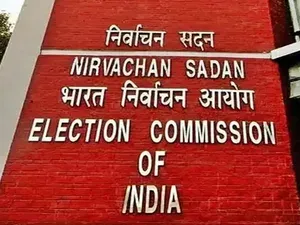
The Election Commission of India (ECI) on Monday, 6 July issued formal notifications for Assembly by-elections to be held on 30 July in three states — Madhya Pradesh, Gujarat, and Bihar — to fill one vacant seat each. Results will be declared on 3 August, the Commission confirmed.
The Three Constituencies
The seats going to the polls are Datia in Madhya Pradesh, Manjalpur in Gujarat, and Bankipur in Bihar. With the notifications issued, the nomination filing process has formally commenced across all three constituencies.
Key Electoral Dates
Scrutiny of nominations is scheduled for 14 July, while the last date for withdrawal of candidatures is 16 July. Voting will take place on 30 July, with counting and declaration of results on 3 August.
Paid Holiday and Dry Day Directives
Alongside the notifications, the ECI issued instructions to the three state governments to ensure compliance with statutory provisions on paid holidays and dry days in the poll-bound constituencies. Under Section 135B of the Representation of the People Act, 1951, every eligible voter employed in any business, trade, industrial undertaking, or establishment is entitled to a paid holiday on polling day, with no wage deduction permissible.
The Commission clarified that the entitlement extends to daily-wage and casual workers as well. Employers who violate this provision are liable to a fine. Notably, voters employed in industrial or commercial establishments outside their constituency but registered as electors in the poll-bound seat are also covered under this benefit.
What Comes Next
Political parties in all three states are expected to finalise candidates ahead of the 16 July withdrawal deadline. The by-elections are being closely watched — particularly Bankipur in Bihar and Datia in Madhya Pradesh — as indicators of ground-level sentiment ahead of broader electoral cycles. The ECI's emphasis on worker voting rights signals a continued push to maximise voter participation in smaller, often lower-turnout by-election contests.
Point of View
But these three seats carry disproportionate signal value. Bankipur in Bihar and Datia in MP are traditional bellwether constituencies where ruling-party margins have historically tracked broader state sentiment. The ECI's unusually explicit reminder about paid-holiday obligations — detailed enough to name daily-wage and out-of-constituency workers — suggests the Commission is pre-empting employer intimidation, a recurring complaint in industrial belt constituencies. Whether these micro-contests shift ground-level momentum ahead of larger state cycles is the real question mainstream coverage will likely miss.
NationPress
5 Oct 2026
Frequently Asked Questions
Which seats are going to by-elections on 30 July?
The three Assembly seats are Datia in Madhya Pradesh, Manjalpur in Gujarat, and Bankipur in Bihar. The Election Commission issued notifications for all three on 6 July.
When will the by-election results be declared?
Results for all three Assembly by-elections will be declared on 3 August, according to the Election Commission of India.
What are the key dates in the by-election schedule?
Nomination filing has commenced from 6 July; scrutiny of nominations is on 14 July; the last date for withdrawal of candidatures is 16 July; polling is on 30 July; and results are on 3 August.
Are workers entitled to a paid holiday on polling day?
Yes. Under Section 135B of the Representation of the People Act, 1951, every eligible voter employed in any business, trade, or industrial establishment is entitled to a paid holiday on polling day with no wage deduction. This covers daily-wage and casual workers as well, and employers who violate this rule are liable to a fine.
Why are these by-elections being held?
The by-elections are being held to fill one vacancy each in the legislative Assemblies of Madhya Pradesh, Gujarat, and Bihar. The specific reasons for the vacancies were not detailed in the official notification.