EU asylum report exposes Pakistan's 'good Taliban, bad Taliban' fiction
Synopsis
A landmark EU asylum agency report has done what years of diplomatic pressure could not: put on paper that Pakistan's militant landscape defies Islamabad's carefully curated categories. By linking JeM and Harakat-ul-Mujahideen to the TTP, the EUAA has effectively documented the structural failure of Pakistan's 'good Taliban, bad Taliban' doctrine — and arrived just as JeM reportedly rebuilds its Bahawalpur headquarters after India's Operation Sindoor strikes.
Key Takeaways
The EUAA Country Guidance: Pakistan , released on 1 October 2026 , links Jaish-e-Mohammed (JeM) and Harakat-ul-Mujahideen to the Tehreek-e-Taliban Pakistan (TTP) .
South Asia analyst Francesca Marino describes Pakistan's framing of the TTP as an Afghan export as 'incomplete to the point of dishonesty.' JeM's headquarters in Bahawalpur , struck during Operation Sindoor , is reportedly being repaired even as Pakistan demands Afghanistan dismantle militant infrastructure.
Post- Operation Sindoor , JeM has reportedly shifted to dispersal, rebuilding Markaz Subhan Allah and expanding digital fundraising.
The analysis argues Pakistan's proxy doctrine failed because 'the categories were never real to the militants themselves.'
A recent report by the European Union Agency for Asylum (EUAA) has punctured the foundational myth of Pakistan's counterterrorism doctrine, acknowledging that Jaish-e-Mohammed (JeM) and Harakat-ul-Mujahideen are among the factions linked to the Tehreek-e-Taliban Pakistan (TTP). The EUAA Country Guidance: Pakistan, released on 1 October 2026, has drawn sharp analytical attention for what it reveals about the structural incoherence of Islamabad's militant management strategy.
What the EUAA Report Says
Italian journalist and South Asia expert Francesca Marino, writing for Parrhesia News, notes that the EUAA document stops short of claiming JeM takes direct orders from the TTP. However, it concedes that Pakistan's militant landscape resists the neat compartmentalisation that the state has long projected. 'The walls between the organisations have always been porous. Men move, commanders defect, factions merge, seminaries supply recruits to more than one battlefield, and ideological affinities survive changes of name or patronage,' Marino wrote.
The 'Good Taliban, Bad Taliban' Doctrine Unravelled
The roots of Pakistan's bifurcated Taliban policy, according to the analysis, lie in a state decision to sort armed Islamist groups by their strategic utility — treating those fighting in Afghanistan as assets, those targeting India as proxies, and reserving the terrorist label exclusively for groups that turned on Pakistan itself. 'The policy assumed that organisations sharing seminaries, clerics, veterans, financiers, and a Deobandi-jihadist vocabulary would respect the filing system of the Inter-Services Intelligence directorate. They did not,' the analysis stated.
Marino characterised Islamabad's long-standing framing of the TTP as an Afghan export as 'incomplete to the point of dishonesty.' 'But geography is not genealogy. The presence of militants in Afghanistan does not make Afghanistan the author of a movement created by Pakistani commanders, rooted in Pakistan's former tribal areas, and shaped by decades of Pakistani jihadist policy,' the analysis said.
The Bahawalpur Double Standard
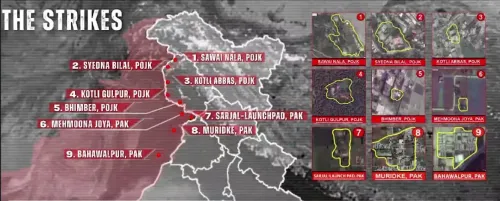
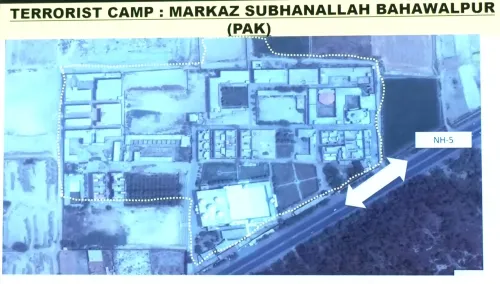
The analysis highlighted a pointed contradiction: even as Pakistan bombs Afghan territory and demands Kabul dismantle militant sanctuaries, JeM's headquarters in Bahawalpur — struck by India during Operation Sindoor — is reportedly being repaired. 'Apparently, the principle that governments are responsible for militant infrastructure on their territory becomes geographically flexible somewhere near the border,' Marino wrote.
Following Operation Sindoor, which demonstrated that India could locate and strike visible terror infrastructure, JeM has reportedly shifted from concentration to dispersal — rebuilding Markaz Subhan Allah in Bahawalpur while simultaneously expanding digital fundraising channels.
Blowback Rebranded as Foreign Aggression
Blaming Afghanistan for the TTP allows Pakistan to reframe domestic blowback as cross-border aggression, the analysis argued. The 'good Taliban, bad Taliban' doctrine, Marino contended, 'failed because the categories were never real to the militants themselves.' The strategic wager that a proxy infrastructure could be confined to external theatres ultimately ran up against a basic reality: 'Pakistan built a proxy system for wars beyond its borders and eventually discovered that borders were the one thing the system did not respect.'
The EUAA report's timing — arriving weeks after fresh India-Pakistan tensions — gives its findings added resonance, and analysts say it could inform how European governments assess asylum claims from Pakistani nationals as well as broader policy conversations on Islamabad's counter-militancy credibility.
Point of View
But because it is a formal European institutional record — one that will be cited in asylum adjudications and policy briefs. Islamabad has successfully ring-fenced its militant policy from serious multilateral scrutiny for decades; a codified EU agency acknowledgement of the JeM-TTP nexus is harder to dismiss than a think-tank paper. The Bahawalpur contradiction is the sharpest element: Pakistan simultaneously claims to be a victim of Afghan-sponsored terror while allowing the reconstruction of infrastructure India struck for precisely the reason Pakistan claims to oppose. That asymmetry has always existed; what has changed is that it is now on record in a European government document.
NationPress
18 Oct 2026
Frequently Asked Questions
What is the EUAA Country Guidance: Pakistan report?
It is a country-guidance document released by the European Union Agency for Asylum on 1 October 2026, assessing the security and human rights situation in Pakistan. It is notable for acknowledging links between JeM, Harakat-ul-Mujahideen, and the TTP, complicating Pakistan's official narrative of distinct militant categories.
What is Pakistan's 'good Taliban, bad Taliban' doctrine?
It refers to Pakistan's longstanding policy of treating certain armed Islamist groups as strategic assets — those fighting in Afghanistan or targeting India — while labelling only groups that attacked Pakistan itself as terrorists. Critics, including analyst Francesca Marino, argue the doctrine was always structurally flawed because the organisations shared seminaries, commanders, and funding networks.
What does the report say about Jaish-e-Mohammed and the TTP?
The EUAA report names JeM and Harakat-ul-Mujahideen among factions linked to the TTP. It does not assert that JeM takes direct orders from the TTP, but acknowledges that Pakistan's militant landscape is far more interconnected than Islamabad's official compartmentalisation suggests.
What is the significance of the Bahawalpur headquarters issue?
JeM's headquarters at Markaz Subhan Allah in Bahawalpur was struck by India during Operation Sindoor. It is reportedly being rebuilt. The analysis highlights the contradiction: Pakistan demands Afghanistan dismantle militant sanctuaries while allowing the repair of terror infrastructure on its own soil — applying the principle of state responsibility for militant infrastructure selectively.
Why does this report matter beyond Pakistan?
The EUAA guidance is used by European governments to assess asylum claims from Pakistani nationals. A formal EU-level acknowledgement of Pakistan's fragmented militant landscape could influence how those claims are evaluated and may add to multilateral pressure on Islamabad regarding its counter-militancy commitments.