Himachal Pradesh infrastructure must integrate geological, climate risks: Experts
Synopsis
Experts, a former NITI Aayog member, and Himachal Pradesh's Chief Minister converged in Shimla to deliver an urgent message: the state's developmental gains in education and healthcare are at risk unless infrastructure planning systematically accounts for the Himalayas' geological fragility and escalating climate-induced disasters. The 2025 Mandi disasters were held up as the defining warning the state cannot afford to ignore.
Key Takeaways
Dr VK Paul , former NITI Aayog member, warned that Himachal Pradesh's socio-economic gains face rollback without systematic climate-proofing of infrastructure.
Chief Minister Sukhvinder Singh Sukhu invoked the 2025 Mandi disasters as a call for synchronised inter-departmental infrastructure planning.
Prabodh Saxena , former Chief Secretary of HPSEB , said climate change combined with geological fragility has amplified the scale of infrastructure and socio-economic losses in the region.
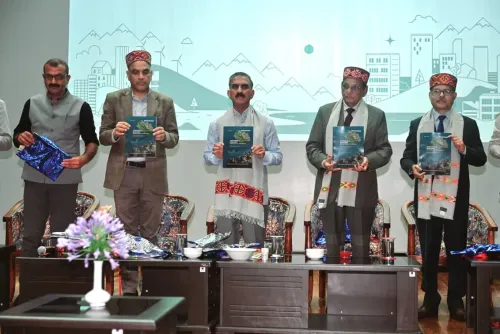
A discussion paper on 'Rethinking Infrastructure Development in the Western Himalayas' was unveiled, authored by Dr Pooja Sehbag of CRF.
Panellists unanimously called for community stakeholder inclusion and coordinated line-department action for durable Himalayan climate resilience.
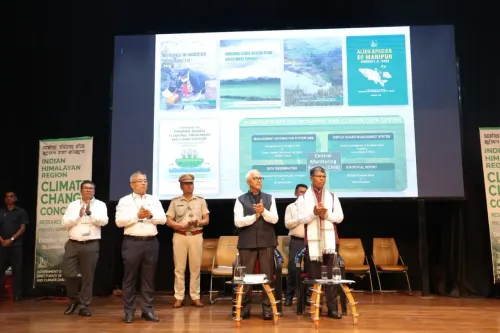
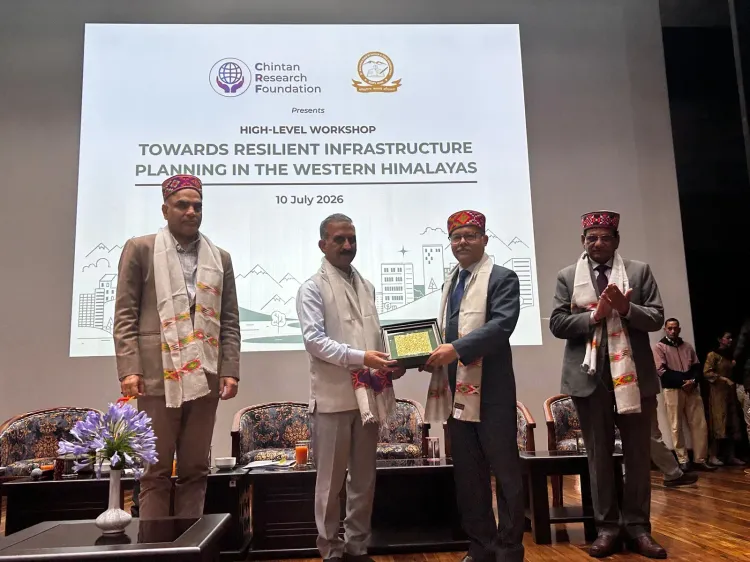
Experts at a high-level workshop in Shimla on 11 July called for the systematic climate-proofing of infrastructure in Himachal Pradesh, warning that the state's hard-earned socio-economic gains in education and healthcare remain vulnerable unless development planning accounts for geological fragility and climate-induced disasters. The workshop, titled 'Towards Resilient Infrastructure Planning in the Western Himalayas', was organised by Chintan Research Foundation (CRF) in collaboration with the Dr Manmohan Singh HP Institute of Public Administration (MSHIPA).
Key Concerns Raised
Dr VK Paul, former member of NITI Aayog, acknowledged Himachal Pradesh's considerable progress across socio-economic indicators despite its challenging mountain terrain. However, he cautioned that without a structured approach to climate-proofing infrastructure, these developmental advances could be significantly set back. His remarks underscored a growing consensus among planners and scientists that the Western Himalayas face compounding risks from both geological instability and accelerating climate change.
Dr Debajit Palit, Centre Head of the Centre for Climate Change and Energy Transition at CRF, framed the challenge in stark terms: climate change in the Himalayas, he argued, has moved beyond being an environmental issue and is now equally a question of public investment, development planning, and long-term economic resilience.
Chief Minister Sukhu Invokes 2025 Mandi Disasters
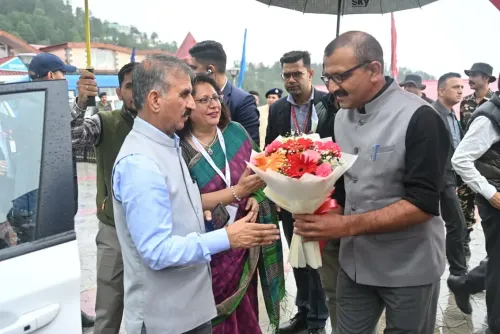
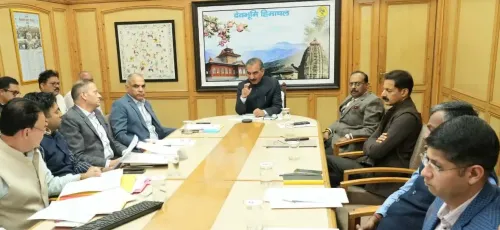
Chief Minister Sukhvinder Singh Sukhu addressed the gathering and revisited the 2025 disasters in Mandi, citing them as a defining reference point for future infrastructure design. He called for synchronised action among line departments to ensure that lessons from those events are embedded in planning and engineering decisions going forward. Sukhu also reaffirmed the state government's commitment to inclusive development, describing climate-proofed infrastructure as a critical pillar of that agenda.
Geological Fragility and Evolving Disaster Patterns
Prabodh Saxena, former Chief Secretary-cum-Chairman of the Himachal Pradesh State Electricity Board, traced how the character of disasters in the region has shifted over time. According to reports, he observed that the interaction between climate change and the Himalayas' inherent geological fragility has amplified the scale of both socio-economic and infrastructure losses. He warned plainly: 'If we do not prepare today, we are doomed to perish tomorrow.'
Representing the Ministry of Environment, Forest and Climate Change, RK Singh stressed the importance of proper infrastructure planning as a preventive measure against future disasters.
Discussion Paper and Technical Sessions
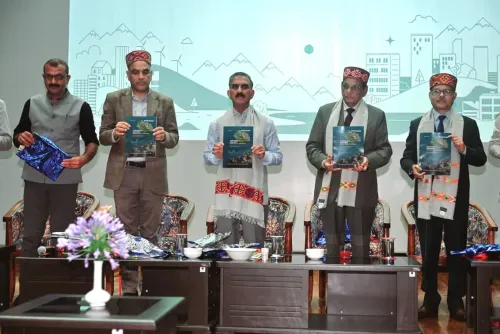
A discussion paper titled 'Rethinking Infrastructure Development in the Western Himalayas towards Climate Resilient Infrastructure', authored by CRF researcher Dr Pooja Sehbag, was unveiled at the event. Three technical sessions followed, with panellists arguing for periodic risk assessments, context-specific planning aligned to regional subjectivities, and the evolution of engineering practices and institutional coordination to meet the realities of climate change in mountain terrain.
Governance and Community Inclusion
The panel unanimously agreed on the active inclusion of community stakeholders and efficient coordination among line departments as essential conditions for durable climate-proofing of Himalayan infrastructure. The governance question — how climate resilience translates into on-ground action — emerged as a central theme, reflecting a broader recognition that policy frameworks alone are insufficient without institutional follow-through and local participation. As the Western Himalayas continue to face intensifying climate pressures, the workshop's recommendations are expected to feed into ongoing policy discussions at both the state and central levels.
Point of View
With predictable consequences. Himachal Pradesh's 2025 Mandi disasters were not an anomaly — they were a stress test that existing planning frameworks failed. The call for periodic risk assessments and context-specific engineering is technically sound, but the harder question is institutional: which body owns climate-proofing mandates, and with what enforcement power? Without that answer, workshops risk producing papers rather than policy. The unanimous agreement on community inclusion is welcome, but community voices have featured in Himalayan disaster discourse for decades without translating into binding planning norms.
NationPress
11 Jul 2026
Frequently Asked Questions
What was the focus of the Shimla infrastructure workshop held on 11 July?
The workshop, titled 'Towards Resilient Infrastructure Planning in the Western Himalayas', focused on integrating geological fragility and climate risk into infrastructure development in Himachal Pradesh. It was organised by Chintan Research Foundation in collaboration with MSHIPA and brought together policymakers, former officials, and researchers.
What did Dr VK Paul say about Himachal Pradesh's development?
Dr VK Paul, former member of NITI Aayog, said Himachal Pradesh has made remarkable progress in education, healthcare, and other socio-economic indicators despite its difficult terrain. He warned, however, that these gains could be significantly undermined if infrastructure is not systematically climate-proofed against growing climate-induced disaster risks.
Why did Chief Minister Sukhu reference the 2025 Mandi disasters?
Chief Minister Sukhvinder Singh Sukhu cited the 2025 disasters in Mandi as a stark reminder of the consequences of inadequate infrastructure planning in a climate-vulnerable region. He called for synchronised action among line departments to embed those lessons into future infrastructure design and planning.
What discussion paper was released at the workshop?
A discussion paper titled 'Rethinking Infrastructure Development in the Western Himalayas towards Climate Resilient Infrastructure', authored by CRF researcher Dr Pooja Sehbag, was unveiled at the event. It argues for a fundamental rethink of how development planning addresses climate and geological risks in mountain regions.
What governance recommendations emerged from the workshop?
Panellists unanimously recommended the active inclusion of community stakeholders and efficient coordination among line departments as essential for durable climate-proofing of Himalayan infrastructure. They also stressed the need for periodic risk assessments and context-specific planning frameworks that reflect regional realities.