Expired Remdesivir given to Kerala Nipah patients; probe ordered

Synopsis
Kerala's Assembly heard on Thursday that Remdesivir — expired since May 2023 — was given to Nipah patients as recently as 2025–26, with 146 vials used after the stock's expiry date. Health Minister K. Muraleedharan has ordered a medical board probe into whether the drug contributed to deaths, in a case that exposes alarming gaps in the state's drug-management chain.
Key Takeaways
Kerala Health Minister K.
Muraleedharan disclosed on 29 October 2026 that Remdesivir expired in May 2023 was administered to patients, including Nipah cases, through 2025–26 .
KMSCL purchased 3,000 vials for ₹42 lakh in June 2021 ; the stock expired on 30 May 2023 .
A total of 146 vials were used after expiry — 102 in 2023–24, 34 in 2024–25, and 10 in 2025–26.
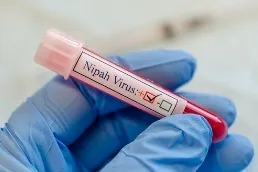
Expired vials were given to Nipah patients at Kozhikode Medical College Hospital .
A medical board under Dr Aravind (Infectious Diseases) has been constituted to investigate; no causal link to deaths has been established yet.
Kerala recorded Nipah fatalities across 2023, 2024 and 2025; both 2024 patients died, as did two of three in 2025.
Kerala Health Minister K. Muraleedharan on Thursday, 29 October 2026, informed the state Assembly that Remdesivir vials that expired in May 2023 were administered to patients — including those being treated for the deadly Nipah virus — at hospitals across Kerala in subsequent years. The minister ordered a formal investigation into whether the use of the expired antiviral drug contributed to patient deaths, in what is shaping up as one of the most serious drug-management failures in the state's recent medical history.
How the Expired Stock Entered Patient Care
According to details placed before the Assembly, the Kerala Medical Services Corporation Limited (KMSCL) purchased 3,000 vials of Remdesivir for ₹42 lakh on 3 June 2021. The entire stock carried an expiry date of 30 May 2023. Despite this, records tabled in the House showed that expired vials continued to be drawn from storage and administered to patients well beyond that date.
Specifically, 102 vials were used in 2023–24, 34 vials in 2024–25, and a further 10 vials in 2025–26 — all after the stock's expiry. Among those who received the drug were Nipah-infected patients at Kozhikode Medical College Hospital, one of Kerala's frontline referral centres for high-risk infectious disease cases.
Medical Board Constituted; Departments Directed to Audit
A medical board has been constituted under Dr Aravind, Head of the Infectious Diseases Department, to examine the circumstances surrounding the continued use of the expired stock. The Health Department has separately directed the Director of Medical Education and the Director of Health Services to compile a comprehensive list of all patients who received the drug through the implicated supply channels.
The investigation is specifically tasked with determining whether the expired Remdesivir had any role in the deaths of Nipah patients and whether other recipients suffered adverse effects. Notably, the ministerial disclosure explicitly states that no causal link between the expired medicine and any death has yet been established.
Nipah Deaths in Kerala: The Backdrop
The revelation arrives against a grim epidemiological record. Kerala reported six Nipah cases in 2023, of whom two died. Both patients detected in 2024 died, while two of three cases in 2025 were fatal. Remdesivir, an antiviral used in experimental Nipah treatment protocols, was among the drugs deployed during these outbreaks. The fact that some of those doses may have been drawn from an expired batch raises acute questions about the efficacy of the treatment received.
The minister also confirmed that 50 vials used during the current financial year had been specially procured from Bahrain on 12 June for a Nipah patient — a separate procurement that underscores how critical supplies were being sourced on an emergency basis even as an expired domestic stock apparently remained in circulation.
Systemic Questions on Drug Storage and Monitoring
The disclosure lays bare what critics argue are structural gaps in Kerala's drug lifecycle management — specifically in expiry monitoring, cold-chain storage oversight, and the hospital-level checks required before controlled antivirals are administered to critically ill patients. This is not the first time India's public health system has faced scrutiny over expired drug administration, but the Nipah link lends the Kerala case exceptional urgency.
The findings of the medical board are expected to clarify whether the lapses originated in procurement, warehousing, distribution, or bedside protocol — and to assign accountability accordingly. With the Assembly now on record, pressure on the Health Department for a time-bound report is likely to intensify.
Point of View
The stock expired, and yet it kept moving through the supply chain into some of Kerala's most critically ill patients without a single documented alert. The Nipah link is what transforms this from a bureaucratic failure into a potential public health accountability crisis. Kerala has long positioned itself as India's model health state; this disclosure forces an honest reckoning with the gap between that reputation and the operational reality on the ground. The medical board must answer not just whether expired Remdesivir harmed anyone, but why the surveillance architecture that should have caught this at Stage One never fired.
NationPress
29 Oct 2026
Frequently Asked Questions
What happened with Remdesivir and Nipah patients in Kerala?
Remdesivir vials purchased in 2021 and expired in May 2023 were administered to patients — including those being treated for Nipah virus — at Kerala hospitals in 2024 and 2025. Health Minister K. Muraleedharan disclosed this to the state Assembly on 29 October 2026, ordering an investigation into whether the expired drug contributed to any deaths.
How many expired vials were used and at which hospitals?
A total of 146 vials were administered after the May 2023 expiry date — 102 in 2023–24, 34 in 2024–25, and 10 in 2025–26. Kozhikode Medical College Hospital is specifically named as a site where Nipah patients received the expired drug.
Has the expired drug been linked to any patient deaths?
No causal link has been established as yet. The minister explicitly stated that the disclosure does not prove the expired Remdesivir caused any death. The medical board constituted under Dr Aravind will investigate whether the drug had any role in Nipah patient fatalities or caused adverse effects in other recipients.
What action has the Kerala government taken?
A medical board has been formed under Dr Aravind, Head of the Infectious Diseases Department, to examine the issue. The Health Department has also directed the Director of Medical Education and the Director of Health Services to identify all patients who received the drug from the implicated supply chain.
What is Kerala's recent record on Nipah outbreaks?
Kerala reported six Nipah cases in 2023, with two deaths. Both patients identified in 2024 died, and two of the three cases in 2025 were also fatal. The repeated outbreaks have made the state a focal point for Nipah response protocols in India, which makes the expired-drug disclosure especially sensitive.