China's CMBEC plan: Extend influence, disrupt South Asia via Bangladesh corridor
Synopsis
The proposed China–Myanmar–Bangladesh Economic Corridor is more than an infrastructure project — it is, analysts argue, a calculated move to encircle India's maritime sphere, deepen debt dependencies across South Asia, and sidestep the Rohingya humanitarian crisis while reshaping regional connectivity in Beijing's favour.
Key Takeaways
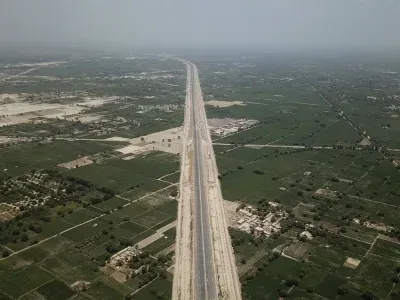
The proposed CMBEC would link Kunming (Yunnan, China) to Bangladesh's Chittagong and Cox's Bazar via Myanmar's Rakhine State through road and rail.
Chinese presence at Mongla and Chittagong ports is seen as part of Beijing's 'string of pearls' strategy alongside Gwadar (Pakistan) and Hambantota (Sri Lanka).
Hundreds of thousands of Rohingya refugees in Cox's Bazar camps risk displacement as port and industrial expansion advances under the corridor plan.
Sri Lanka's Hambantota Port — leased to China for 99 years after debt default — is cited as a precedent for the 'debt trap' risk facing corridor nations.
Minister of State Pabitra Margherita told Lok Sabha in March that India's ties with Bangladesh are independent of third-country relationships.
Myanmar President U.
Min Aung Hlaing visited India between 30 May and 3 June , meeting PM Narendra Modi on bilateral and regional issues.
The proposed China–Myanmar–Bangladesh Economic Corridor (CMBEC) represents Beijing's latest strategic push to reshape South Asia's connectivity landscape, deepen its Belt and Road Initiative (BRI) footprint, and secure direct access to the Indian Ocean — moves that analysts argue are as geopolitical as they are economic.
The Corridor's Architecture and Strategic Logic
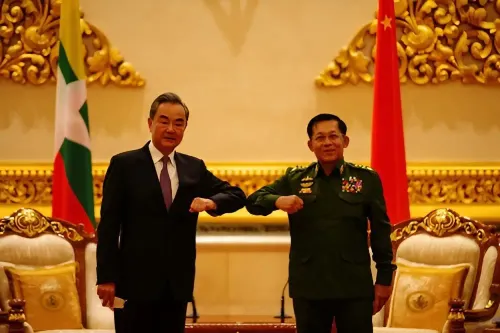
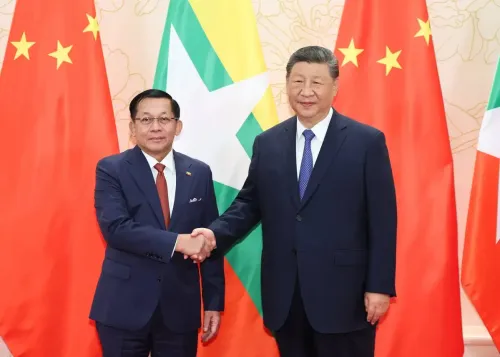
According to reports, the CMBEC is slated to originate in Kunming, the capital of China's Yunnan Province, and extend to Mandalay in Myanmar. From there, one arm was earlier proposed to reach Yangon, while another would connect to the Kyaukphyu deep-sea port in Myanmar's Rakhine State. Following a recent visit by Bangladesh Prime Minister Tarique Rahman to Beijing, China reportedly proposed extending the corridor further — linking Rakhine State to Bangladesh's Chittagong and Cox's Bazar regions via road and railway networks.
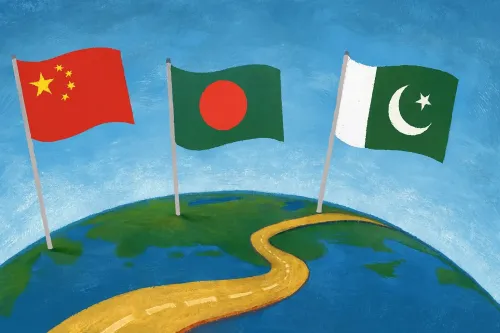
Alongside Chinese presence at Gwadar Port in Pakistan and Hambantota Port in Sri Lanka, Beijing's investments in Bangladesh's Mongla and Chittagong ports are widely seen as an extension of what strategic analysts describe as the 'string of pearls' strategy — a network of Chinese-linked ports and infrastructure encircling India's maritime sphere.
The Rohingya Dimension
The corridor's proposed route raises serious humanitarian concerns. Refugee camps in the Chittagong region — particularly in Cox's Bazar — reportedly host hundreds of thousands of Rohingya refugees, primarily from Myanmar's Rakhine State, who have been fleeing military crackdowns since 2017. Port modernisation and industrial expansion under the CMBEC could directly displace these communities, pushing them toward India's eastern and northeastern borders on one side, and into Southeast Asia on the other.
Critics argue that Beijing frames these projects as purely economic while deliberately avoiding engagement with the Rohingya issue — potentially leaving the humanitarian crisis unresolved and worsening regional instability. China's handling of the Uyghur minority in Xinjiang Province, flagged in multiple international reports, has drawn comparisons. The United States enacted the Uyghur Forced Labour Prevention Act (UFLPA) in December 2021, barring goods linked to alleged forced labour in the Xinjiang Uyghur Autonomous Region (XUAR) from entering American markets.
The Debt Trap Concern and the CPEC Precedent
The CMBEC follows the template of the China–Pakistan Economic Corridor (CPEC), launched in 2015, which connects China's Xinjiang region to Gwadar Port on the Arabian Sea through highways, railways, pipelines, and energy projects. While CPEC promised infrastructure development for a Pakistan in economic crisis, concerns have since mounted over transparency, environmental impact, and the sustainability of debt incurred to finance the projects.
Several analysts and reports have raised the risk of a 'debt trap' dynamic — where countries lose economic sovereignty and strategic assets due to unsustainable borrowing, while China gains geopolitical leverage. Sri Lanka's Hambantota Port is frequently cited as a cautionary example: the government's inability to repay Chinese loans forced it to lease the port to China for 99 years. Pakistan's deepening financial dependence on Chinese loans for CPEC has similarly raised concerns about long-term economic autonomy.
More broadly, analysts contend that Beijing's infrastructure investments across South Asia — often structured as loans — form part of a multi-layered strategy to counter New Delhi's regional influence, while also supporting regimes in unstable environments such as Pakistan, Afghanistan, and post-coup Myanmar to secure borders and investments.
India's Response and Regional Posture
India has maintained that its bilateral relationships with neighbours remain independent of third-country dynamics. Minister of State for External Affairs Pabitra Margherita, responding to a question in the Lok Sabha in March, stated that India's relationship with Bangladesh is independent of its relationship with third countries, and that New Delhi continues to monitor developments bearing on India's national interests, taking all necessary measures to safeguard them.
India's 'Neighbourhood First' foreign policy doctrine prioritises cooperative relations with immediate neighbours through aid, connectivity, trade, and cultural ties. With Myanmar specifically, India remains engaged in development assistance, humanitarian support, healthcare, pharmaceuticals, education, capacity building, and infrastructure development. An official note indicates that India's timely disaster relief and reconstruction efforts have built significant goodwill among the people of Myanmar.
Myanmar's President U. Min Aung Hlaing visited India on his first official trip between 30 May and 3 June this year, meeting Prime Minister Narendra Modi and other officials. Talks covered bilateral, regional, and global issues of mutual interest, as well as the way forward for the relationship.
As the CMBEC takes shape, India faces a compounding challenge: managing potential refugee flows at its eastern borders, preserving strategic influence in a neighbourhood increasingly courted by Beijing, and articulating a connectivity counter-narrative that matches China's infrastructure ambition.
Point of View
India's northeastern border becomes the pressure valve, compounding an already strained border management apparatus. Beijing's studied silence on the Rohingya issue is not an oversight; it is a feature. China secures infrastructure leverage while leaving the humanitarian fallout for India and Bangladesh to absorb. India's 'Neighbourhood First' doctrine needs a credible infrastructure counter-offer — goodwill from disaster relief alone will not hold ground against the scale of BRI financing.
NationPress
28 Jun 2026
Frequently Asked Questions
What is the China–Myanmar–Bangladesh Economic Corridor (CMBEC)?
The CMBEC is a proposed infrastructure corridor that would link Kunming in China's Yunnan Province to Bangladesh's Chittagong and Cox's Bazar regions via Myanmar, using road and railway networks. It is part of China's broader Belt and Road Initiative and is designed to give Beijing direct connectivity to the Indian Ocean through South Asia.
How does CMBEC fit into China's 'string of pearls' strategy?
The 'string of pearls' refers to a network of Chinese-linked ports and infrastructure facilities encircling India's maritime sphere. CMBEC adds Mongla and Chittagong in Bangladesh to an existing chain that includes Gwadar Port in Pakistan and Hambantota Port in Sri Lanka, deepening China's naval and commercial presence around India.
What is the risk of a 'debt trap' for Bangladesh and Myanmar?
Analysts warn that Chinese infrastructure financing — typically structured as loans — can leave recipient countries with unsustainable debt, forcing them to cede strategic assets. Sri Lanka's Hambantota Port, leased to China for 99 years after Colombo could not repay loans, is the most cited example. Pakistan's deepening reliance on Chinese CPEC financing raises similar concerns.
How does the CMBEC affect the Rohingya refugee crisis?
Cox's Bazar in Bangladesh's Chittagong region hosts hundreds of thousands of Rohingya refugees who fled Myanmar's Rakhine State following military crackdowns from 2017. Port modernisation and industrial expansion under CMBEC could displace these communities further — pushing them toward India's eastern and northeastern borders or into Southeast Asia, critics argue.
What is India's official position on the CMBEC and China's regional role?
India has not formally commented on the CMBEC specifically, but Minister of State for External Affairs Pabitra Margherita told Lok Sabha in March that India's relationship with Bangladesh is independent of its ties with third countries, and that New Delhi monitors all developments bearing on its national interests. India continues to engage Myanmar through its 'Neighbourhood First' policy, covering development, humanitarian aid, and infrastructure.