CM Fadnavis: Drought Declaration Under Trigger One Coming Soon for Amravati
Synopsis
Maharashtra CM Devendra Fadnavis announced on September 24, 2026 that a government resolution declaring drought-like conditions under the 'Trigger One' protocol will be issued shortly for Amravati, unlocking agricultural relief for Vidarbha farmers facing monsoon distress.
Key Takeaways
CM Devendra Fadnavis announced on September 24, 2026 that a drought declaration under Trigger One criteria is imminent for Amravati .
The announcement was made in both Marathi and Hindi on X, signalling outreach to Vidarbha's farming community.
Trigger One is the first threshold in Maharashtra's tiered drought management framework, tied to significant rainfall deficits.
A formal Government Resolution (GR) is required before district authorities can disburse input subsidies, employment scheme wages, and other relief.
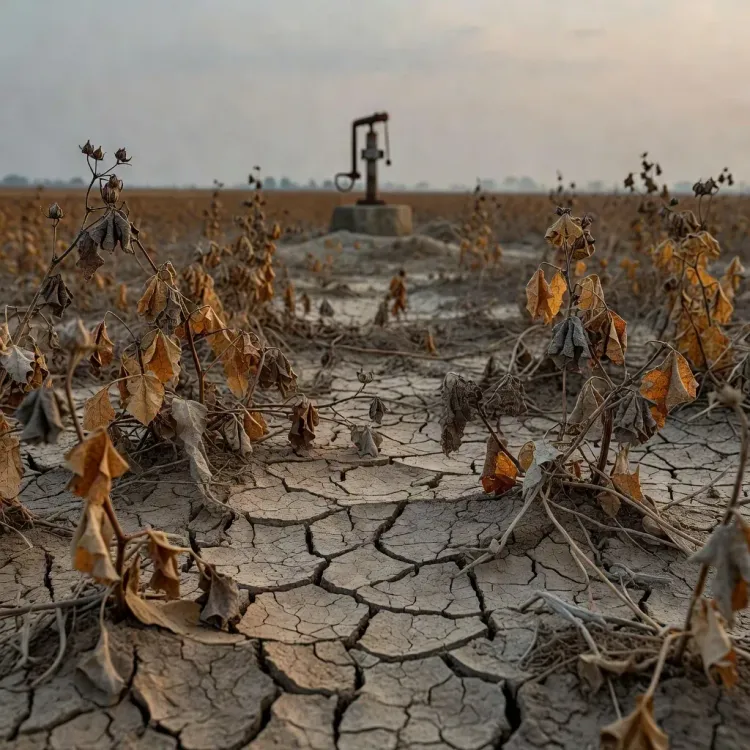
Amravati district in Vidarbha is historically among Maharashtra's most drought-prone zones, reliant on rain-fed agriculture.
The GR may be extended to additional Vidarbha districts depending on 2026 southwest monsoon data across the region.
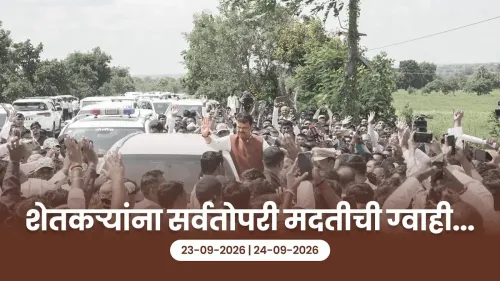
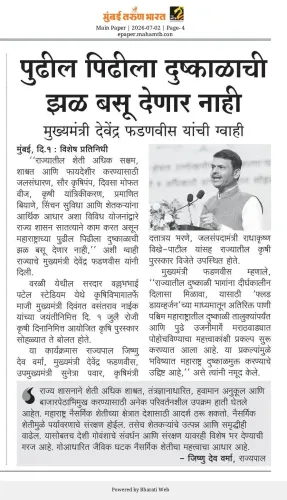
Farmers in Amravati — the rain-fed heartland of Vidarbha — are set to get official drought recognition. Maharashtra Chief Minister Devendra Fadnavis announced on Thursday, September 24, 2026 that a government resolution declaring drought-like conditions under the 'Trigger One' protocol will be issued shortly, activating a critical layer of state relief machinery.
Posting in both Marathi and Hindi, Fadnavis stated: 'दुष्काळसदृश परिस्थितीच्या निकषांनुसार Trigger One प्रमाणे दुष्काळ जाहीर करण्याचा शासन निर्णय लवकरच' — 'A government resolution to declare drought under Trigger One criteria for drought-like conditions is coming soon.' The announcement was tagged to Amravati and was preceded by what appears to be a direct response to constituent concerns raised on the platform.
What 'Trigger One' means for Vidarbha's farmers
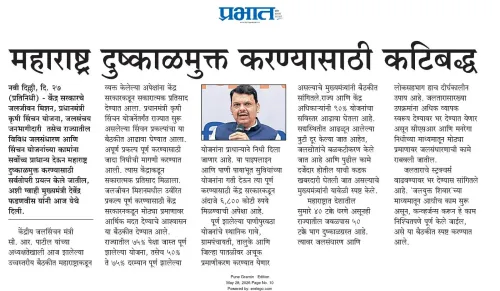
Maharashtra's drought management framework operates on a trigger-based protocol — a tiered system that maps rainfall deficits and crop failure data against pre-set thresholds to determine when relief mechanisms must be activated. Trigger One is the first threshold, typically tied to significant rainfall shortfall during the southwest monsoon season, and its declaration is the formal switch that unlocks input subsidies, employment guarantee disbursements, and other agricultural relief measures.
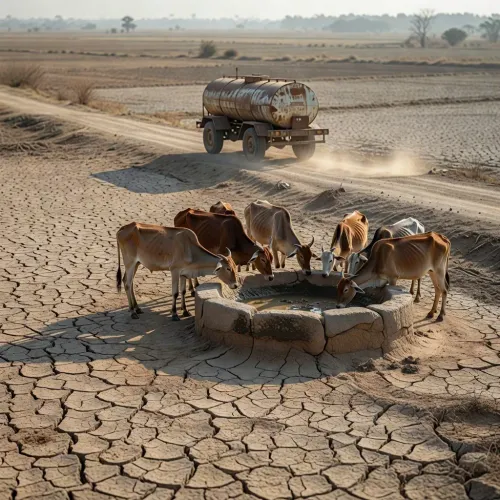
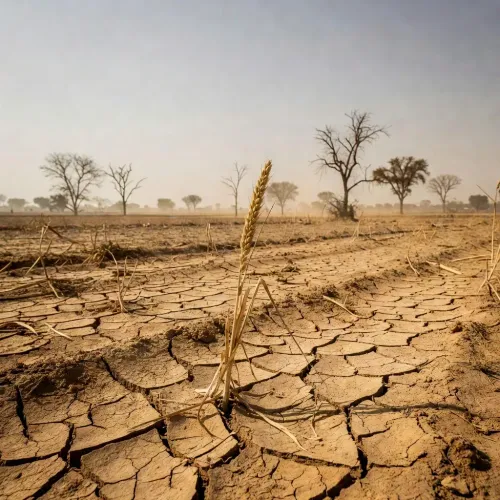
Amravati district, situated in the Vidarbha region of eastern Maharashtra, is among the state's most agriculturally vulnerable zones — heavily dependent on rain-fed cultivation, with a long history of monsoon deficiencies. Vidarbha has seen repeated drought notifications across successive state administrations, each time triggering the state's standardised relief pipeline. A formal government resolution, once issued, gives collectors the administrative authority to operationalise relief at the ground level without delay.
Vidarbha's recurring drought cycle and the pressure on Nagpur
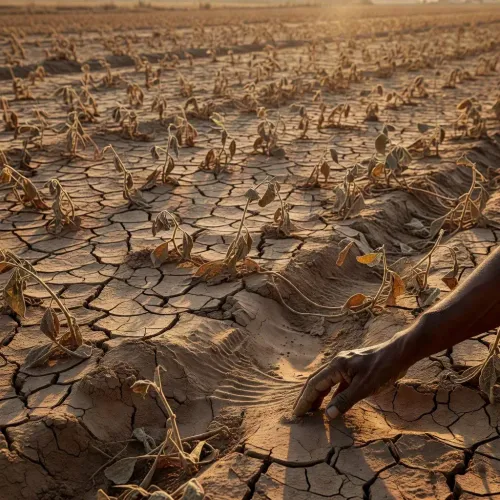
The announcement reflects a pattern that has defined Maharashtra's agricultural politics for over a decade. Vidarbha districts — where cotton and soybean dominate the landscape — bear a disproportionate share of the state's agrarian distress, making timely drought notifications politically and economically consequential. Delayed declarations have historically drawn sharp criticism, as every week without official status is a week without subsidised inputs or assured wages under employment schemes.
Fadnavis, who has governed Maharashtra with Vidarbha as part of his own political base, has emphasised the trigger-based framework as a mechanism to depoliticise and accelerate relief. The reference to Amravati on September 24 signals that the 2026 southwest monsoon's performance in at least this district has crossed the threshold required for a Trigger One declaration.
What comes next: the GR and possible expansion
The government resolution — known in Maharashtra's administrative lexicon as a GR (Government Resolution) — is the binding legal document that operationalises the declaration. Once issued, district authorities can begin formal assessments, beneficiary identification, and disbursement of relief funds. The key question now is whether the GR will be confined to Amravati or extended to neighbouring Vidarbha districts depending on 2026 rainfall data across the region.
Farmers who have been waiting on this signal can expect the relief machinery to begin moving the moment the GR lands. For Vidarbha, that signal cannot come fast enough.
Point of View
He signals administrative responsiveness, but the actual test will be the speed and scope of the resolution once it lands. The trigger-based framework, refined over successive administrations, is designed precisely to prevent relief from being held hostage to political timing — yet the fact that a CM must announce it on social media suggests ground-level pressure remains intense. Watch whether the GR covers only Amravati or expands across Vidarbha: that will reveal how widely the 2026 monsoon has underperformed.
NationPress
25 Sept 2026
Frequently Asked Questions
What is Trigger One drought declaration in Maharashtra?
'Trigger One' is the first threshold in Maharashtra's tiered drought management protocol, activated when rainfall deficits and crop failure data cross pre-set limits. It allows state authorities to unlock agricultural relief such as input subsidies and employment scheme wages for affected farmers.
Which district did Fadnavis announce drought relief for?
CM Devendra Fadnavis announced on September 24, 2026 that a drought declaration under Trigger One criteria will be issued for Amravati district in the Vidarbha region of eastern Maharashtra.
What is a Government Resolution (GR) in Maharashtra's drought process?
A Government Resolution or GR is the formal legal document issued by the Maharashtra state government that operationalises a drought declaration, giving district collectors the authority to begin relief disbursements and beneficiary identification.
Why is Amravati frequently affected by drought?
Amravati lies in the Vidarbha region of eastern Maharashtra, an area heavily dependent on rain-fed agriculture for crops like cotton and soybean. It has historically experienced recurring monsoon deficiencies, making it one of the state's most agriculturally vulnerable districts.
What relief do farmers get after a Trigger One drought declaration?
Once Trigger One is declared and a GR is issued, farmers become eligible for input subsidies, employment guarantee scheme disbursements, and other state-level agricultural relief measures designed to compensate for crop losses due to rainfall shortfall.