CM Fadnavis Calls for Kolhapur City Boundary Expansion
Synopsis
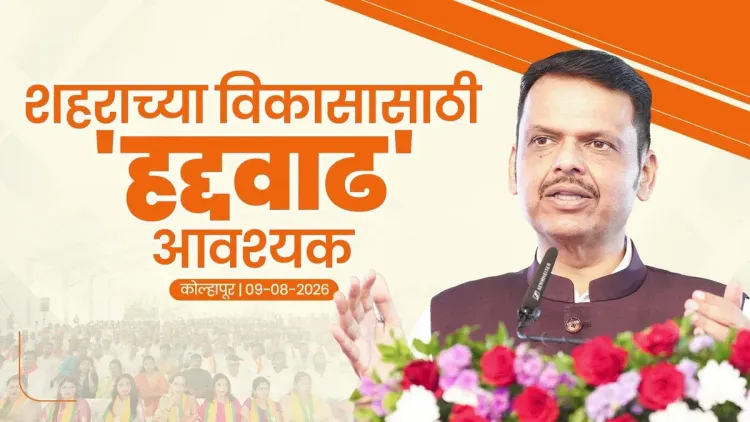
Maharashtra CM Devendra Fadnavis publicly backed expanding Kolhapur's municipal boundaries at a multi-project civic event on 9 August 2026, framing the move as essential for the historic western Maharashtra city's development.
Key Takeaways
CM Devendra Fadnavis declared boundary expansion ( haddvadh ) essential for Kolhapur city's development.
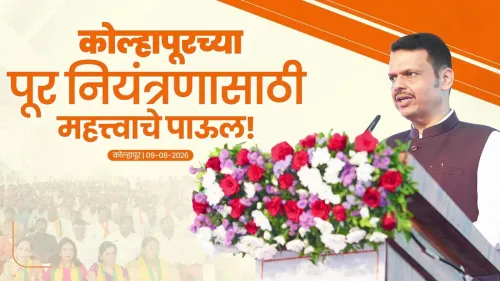
The statement was made at civic foundation-laying and inauguration events in Karvirnagari, Kolhapur on 9 August 2026 .
The remarks were addressed directly to the Kolhapur Municipal Corporation .
Maharashtra has a precedent of expanding municipal limits of tier-2 cities to enable integrated urban planning.
A formal expansion process would involve state proposals, stakeholder consultations, and a gazette notification.
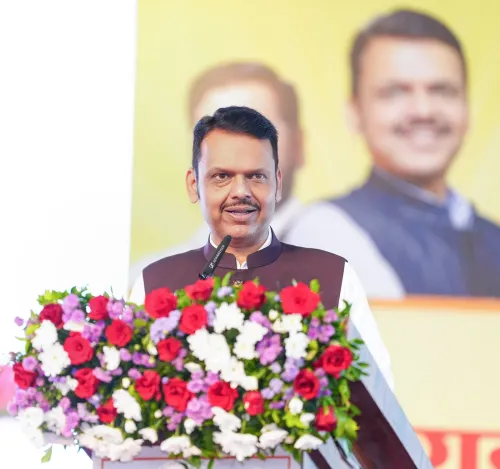
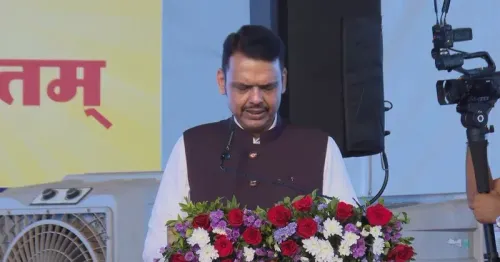
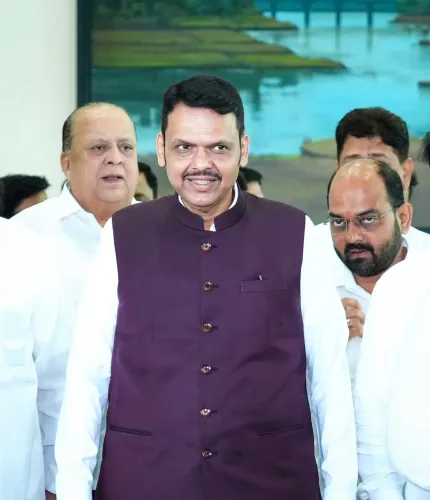
A historic city is bumping against its own limits — and Maharashtra Chief Minister Devendra Fadnavis says it is time to redraw the lines. Speaking at a series of foundation-laying ceremonies, inaugurations, and public dedications in Kolhapur on 9 August 2026, Fadnavis declared that boundary expansion (haddvadh) is essential for the city's future development.
The Case for Expanding Kolhapur's Limits
Fadnavis made his position unambiguous: 'Kolhapur shahrachya vikasasathi haddvadh karne avashyak ahe' — 'Boundary expansion is necessary for the development of Kolhapur city.' The statement, directed at the Kolhapur Municipal Corporation (@KolhapurKmc), signals that the state government is prepared to back a formal enlargement of the civic body's jurisdiction.
The push is not without precedent. Maharashtra has periodically expanded the limits of its tier-2 cities to keep pace with urban sprawl and enable integrated infrastructure planning. When a city's administrative boundary lags behind its actual growth, peripheral neighbourhoods fall into a planning vacuum — roads, drainage, and civic services become fragmented. Boundary expansion is the structural fix that pulls those zones under a single, accountable authority.
Karvirnagari's Ground-Breaking Day
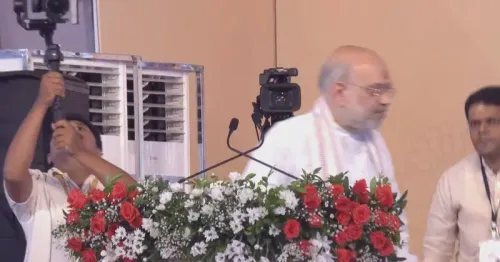
The CM's remarks came during a packed civic programme in Karvirnagari — the cultural heartland of Kolhapur — where multiple projects received ground-breakings, inaugurations, and public handovers in a single sitting. The occasion gave Fadnavis a platform to frame the boundary question not as an administrative technicality but as a prerequisite for Kolhapur's next phase of growth.
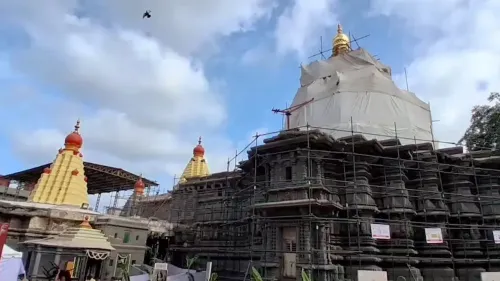
The Kolhapur Municipal Corporation administers one of western Maharashtra's most historically significant cities — home to the Mahalakshmi temple, a thriving trade economy, and a rapidly expanding urban footprint. Whether the corporation's current limits reflect that footprint is precisely the question Fadnavis has now put on the table publicly.
What Comes Next for Kolhapur
A Chief Minister's public endorsement of boundary expansion typically triggers a formal process: a state government proposal, stakeholder consultations with affected gram panchayats and residents on the city's periphery, and ultimately a gazette notification. The timeline depends on political will and local consensus — both of which the CM's statement is designed to accelerate.
For Kolhapur's residents, the stakes are concrete: expanded limits mean new zones brought under organised water supply, roads, and building regulations — but also new property tax jurisdictions. The debate, once it formally begins, will be loud.
Fadnavis has fired the starting gun. The next move belongs to the municipal corporation and the state urban development machinery — and Kolhapur will be watching every step.
Point of View
Building political capital in tier-2 cities ahead of civic and assembly cycles. The real test will be how quickly the state translates the statement into a formal proposal, and whether peripheral panchayats — whose residents face changed tax and regulatory status — are brought on board or steamrolled.
NationPress
24 Sept 2026
Frequently Asked Questions
What is 'haddvadh' and why is CM Fadnavis calling for it in Kolhapur?
'Haddvadh' means municipal boundary expansion — enlarging the official limits of a city's civic body to include surrounding areas. Fadnavis called for it because Kolhapur's urban growth has outpaced its current administrative boundary, leaving peripheral zones without proper civic services and integrated planning.
What happens when a city's municipal limits are expanded?
When municipal limits expand, surrounding villages or peri-urban areas come under the jurisdiction of the municipal corporation. Residents gain access to organised civic services like water supply and roads, but also become liable for municipal property taxes and building regulations.
Has Maharashtra expanded municipal limits of other cities before?
Yes. Maharashtra has periodically expanded the boundaries of tier-2 cities to match urban growth and enable integrated infrastructure planning. Such expansions are typically initiated by a state government proposal followed by stakeholder consultations and a gazette notification.
What was the event where Fadnavis made this announcement?
Fadnavis made the statement at a civic event in Karvirnagari, Kolhapur on 9 August 2026, which included multiple foundation-laying ceremonies, inaugurations, and public dedications of local projects.
What is the next step after the CM's statement on Kolhapur boundary expansion?
A formal state government proposal would need to be drafted, followed by consultations with affected gram panchayats and residents on Kolhapur's periphery, and ultimately a gazette notification to make the expansion official.