CM Fadnavis Highlights 12 Years of Modi's Nari Shakti Push
Synopsis
Maharashtra CM Devendra Fadnavis marked 12 years of PM Modi's women-led development agenda on June 12, 2026, citing 32 crore Jan Dhan accounts, a near-fourfold rise in women defence officers since 2014, and India's global lead in women pilots and SHG networks.
Key Takeaways
CM Devendra Fadnavis posted on June 12, 2026 to mark 12 years of PM Modi's Nari Shakti-focused governance.
Over 32 crore women are cited as actively connected to banking through Pradhan Mantri Jan Dhan Yojana accounts.
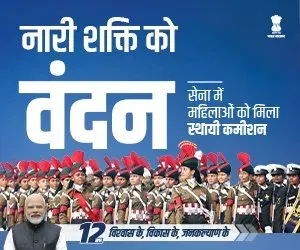
Women officers in the Indian defence forces reportedly rose from 3,000 in 2014 to over 11,000 in 2025 .
India is claimed to lead the world in the share of women pilots and hosts the largest women-led SHG network globally.
Guinness World Records in financial inclusion and healthcare are cited as milestones; independent post-2023 verification is pending.
The post signals the BJP's intent to anchor its twelve-year narrative around women-led development metrics ahead of the next electoral cycle.
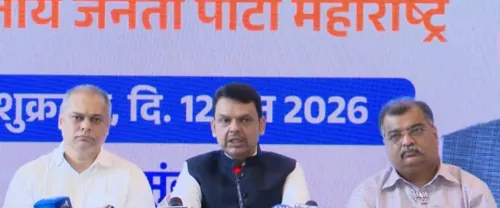
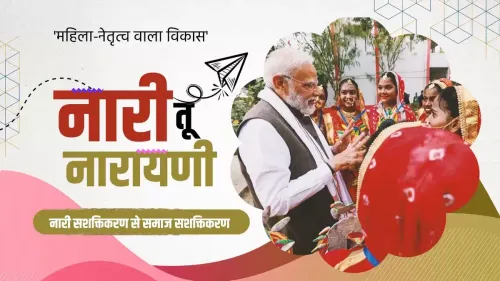
Maharashtra Chief Minister Devendra Fadnavis on Friday, June 12, 2026, took to X to mark what he called '12 phenomenal years of championing women-led development' under Prime Minister Narendra Modi, citing advances in financial inclusion, defence representation, and global aviation milestones as evidence of a 'historic transformation' driven by India's Nari Shakti.
Context
Fadnavis's post, tagged #12YearsOfNariShakti, arrives as the BJP-led government at the Centre completes twelve years in office. The Chief Minister framed the occasion not as a political anniversary but as a ledger of policy outcomes for women across households, defence establishments, and financial institutions. He directly addressed Prime Minister Modi, crediting 'visionary leadership' for turning 'aspirations into impactful milestones.'
The post referenced over 32 crore women actively connected to banking through Jan Dhan accounts, a figure that speaks to the scale of the Pradhan Mantri Jan Dhan Yojana launched in August 2014. The scheme was designed to provide universal banking access with priority for women and rural households, and has since become one of the government's flagship financial-inclusion instruments.
Policy Backdrop
The Pradhan Mantri Jan Dhan Yojana, announced at the start of the Modi government's first term, opened bank accounts for previously unbanked citizens, with women and rural communities as primary beneficiaries. Alongside it, the Beti Bachao Beti Padhao scheme, announced in January 2015, sought to improve child sex ratios and expand girls' access to education and healthcare.
On the defence front, Fadnavis cited a rise in women officers from 3,000 in 2014 to over 11,000 in 2025. This trajectory aligns with policy and judicial shifts between 2019 and 2020, when Supreme Court orders and government decisions opened permanent commissions to women officers across the Army, Navy, and Air Force. The expansion of women in aviation, where India is cited as leading globally in the share of women pilots, reflects a parallel trend in the civil sector.
The post also highlighted India's women-led Self Help Group network — the largest of its kind globally — which draws on the National Rural Livelihoods Mission framework that has been scaled significantly since 2014. Guinness World Records in financial inclusion and healthcare were cited as markers of the programme's reach, though independent verification of specific records post-2023 remains pending.
Stakeholders and Impact
The primary beneficiaries of the policies Fadnavis highlighted are rural women, women defence officers, and Self Help Group members spread across the country. For rural households, Jan Dhan accounts have provided a formal banking identity, enabling access to direct benefit transfers and insurance products that were previously inaccessible.
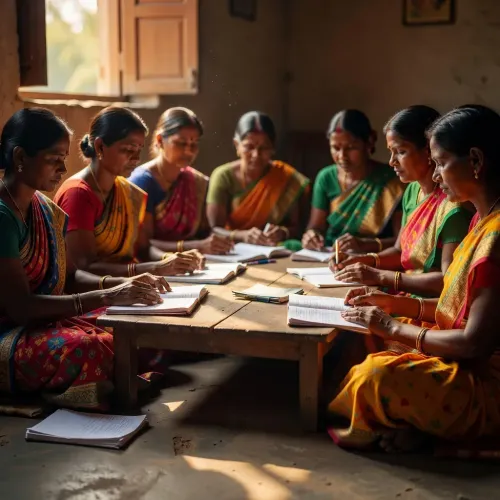
For women in uniform, the policy shift toward permanent commissions has meant career parity with male counterparts — a structural change rather than a numerical one. The SHG network, meanwhile, functions as a micro-enterprise and savings backbone for millions of women, particularly in states like Maharashtra, where state-level experiments preceded the national scale-up.
What's Next
Observers will watch the next Union Budget for allocations to women-specific components of flagship schemes, which would indicate whether the policy momentum cited by Fadnavis is matched by fresh fiscal commitments. Annual defence recruitment data will also be closely tracked to confirm whether the gender ratio in officer ranks continues its upward trajectory beyond the 2025 figures cited in the post.
Fadnavis's intervention signals that the BJP's communication strategy around the twelve-year mark will lean heavily on women-led development metrics — framing governance outcomes as a moral and social revolution rather than a purely administrative record. How opposition parties respond to these claims, and whether civil-society groups validate the numbers on the ground, will shape the political narrative heading into the next electoral cycle.
Point of View
Arriving at the twelve-year mark of the Modi government and deploying quantitative metrics — Jan Dhan numbers, defence officer counts, aviation rankings — to shift the women-empowerment debate from aspiration to measurable outcome. By amplifying the Centre's record from a state platform, the Maharashtra CM reinforces the BJP's federal messaging architecture, where state leaders serve as amplifiers for national policy wins. The emphasis on 'revolution' language suggests the party is calibrating its pitch beyond traditional welfare framing toward a broader social-transformation narrative. Whether the cited figures withstand independent scrutiny will determine how durable this messaging proves in the months ahead.
NationPress
26 Oct 2026
Frequently Asked Questions
What is Nari Shakti and why is it trending in June 2026?
Nari Shakti refers to the Modi government's women-led development framework spanning financial inclusion, defence, health, and rural livelihoods. It is trending because Maharashtra CM Devendra Fadnavis posted on June 12, 2026 to mark 12 years of the agenda, citing milestones such as 32 crore Jan Dhan accounts and a rise in women defence officers.
How many women are connected to Jan Dhan accounts in India?
According to CM Fadnavis's post, over 32 crore women are actively connected to banking through Pradhan Mantri Jan Dhan Yojana accounts. The scheme was launched in August 2014 with a focus on women and rural households.
How many women officers are there in the Indian defence forces in 2025?
Fadnavis cited a rise from 3,000 women officers in 2014 to over 11,000 in 2025, a trend linked to Supreme Court orders and government decisions between 2019 and 2020 that opened permanent commissions to women across the Army, Navy, and Air Force.
Does India really have the highest share of women pilots in the world?
The claim that India leads the world in the share of women pilots in commercial aviation has been cited by government officials and is referenced in Fadnavis's post. Independent verification of the most current global ranking should be confirmed against the latest International Air Transport Association data.
What is the BJP's political message behind the 12 Years of Nari Shakti campaign?
The campaign positions the Modi government's twelve-year record on gender policy as a social revolution rather than routine welfare delivery, using quantitative milestones to pre-empt opposition criticism and build a narrative ahead of future elections.