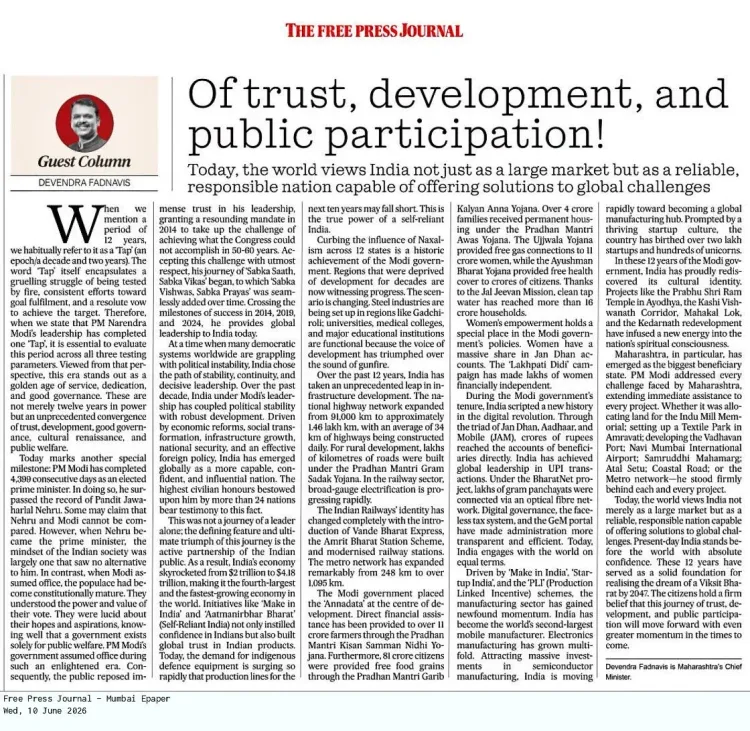
CM Fadnavis Marks 12 Years of Modi Govt With Special Article
Synopsis
Maharashtra Chief Minister Devendra Fadnavis on June 10, 2026, shared a signed article marking 12 years of the Modi government, highlighting welfare, digital growth, infrastructure, and women's empowerment as pillars of a New India rising on the global stage.
Key Takeaways
Maharashtra CM Devendra Fadnavis published a special article on June 10, 2026 , marking 12 years of the BJP-led NDA government under PM Narendra Modi .
Fadnavis cited welfare for the poor, women's empowerment, infrastructure, and the digital revolution as the four pillars of India's transformation.
The Modi government was first elected in May 2014 and has since been re-elected in 2019 and 2024 .
Key flagship schemes referenced include Digital India (2015), Pradhan Mantri Awas Yojana , and Beti Bachao Beti Padhao .
The Viksit Bharat 2047 vision — India as a developed economy by independence centenary — frames the broader policy arc.
The post is part of a coordinated BJP communication effort around the government's anniversary milestone, amplified by state-level leaders.
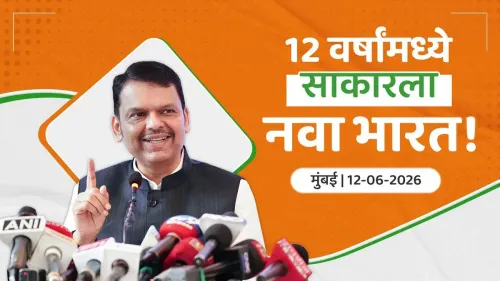
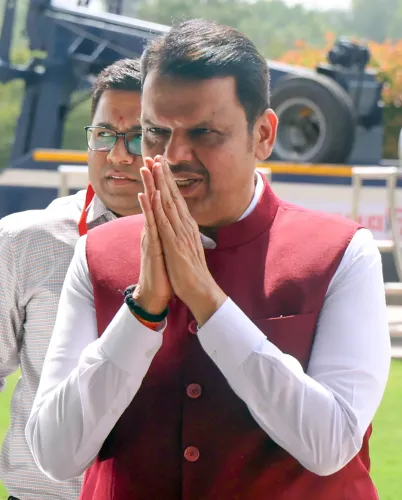
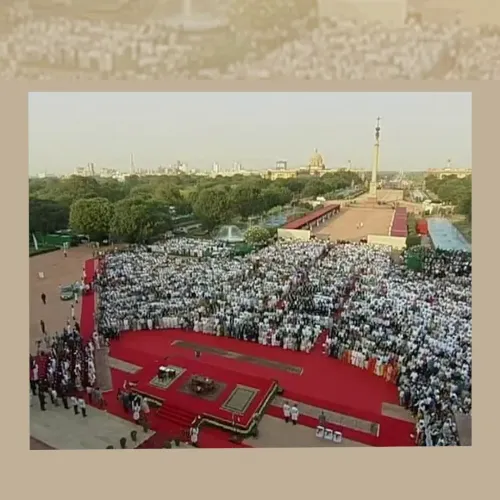
Maharashtra Chief Minister Devendra Fadnavis on Wednesday, June 10, 2026, shared a special article reflecting on 12 years of the BJP-led NDA government under Prime Minister Narendra Modi, calling the period a decade-plus of trust, development, and public participation that has repositioned India on the global stage.
Context
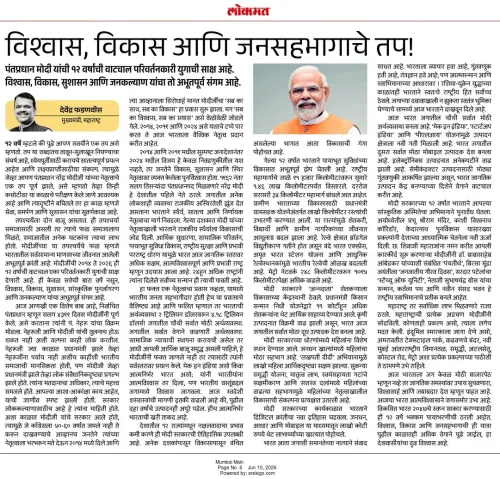
In his post, Fadnavis wrote that India has 'scaled new heights of progress, driven by trust, development, and public participation' under PM Modi's leadership. He highlighted 'transformative initiatives focused on the welfare of the poor, women's empowerment, world-class infrastructure, and the digital revolution' as the pillars of what he described as a Viksit Bharat — a New India standing 'confidently on the global stage.' The post directed followers to a signed analysis article authored by Fadnavis himself detailing these themes.
The message was accompanied by hashtags including #12YearsOfModiGovt, #LongestServingElectedPMModi, and #ViksitBharat, signalling a coordinated BJP communication push around the milestone anniversary of the Modi government's first oath of office in May 2014.
Policy Backdrop
The BJP-led NDA government assumed office in May 2014 following a decisive general election mandate, launching a series of flagship programmes in subsequent years. The Digital India initiative, rolled out in July 2015, expanded digital infrastructure, e-governance, and financial inclusion across the country, with the Unified Payments Interface (UPI) becoming a globally recognised digital public good.
Welfare schemes such as Pradhan Mantri Awas Yojana — targeting housing for poor households — and Beti Bachao Beti Padhao, focused on women's empowerment, were launched in 2015 and have since been scaled across states including Maharashtra. The Modi government was subsequently re-elected in 2019 and 2024, extending its policy emphasis on infrastructure corridors and direct welfare delivery mechanisms. The overarching Viksit Bharat 2047 vision articulates the goal of making India a fully developed economy by the centenary of independence.
Stakeholders and Impact
The beneficiary groups most frequently cited in the Modi government's communication arc — poor households, women, and infrastructure developers — are central to Fadnavis's framing as well. Maharashtra, as one of India's largest and most economically significant states, has been a key implementation ground for centrally sponsored schemes, and its Chief Minister's endorsement reinforces the narrative of state-centre policy continuity.
Such messaging by state leaders typically intensifies around government anniversary milestones, reflecting a coordinated approach within the BJP's broader communication strategy to project unified national progress. The article authored by Fadnavis serves both as a political statement and as a policy-review document aimed at a wider public audience.
What's Next
Attention will now turn to the rollout status of centrally sponsored schemes in Maharashtra and any state-level reviews tied to the Viksit Bharat 2047 roadmap. As the Modi government crosses the 12-year mark, the alignment between central policy targets and Maharashtra's implementation record is likely to come under closer scrutiny, particularly in the context of future electoral cycles. Fadnavis's public articulation of this development narrative positions him as a key amplifier of the BJP's national governance messaging at the state level.
Point of View
Particularly around milestone anniversaries, to project seamless governance continuity from Delhi to the states. By invoking welfare delivery, digital public goods, and the Viksit Bharat 2047 framework simultaneously, Fadnavis is anchoring Maharashtra's political identity firmly within the national BJP development story. This also serves a local function: reinforcing the ruling coalition's legitimacy in Maharashtra ahead of any future electoral tests.
NationPress
16 Sept 2026
Frequently Asked Questions
Why did CM Devendra Fadnavis write an article about PM Modi's government?
Fadnavis wrote a special article to mark 12 years of the BJP-led NDA government under PM Modi, highlighting achievements in welfare, infrastructure, and the digital economy as part of the party's anniversary communication effort.
What is Viksit Bharat 2047?
Viksit Bharat 2047 is PM Modi's national vision to make India a fully developed economy by 2047, the centenary of independence, through sustained reforms, infrastructure investment, and public participation.
What schemes did the Modi government launch for the poor and women?
Key schemes include Pradhan Mantri Awas Yojana for housing the poor and Beti Bachao Beti Padhao for women's empowerment, both launched in 2015, alongside the Digital India programme for financial inclusion.
How long has Narendra Modi been Prime Minister of India?
Narendra Modi has been Prime Minister since May 2014, having been re-elected in 2019 and 2024, making him one of India's longest-serving elected prime ministers.
What is Devendra Fadnavis's role in Maharashtra?
Devendra Fadnavis is the Chief Minister of Maharashtra and a senior BJP leader who has held the post across multiple terms, frequently aligning state policy communication with the central government's agenda.