CM Fadnavis, Gadkari Break Ground for NMC Sanitation Workers' Housing
Synopsis
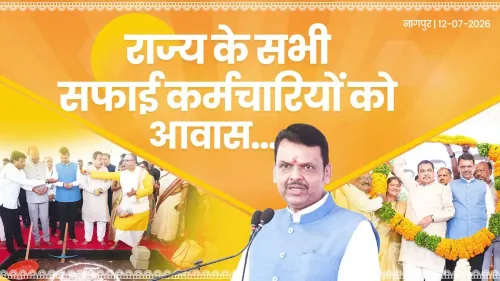
Chief Minister Devendra Fadnavis and Union Minister Nitin Gadkari performed the groundbreaking for the 'Maharshi Sudarshan Valmiki Vasahat' housing colony for NMC sanitation workers and the 'Swapnapurti' PMAY 2.0 AHP project in Nagpur on 12 July 2026, marking a centre-state push for urban sanitation worker welfare.
Key Takeaways
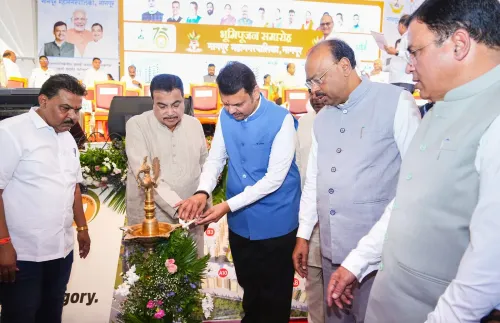
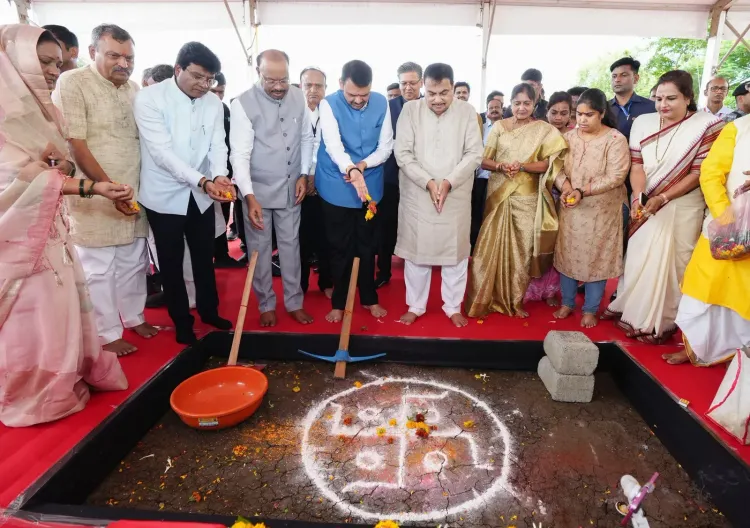
CM Devendra Fadnavis and Union Minister Nitin Gadkari jointly performed the bhoomipujan for two housing projects in Nagpur on 12 July 2026 .
The 'Maharshi Sudarshan Valmiki Vasahat' is a dedicated housing colony for Nagpur Municipal Corporation sanitation workers .
The 'Swapnapurti' project is being implemented under the Pradhan Mantri Awas Yojana 2.0 (Urban) AHP vertical.
The Maharashtra Safai Karamchari Commission Chairman Shersingh (Satish) Dagor was among the dignitaries present, reflecting the statutory welfare mandate behind the initiative.
The projects continue Maharashtra's established pattern of converging central PMAY funds with local municipal delivery for occupational communities.
Next steps include construction, beneficiary allotment, and potential replication of the model in other Maharashtra municipal corporations.
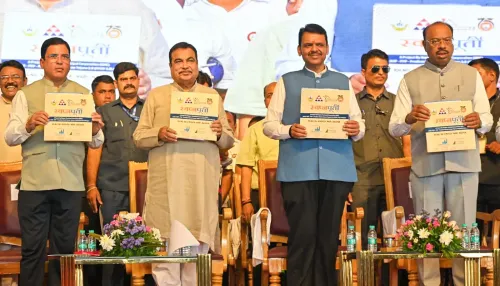
The Chief Minister's Office of Maharashtra announced on 12 July 2026 that Chief Minister Devendra Fadnavis and Union Minister Nitin Gadkari jointly performed the bhoomipujan (groundbreaking ceremony) and unveiled the stone plaque for two housing projects in Nagpur — the 'Maharshi Sudarshan Valmiki Vasahat' for sanitation workers of the Nagpur Municipal Corporation (NMC), and the 'Swapnapurti' housing project under the Pradhan Mantri Awas Yojana 2.0 (Urban) Affordable Housing in Partnership (AHP) component.
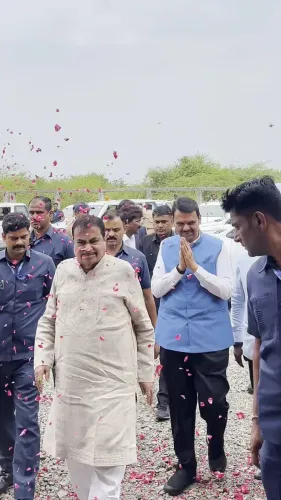
The ceremony, held at 12:20 pm in Nagpur, was attended by Minister Chandrashekhar Bawankule, Minister of State Adv. Ashish Jaiswal, Nagpur Mayor Neeta Thakre, Deputy Mayor Leela Hathibed, Standing Committee Chairperson Shivani Dani-Wakhare, and Maharashtra Safai Karamchari Commission Chairman Shersingh (Satish) Dagor, along with other dignitaries.
Context
The Maharshi Sudarshan Valmiki Vasahat is a dedicated housing colony being developed specifically for NMC sanitation workers — a community that provides essential civic services but has historically faced acute housing insecurity. The naming of the colony after Maharshi Sudarshan Valmiki carries symbolic weight, honouring a revered figure associated with the Valmiki community, to which a large proportion of urban sanitation workers belong.
The Swapnapurti project — swapnapurti meaning 'fulfilment of dreams' — is being executed under the AHP vertical of PMAY 2.0 (Urban), a central government scheme that channels subsidised housing to economically weaker sections and low-income groups in cities. Gadkari, who represents Nagpur in Parliament, co-presided over the event, underscoring the centre-state coordination embedded in the initiative.
Policy Backdrop
The Pradhan Mantri Awas Yojana (Urban) was first launched in June 2015 to address the housing deficit for urban poor households across India. Its second phase, PMAY 2.0, extends and deepens the programme's reach, with the AHP component specifically enabling state agencies and urban local bodies to partner with the central government to build housing at scale for targeted communities.
Maharashtra has consistently leveraged PMAY frameworks to deliver housing for occupational groups such as safai karmacharis (sanitation workers), blending central subsidies with municipal execution. The NMC projects announced on 12 July 2026 continue this established pattern of centre-state convergence, directing benefits to a workforce that underpins urban sanitation infrastructure.
Stakeholders and Impact
The primary beneficiaries are NMC sanitation workers and their families, who stand to gain formal, stable housing through both projects. The Maharashtra Safai Karamchari Commission, whose chairman was present at the event, functions as the statutory body advocating for the welfare — including housing rights — of this workforce across the state.
Local civic leadership, including the Nagpur Mayor, Deputy Mayor, and Standing Committee Chairperson, were present, reflecting the NMC's institutional ownership of project delivery. Their participation signals municipal-level commitment to ensuring the projects move from groundbreaking to completion.
What's Next
With the bhoomipujan and stone plaque unveiling complete, attention will now shift to construction timelines, beneficiary identification, and the formal allotment process under both the Maharshi Sudarshan Valmiki Vasahat and the Swapnapurti scheme. Progress on these projects will also be watched as a benchmark for how other Maharashtra municipal corporations implement PMAY 2.0 AHP components for similar occupational groups.
If successfully delivered, the Nagpur model — combining a dedicated named colony for sanitation workers with a broader PMAY-linked affordable housing project — could serve as a replicable template for urban local bodies across Maharashtra.
Point of View
The state's most powerful elected figure, and Gadkari, the city's most prominent central minister, on a single welfare platform — reinforcing BJP's consolidation of both state and central credit for urban housing delivery ahead of future electoral cycles. The naming of the colony after Maharshi Sudarshan Valmiki is a deliberate signal to the Valmiki community, a key constituency among urban sanitation workers. More broadly, the event illustrates how PMAY 2.0's AHP component is being operationalised at the municipal level to target specific occupational groups rather than the urban poor as an undifferentiated mass. The Nagpur model, if it reaches occupancy on schedule, could become a reference point for housing policy advocates pushing for worker-category-specific PMAY allocations across India's tier-2 cities.
NationPress
11 Oct 2026
Frequently Asked Questions
What is the 'Maharshi Sudarshan Valmiki Vasahat' in Nagpur?
It is a dedicated housing colony being built for sanitation workers of the Nagpur Municipal Corporation, with its groundbreaking performed by CM Devendra Fadnavis and Union Minister Nitin Gadkari on 12 July 2026.
What is the Swapnapurti housing project?
'Swapnapurti' is a housing project being implemented under the Pradhan Mantri Awas Yojana 2.0 (Urban) Affordable Housing in Partnership component in Nagpur, aimed at providing homes to economically weaker sections.
What is PMAY 2.0 AHP?
PMAY 2.0, or Pradhan Mantri Awas Yojana 2.0 (Urban), is the second phase of the central government's urban housing scheme launched to address housing shortages for low-income groups. The AHP (Affordable Housing in Partnership) vertical enables state bodies and urban local bodies to co-develop housing with central funding support.
Who attended the Nagpur housing bhoomipujan on 12 July 2026?
The event was attended by Minister Chandrashekhar Bawankule, MoS Adv. Ashish Jaiswal, Nagpur Mayor Neeta Thakre, Deputy Mayor Leela Hathibed, Standing Committee Chairperson Shivani Dani-Wakhare, Maharashtra Safai Karamchari Commission Chairman Shersingh (Satish) Dagor, along with other dignitaries.
What is the Maharashtra Safai Karamchari Commission?
It is a state statutory body in Maharashtra mandated to advocate for the welfare of sanitation workers, including housing rights and other social protections for the community.