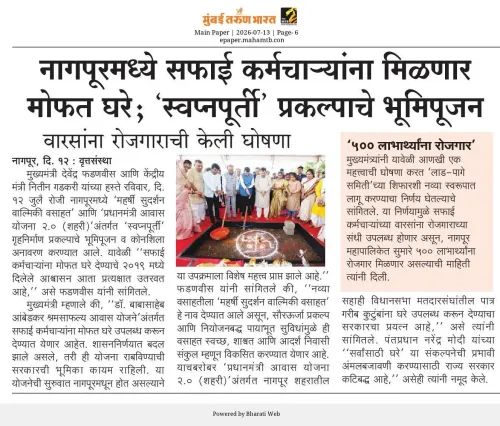
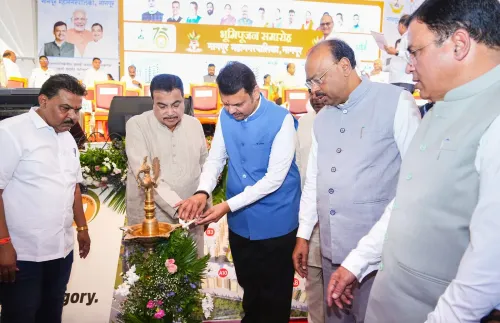
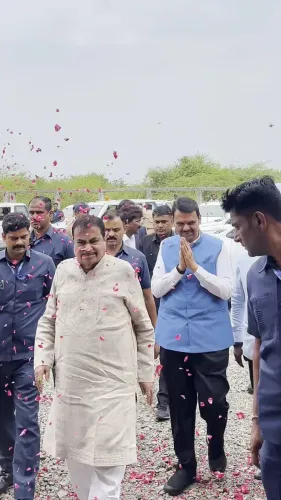
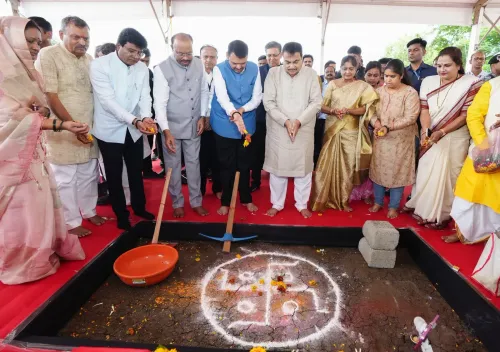
CM Fadnavis: NMC to build homes for sanitation workers in Nagpur

Synopsis
The Maharashtra CMO has shared details of an ambitious NMC housing project — Maharshi Sudarshan Valmiki Vasahat — to provide modern, fully-equipped homes for sanitation workers on an 11,109 sq m site at Mouja Nari in Nagpur, tagged to CM Devendra Fadnavis.
Key Takeaways
The Chief Minister's Office of Maharashtra announced details of the Maharshi Sudarshan Valmiki Vasahat housing project for sanitation workers.
The colony will be built by the Nagpur Municipal Corporation (NMC) on a 11,109 sq m plot at Mouja Nari, Nagpur .
The project aims to provide modern, safe, and fully-equipped homes to NMC safai karmacharis.
The colony is named after the Valmiki community , historically associated with sanitation work in Indian cities.
The initiative aligns with national schemes including PMAY-Urban and the legacy of the Valmiki Ambedkar Awas Yojana (2001) .
Beneficiary list finalisation and construction timeline remain key milestones to watch.
The Chief Minister's Office of Maharashtra on Sunday, 13 July 2026 shared detailed information about an ambitious housing project for sanitation workers being developed by the Nagpur Municipal Corporation (NMC) at Mouja Nari, Nagpur — a colony to be named Maharshi Sudarshan Valmiki Vasahat, spread across 11,109 square metres.
The post, tagging Chief Minister Devendra Fadnavis, described the project as aimed at providing sanitation workers with 'modern, safe, and fully-equipped homes' (आधुनिक, सुरक्षित आणि सर्व सुविधांनी सुसज्ज घरे). The CMO described it as a 'detailed account of this ambitious project' being constructed by the NMC.
Context
Sanitation workers — commonly referred to as safai karmachari — form an essential but historically underserved segment of India's urban workforce. Municipal corporations across Maharashtra are obligated under urban local body welfare frameworks to ensure dignified living conditions for these employees. The Maharshi Sudarshan Valmiki Vasahat is named in honour of the Valmiki community, which has traditionally been associated with sanitation work in Indian cities.
The project site at Mouja Nari in Nagpur has been identified specifically for this colony, with the 11,109 sq m footprint intended to accommodate a significant number of beneficiary families from the NMC's sanitation workforce.
Policy Backdrop
The initiative draws from a longer lineage of central and state housing schemes. The Valmiki Ambedkar Awas Yojana, launched nationally in 2001, was designed to provide pucca housing to safai karmacharis and manual scavengers. More recently, the Pradhan Mantri Awas Yojana-Urban (PMAY-U), launched in 2015, has provided financial infrastructure for housing urban poor including municipal workers.
Maharashtra governments have periodically announced dedicated colonies for sanitation workers as part of urban local body welfare obligations, often linking them to Swachh Bharat Mission goals around dignity for essential service providers. Similar projects have been undertaken by other municipal corporations across the state.
Stakeholders and Impact
The primary beneficiaries of the Maharshi Sudarshan Valmiki Vasahat are NMC sanitation workers and their families, who currently may lack access to formal, safe housing. The project represents a convergence of urban housing policy, worker welfare, and social equity goals.
Chief Minister Devendra Fadnavis, whose political base is in Nagpur, has a direct stake in the city's civic development. The NMC, as the implementing agency, will be responsible for construction, beneficiary list finalisation, and facility provisioning within the colony.
What's Next
Key milestones to watch include the finalisation of the beneficiary list, the commencement and completion of construction, and whether the Maharashtra government moves to replicate this model across other municipal corporations in the state. The project's outcome will also be seen as a test of the state's commitment to welfare delivery for its frontline sanitation workforce.
If successfully executed, the Maharshi Sudarshan Valmiki Vasahat could serve as a template for similar NMC-level housing interventions in other cities, reinforcing the broader national push for dignified living standards for urban sanitation workers.
Point of View
Particularly in electorally significant cities like Nagpur. For CM Devendra Fadnavis, whose home constituency is Nagpur, a high-visibility NMC project of this nature carries both administrative and political weight. The naming of the colony after the Valmiki community is also a deliberate act of symbolic recognition, consistent with broader BJP outreach to communities engaged in sanitation work. Whether the project moves from announcement to timely delivery will determine its real policy impact.
NationPress
11 Oct 2026
Frequently Asked Questions
What is Maharshi Sudarshan Valmiki Vasahat in Nagpur?
Maharshi Sudarshan Valmiki Vasahat is an ambitious housing colony being built by the Nagpur Municipal Corporation (NMC) at Mouja Nari, Nagpur, on an 11,109 sq m plot, specifically to provide modern and safe homes to sanitation workers.
Who will benefit from the NMC sanitation worker housing project in Nagpur?
NMC sanitation workers and their families are the primary beneficiaries of the Maharshi Sudarshan Valmiki Vasahat housing colony project in Nagpur.
Where is the Maharshi Sudarshan Valmiki Vasahat being built?
The colony is being constructed at Mouja Nari in Nagpur, on a site measuring 11,109 square metres.
What schemes support housing for safai karmacharis in India?
The Valmiki Ambedkar Awas Yojana (launched 2001) and Pradhan Mantri Awas Yojana-Urban (launched 2015) are key national schemes that support housing for sanitation workers and urban poor, including municipal employees.
What is CM Devendra Fadnavis's role in the Nagpur NMC housing project?
Chief Minister Devendra Fadnavis was tagged in the Maharashtra CMO's post about the project. As CM with his political base in Nagpur, he has oversight of state urban development programmes and the NMC's welfare initiatives.