CM Fadnavis offers state puja at Pandharpur on Ashadhi Ekadashi
Synopsis
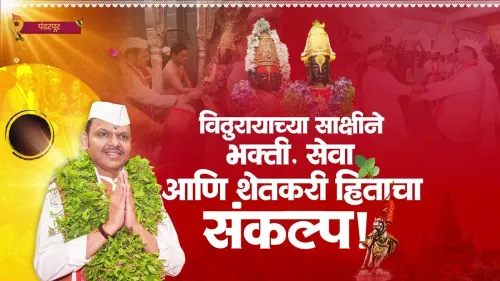
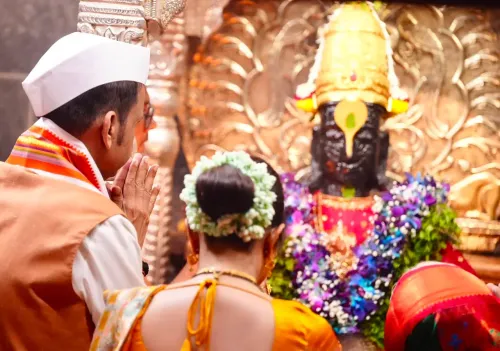
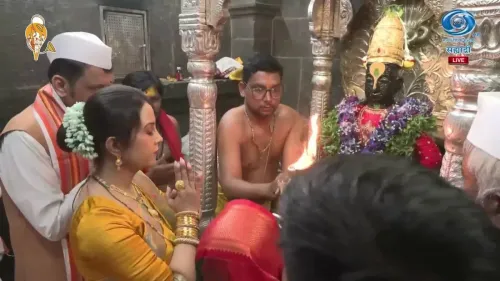
Maharashtra Chief Minister Devendra Fadnavis performed the official state mahapuja at the Vitthal-Rukmini temple in Pandharpur on Ashadhi Ekadashi, 25 July 2026, accompanied by his wife. He prayed for the prosperity, health, and progress of Maharashtra's farmers, workers, and all citizens.
Key Takeaways
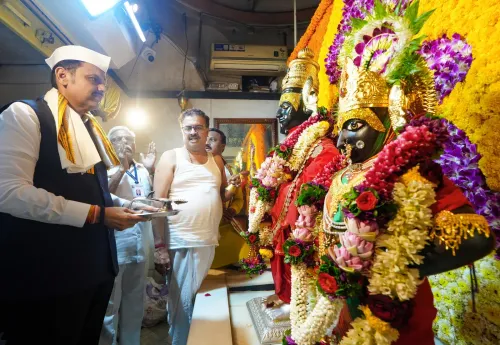
Chief Minister Devendra Fadnavis performed the official state mahapuja at the Vitthal-Rukmini temple, Pandharpur , on Ashadhi Ekadashi, 25 July 2026 .
He was accompanied by his wife Amruta Fadnavis for the government-sanctioned worship ceremony.
Fadnavis prayed for the happiness, prosperity, good health, and auspicious future of Maharashtra's farmers, labourers, mothers, sisters, and youth .
He specifically invoked 'Baliraj' — a reverent title for farmers — praying that their labour be rewarded with success.
The ceremony is part of a longstanding Maharashtra government tradition of official state participation in Ashadhi Ekadashi observances at Pandharpur .
The Pandharpur Wari pilgrimage, central to the Warkari devotional tradition, draws millions of participants from across Maharashtra every year.
Maharashtra Chief Minister Devendra Fadnavis performed the official state mahapuja at the Vitthal-Rukmini temple in Pandharpur on Saturday, 25 July 2026, on the occasion of Ashadhi Ekadashi, accompanied by his wife Amruta Fadnavis. The Chief Minister said the darshan of Vitthal-Rukmini Mata left him deeply fulfilled, and he prayed for the welfare of every citizen of Maharashtra.
Context
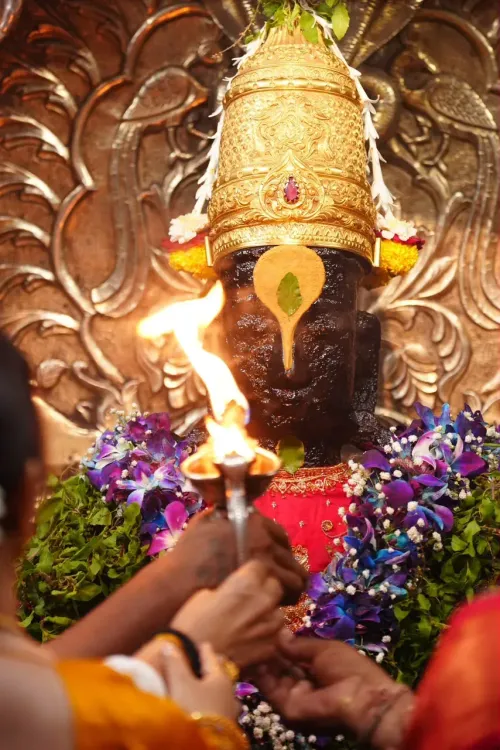
Posting on X in Marathi, Fadnavis opened with a devotional verse — 'Sundar te dhyan ubhe vitevaree, kar katavaree thevoniya' ('Beautiful is that meditation, standing on the brick, hands resting on the hips') — a celebrated Warkari abhangas that describes Lord Vitthal. He wrote that he was blessed with the opportunity to perform the shaskiya mahapuja (official state worship) at the feet of Vitthal-Rukmini Mata along with his wife.
The Chief Minister said he prayed for the happiness, prosperity, good health, and auspicious future of Maharashtra's farmers, labourers, mothers, sisters, youth, and every citizen. He specifically prayed that 'Balirajachya shramanla yash labho' — 'May the toil of the farmer-king be rewarded with success' — and that Maharashtra remain ever on the path of progress.
Policy Backdrop
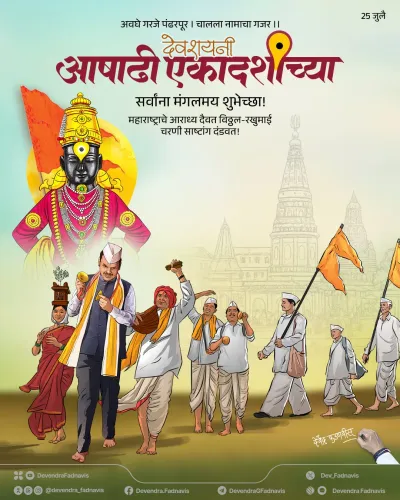
Ashadhi Ekadashi, which marks the start of Chaturmas (the four-month monsoon period in the Hindu calendar), is one of the most significant days in the Warkari devotional tradition. Millions of pilgrims, known as Warkaris, undertake the Pandharpur Wari — a centuries-old foot pilgrimage — converging on Pandharpur in Solapur district to seek the blessings of Lord Vitthal.
Maharashtra governments have a longstanding tradition of arranging an official state mahapuja at the Vitthal-Rukmini temple on Ashadhi Ekadashi, with the sitting Chief Minister typically performing the ceremony. The practice reflects the deep intertwining of the Warkari movement with Maharashtra's cultural and political identity, and successive administrations have used the occasion to announce or highlight support for pilgrims and the farming community.
Stakeholders and Impact
The prayers offered by Fadnavis specifically named farmers — invoking the term 'Baliraj', a reverent title for the cultivator — alongside workers, women, youth, and the broader public. Agriculture remains a central concern in Maharashtra, where large swathes of the Vidarbha and Marathwada regions are prone to drought and agrarian distress.
The Pandharpur Wari draws participants from across caste and class lines, making it one of the most socially inclusive mass gatherings in India. The Chief Minister's participation, alongside the official state puja, signals the government's recognition of the pilgrimage's role in shaping regional identity and public sentiment.
What's Next
Attention will now turn to the full arrangements put in place by the Maharashtra government for the 2026 Pandharpur Wari cycle, including infrastructure, medical facilities, and any welfare measures announced for pilgrims and the farming community. The Warkari season culminates with Kartiki Ekadashi later in the year, which typically draws another massive gathering at Pandharpur. The state's response to the pilgrimage season is closely watched as a barometer of its commitment to both cultural heritage and rural welfare.
Point of View
Where the Warkari tradition commands deep mass loyalty cutting across caste and region. By specifically invoking 'Baliraj' — the farmer — in his prayer, the Chief Minister signals attentiveness to agrarian constituencies at a time when rural distress remains politically sensitive. The move also reinforces the BJP-led government's positioning as a custodian of Maharashtra's cultural and devotional heritage. In a state where the Wari pilgrimage mobilises millions, the Chief Minister's visible presence at Pandharpur carries both spiritual resonance and clear electoral symbolism.
NationPress
24 Oct 2026
Frequently Asked Questions
What is Ashadhi Ekadashi and why is it significant in Maharashtra?
Ashadhi Ekadashi is an annual Hindu observance that marks the start of the four-month Chaturmas period and is the culminating day of the Pandharpur Wari pilgrimage, during which millions of Warkari devotees walk to the Vitthal-Rukmini temple in Pandharpur to seek Lord Vitthal's blessings. It is one of the most important religious and cultural events in Maharashtra.
What did CM Devendra Fadnavis do on Ashadhi Ekadashi 2026?
Chief Minister Devendra Fadnavis performed the official state mahapuja at the Vitthal-Rukmini temple in Pandharpur on 25 July 2026, accompanied by his wife Amruta Fadnavis, and prayed for the welfare, prosperity, and good health of Maharashtra's farmers, workers, women, youth, and all citizens.
Where is the Vitthal-Rukmini temple located?
The Vitthal-Rukmini temple is located in Pandharpur, in the Solapur district of Maharashtra. It is the most sacred shrine of the Warkari Vaishnava tradition and draws millions of pilgrims each year.
What is the Pandharpur Wari pilgrimage?
The Pandharpur Wari is a centuries-old foot pilgrimage undertaken by Warkari devotees who walk from various parts of Maharashtra to the Vitthal-Rukmini temple in Pandharpur, converging on Ashadhi Ekadashi and again on Kartiki Ekadashi. It is one of the largest mass pilgrimages in India and is central to Maharashtra's cultural identity.
Is it tradition for Maharashtra's Chief Minister to attend Ashadhi Ekadashi at Pandharpur?
Yes, Maharashtra governments have a longstanding tradition of arranging an official state mahapuja at the Vitthal-Rukmini temple on Ashadhi Ekadashi, with the sitting Chief Minister typically performing the ceremony as a mark of the state's respect for the Warkari devotional tradition.