CM Fadnavis addresses fuel prices, drug policy at Nagpur presser
Synopsis
Chief Minister Devendra Fadnavis briefed media in Nagpur on 7 June 2026 on two fronts: the effect of international conflict on petrol, diesel and gas prices in Maharashtra, and the state's continuing zero-tolerance stance against drugs.
Key Takeaways
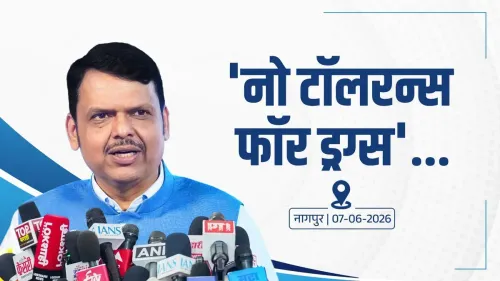
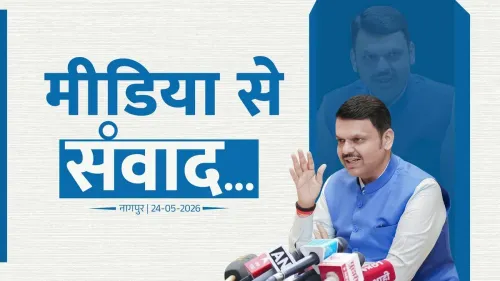
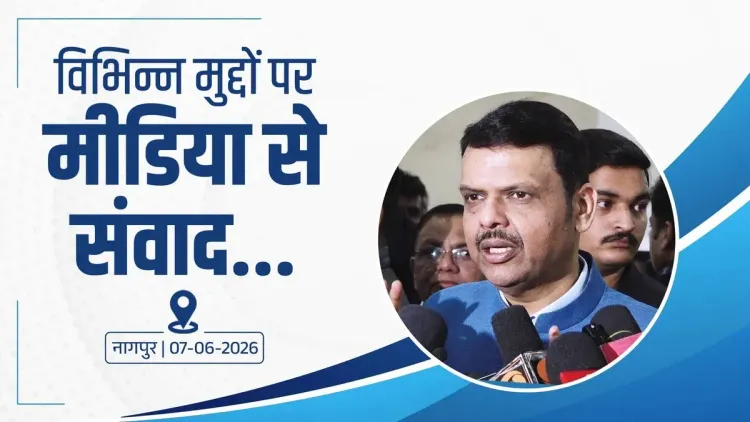
CM Devendra Fadnavis held a media interaction in Nagpur on 7 June 2026 .
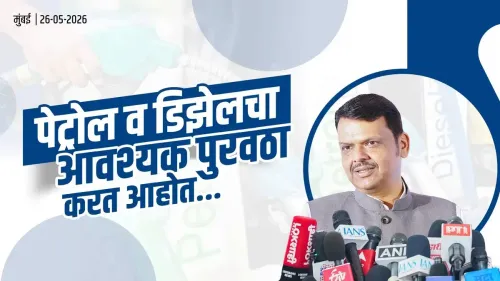
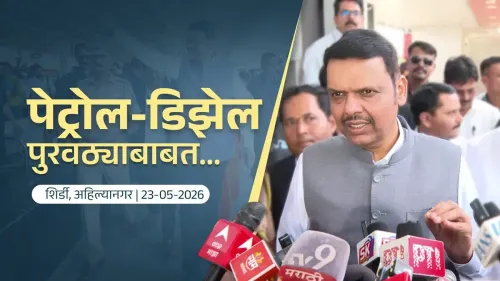
He addressed the impact of war-time conditions on petrol, diesel, and gas prices in Maharashtra.
He reaffirmed the state government's zero-tolerance policy against drugs.
Maharashtra has maintained continuity in anti-narcotics enforcement since the 2014-2019 Fadnavis government.
Fuel consumers, transport operators, and anti-narcotics agencies are the key stakeholders watching for follow-up action.
Maharashtra Chief Minister Devendra Fadnavis held a media interaction in Nagpur on 7 June 2026, addressing two pressing issues: the impact of war-time conditions on petrol, diesel, and gas prices, and the state government's zero-tolerance policy against drugs.
Context
Speaking to reporters in Nagpur — the winter capital of Maharashtra and Fadnavis's home constituency — the Chief Minister took up questions on fuel pricing amid an international conflict environment and on the state's ongoing anti-narcotics stance. His post on X described the interaction as a 'yuddh ki paristhiti mein petrol-diesel aur gas ki keemat' ('fuel prices in war-time conditions') briefing, signalling that global geopolitical pressures are feeding into domestic energy costs.
The reference to war-time conditions reflects a broader pattern in which international conflicts and supply disruptions push crude oil prices higher, directly affecting pump prices across Indian states. Maharashtra, as one of India's most populous and industrialised states, is acutely sensitive to such fluctuations.
Policy Backdrop
Indian state governments have periodically adjusted excise duties and sought central coordination on fuel subsidies during periods of global oil-price volatility — most notably during the 2022 surge triggered by the Russia-Ukraine conflict, when both the Centre and several states trimmed levies to provide consumer relief. A similar policy conversation appears to be underway now, with Fadnavis using the Nagpur briefing to publicly frame the government's position.
On the drug front, Fadnavis has consistently championed a zero-tolerance approach. During his earlier tenure as Chief Minister between 2014 and 2019, the state government launched coordinated anti-narcotics operations and awareness drives in partnership with central agencies operating under the Narcotic Drugs and Psychotropic Substances (NDPS) Act. The current administration has maintained that continuity, and Sunday's briefing reaffirmed that the policy remains a stated priority.
Stakeholders and Impact
Fuel consumers across Maharashtra — from daily commuters in Mumbai and Pune to farmers dependent on diesel-run irrigation pumps — stand to be most immediately affected by any pricing decisions that follow the briefing. Transport operators and small businesses that run on LPG and compressed natural gas are equally exposed to cost pressures driven by international supply shocks.
On the narcotics front, anti-drug enforcement agencies, district police units, and the Maharashtra Anti-Narcotics Cell are the key operational stakeholders. Civil society groups working on drug rehabilitation in coastal and urban districts have long sought stronger state commitment to both enforcement and awareness, making the Chief Minister's public reiteration of zero tolerance politically and operationally significant.
What's Next
Observers will watch for any follow-up announcements from the state government on fuel-price relief measures — such as a reduction in state excise duty on petrol and diesel — in the days following the Nagpur briefing. Any new anti-narcotics operational orders or district-level drives are also likely to be tracked as a measure of whether Sunday's policy signal translates into ground-level action.
The dual focus on economic relief and law-and-order enforcement reflects Fadnavis's broader governing strategy: addressing immediate citizen concerns on cost of living while maintaining a firm posture on social-order issues ahead of future electoral cycles in Maharashtra.
Point of View
Fadnavis is signalling a dual-track governance message: that the ruling dispensation is alive to citizen anxieties on cost of living while remaining uncompromising on social order. The fuel-price framing is notable because it externalises responsibility — attributing price pressures to global war conditions rather than domestic policy — a standard but effective communication strategy for incumbents. The drugs plank, meanwhile, reinforces a long-standing BJP-Maharashtra identity around tough law enforcement. Together, the two themes suggest a deliberate effort to consolidate both urban middle-class and hinterland voter sentiment ahead of the next political cycle.
NationPress
22 Sept 2026
Frequently Asked Questions
What did CM Devendra Fadnavis say about fuel prices in Maharashtra?
CM Fadnavis addressed media in Nagpur on 7 June 2026, stating that petrol, diesel, and gas prices are being affected by war-time conditions internationally, signalling that global conflict is driving cost pressures on Maharashtra consumers.
What is Maharashtra's zero-tolerance policy on drugs?
Maharashtra's zero-tolerance policy on drugs refers to a strict enforcement stance against narcotics trafficking and use, backed by coordinated operations with central agencies under the NDPS Act. CM Fadnavis has championed this approach since his first term as Chief Minister.
Why is Nagpur significant for CM Fadnavis?
Nagpur is both the winter capital of Maharashtra and CM Devendra Fadnavis's home constituency, making it a politically significant venue for major policy communications and media interactions.
Will Maharashtra reduce petrol and diesel prices amid the current conflict?
No specific price relief announcement has been made yet. Observers are watching for a possible reduction in state excise duty on petrol and diesel as a follow-up to the 7 June 2026 Nagpur briefing.
How has Maharashtra tackled drug trafficking under Fadnavis?
Under Fadnavis, Maharashtra launched anti-narcotics operations and awareness drives, particularly between 2014 and 2019, and has maintained enforcement continuity through the Maharashtra Anti-Narcotics Cell in coordination with central agencies.