CM Fadnavis assures adequate petrol-diesel supply in Maharashtra
Synopsis
Maharashtra Chief Minister Devendra Fadnavis on 26 May 2026 publicly assured that petrol and diesel supplies are being kept adequate despite above-average demand, reaffirming state-level coordination with central oil distributors to prevent shortages.
Key Takeaways
CM Devendra Fadnavis issued a public assurance on 26 May 2026 about fuel availability in Maharashtra .
Demand for petrol and diesel has risen above average levels, according to the Chief Minister's post.
The government stated that supply is being maintained in line with the elevated demand.
The statement was made bilingually in Marathi and Hindi, broadening its reach across the state.
The assurance follows a standing coordination mechanism between state governments and central oil marketing companies during demand spikes.
Vehicle owners, transport operators, and agricultural users are the primary stakeholders affected.
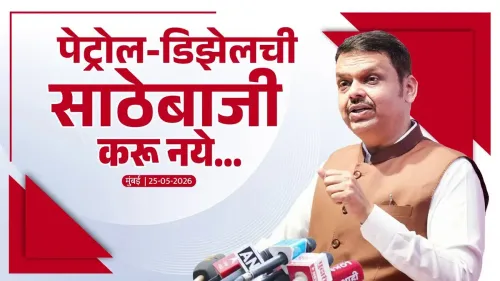
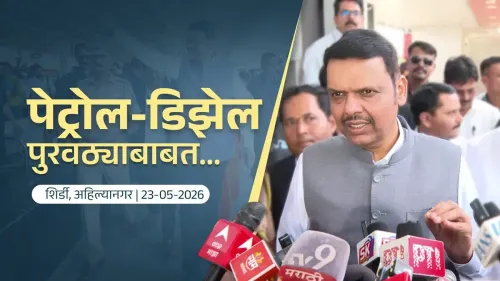
Maharashtra Chief Minister Devendra Fadnavis on Tuesday, 26 May 2026, issued a public assurance that petrol and diesel supplies across Maharashtra are being maintained at adequate levels despite demand rising above average, signalling that the state administration is actively coordinating with fuel distributors to prevent any shortage.
Context
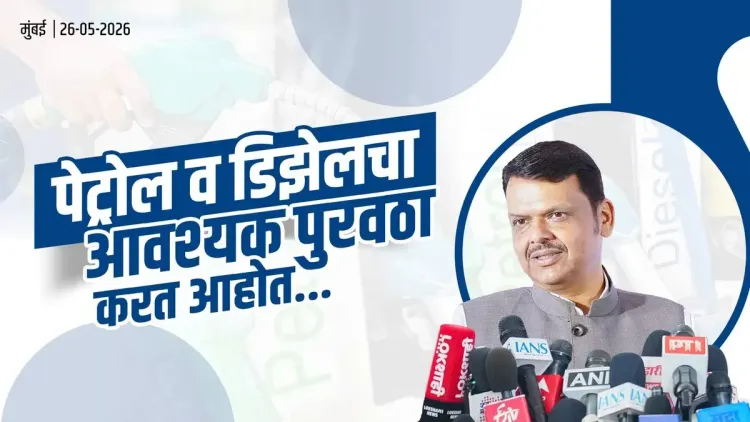
Responding to a query directed at him on X, CM Fadnavis stated — in both Marathi and Hindi — that while demand for petrol and diesel has risen beyond normal levels, supply is being ensured in line with that requirement. In his words: 'पेट्रोल व डिझेलची मागणी सामान्यपेक्षा वाढली असली, तरी त्यानुसार आवश्यक पुरवठा करत आहोत' ('Even though demand for petrol and diesel has risen above average, we are ensuring the necessary supply accordingly'). The bilingual response — in both Marathi and Hindi — underscores the state government's intent to communicate the message broadly across Maharashtra's diverse population.
Policy Backdrop
Indian state governments have a standing practice of issuing supply-status assurances when fuel offtake rises above seasonal norms, coordinating with central public-sector oil marketing companies that manage distribution logistics nationwide. This mechanism has been documented since at least 2014 and reflects the political sensitivity of retail fuel availability in a country structurally dependent on imported crude. Maharashtra, as India's most industrialised state, has consistently high fuel consumption driven by its transport, manufacturing, and agricultural sectors — making supply continuity a high-stakes governance priority.
When demand spikes occur, state administrations typically liaise with oil marketing companies to expedite inventory replenishment at retail outlets, particularly in high-density urban corridors like Mumbai, Pune, and Nagpur, as well as in rural districts where supply chains are thinner.
Stakeholders and Impact
The assurance is directly relevant to Maharashtra's millions of vehicle owners and transport operators, who are most exposed to disruptions in petrol and diesel availability. Long-haul truckers, auto-rickshaw drivers, and agricultural pump operators — all of whom depend on uninterrupted fuel access — stand to benefit from proactive state-level coordination. Any perceived shortage, even a temporary one, can trigger panic buying that amplifies the original demand surge, making timely official communication a critical tool for market stabilisation.
The statement also carries significance for Mumbai-based businesses and logistics firms whose supply chains run on diesel-powered fleets. A credible government assurance at the chief ministerial level is typically sufficient to prevent queue formation at fuel stations and curb hoarding behaviour.
What's Next
Observers will watch for daily inventory disclosures from central oil marketing companies and any follow-up communication from the Maharashtra state energy department or the Union Ministry of Petroleum and Natural Gas. Should demand remain elevated beyond May 2026, the state may need to escalate coordination with central authorities to ensure buffer stocks are maintained. The government's ability to sustain supply without visible disruption will be a near-term test of its fuel-distribution coordination machinery.
Point of View
Bilingual response on a public platform reflects a deliberate effort to use social media as a real-time governance tool — pre-empting panic buying before it can take hold. The move fits a broader pattern among Indian chief ministers of using X to signal administrative responsiveness on economically sensitive issues, particularly fuel, which carries outsized political weight. With Maharashtra being India's largest industrial economy, any fuel supply anxiety can ripple quickly through logistics and manufacturing chains, making the chief minister's swift, unambiguous assurance a calculated act of market management as much as public communication. How long the elevated demand persists will determine whether this statement is sufficient or merely the opening move in a longer supply-coordination exercise.
NationPress
11 Oct 2026
Frequently Asked Questions
Is there a petrol or diesel shortage in Maharashtra right now?
Maharashtra CM Devendra Fadnavis stated on 26 May 2026 that while demand has risen above average, adequate supply is being maintained and there is no shortage.
Why did CM Fadnavis make a statement about fuel supply?
Fadnavis responded to a public query on X, assuring citizens that the state government is coordinating with distributors to meet the elevated demand for petrol and diesel.
What should Maharashtra vehicle owners do if they face fuel unavailability?
The state government has assured adequate supply; vehicle owners are advised to purchase fuel through normal channels and avoid panic buying, which can worsen temporary demand spikes.
Who manages petrol and diesel supply in Maharashtra?
Fuel distribution in Maharashtra is managed by central public-sector oil marketing companies in coordination with the state government, which monitors and escalates supply requirements during demand surges.
Has Maharashtra faced fuel shortages before?
Maharashtra, as India's most industrialised state, periodically sees demand spikes for petrol and diesel, and state administrations have routinely issued supply assurances in coordination with central oil companies since at least 2014.