CM Fadnavis Warns Against Petrol-Diesel Hoarding in Maharashtra
Synopsis
Maharashtra Chief Minister Devendra Fadnavis issued a bilingual public warning on 25 May 2026, urging all stakeholders to refrain from hoarding petrol and diesel in ways that could strain supply chains across the state, with Mumbai flagged as the point of concern.
Key Takeaways
CM Devendra Fadnavis issued an anti-hoarding advisory for petrol and diesel on 25 May 2026 from Mumbai .
The warning was issued in both Marathi and Hindi , signalling a broad, state-wide audience.
The directive targets anyone — individual or entity — whose stockpiling could put pressure on fuel supply chains.
Such advisories align with central government guidelines on strategic petroleum reserves and distribution management.
Key stakeholders affected include fuel retailers, transport operators, and consumers across Maharashtra.
Follow-up enforcement action under essential commodities regulations remains possible if hoarding is detected.
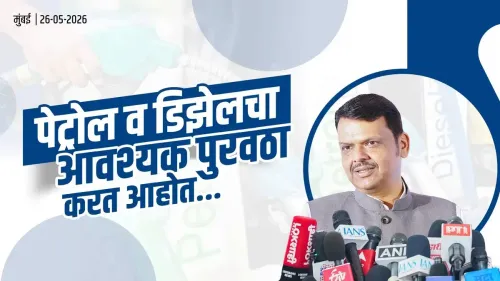
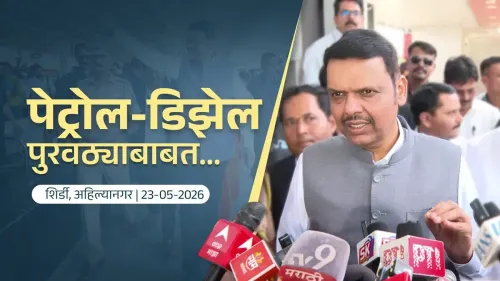
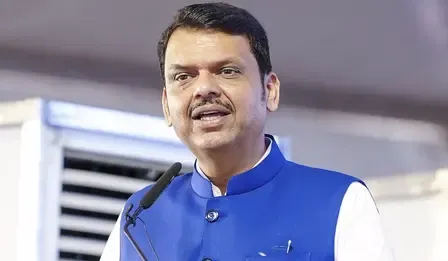
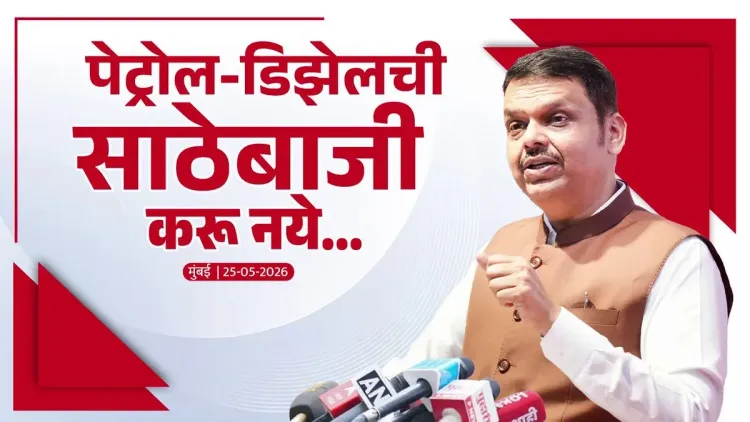
Maharashtra Chief Minister Devendra Fadnavis on Monday, 25 May 2026 issued a sharp public warning against hoarding of petrol and diesel, cautioning that no individual or entity should engage in stockpiling that places strain on the state's fuel supply chain. The advisory, posted from Mumbai, was directed at all stakeholders across the fuel distribution network.
Context
In his post, Fadnavis stated in both Marathi and Hindi: 'पेट्रोल-डिझेलच्या पुरवठ्यावर ताण येईल अशा प्रकारची साठेबाजी कोणीही करू नये' ('No one should indulge in hoarding of the kind that puts pressure on the supply of petrol and diesel'). The bilingual message underscored the seriousness of the directive, signalling that it was addressed to a broad cross-section of the population across linguistic communities in Maharashtra.
The statement was issued directly by the Chief Minister rather than through a departmental channel, indicating that the concern over supply disruption warranted high-level attention.
Policy Backdrop
Indian state governments have periodically issued anti-hoarding advisories for petroleum products during periods of volatility in global oil markets — a pattern seen most notably in 2022 when supply pressures prompted similar warnings across several states. Such directives typically align with central government guidelines on maintaining strategic petroleum reserves and ensuring uninterrupted distribution networks.
Maharashtra, as India's most industrialised state, is particularly sensitive to disruptions in fuel availability. Mumbai, the state capital and India's financial hub, anchors a vast logistics and transport ecosystem that depends heavily on consistent petrol and diesel supply.
Stakeholders and Impact
The advisory directly concerns fuel retailers, transport operators, and consumers across the state. Hoarding by any link in the supply chain — whether at the retail, wholesale, or consumer level — can trigger artificial shortages and price distortions that ripple across sectors from daily commuting to freight movement.
For ordinary consumers and small businesses, a squeeze on fuel availability can translate into higher informal prices and logistical disruptions. The CM's public statement serves as both a deterrent and a signal that the state administration is monitoring the situation closely.
What's Next
Observers will watch for any follow-up directives from state departments, particularly from the Maharashtra Food and Civil Supplies or Energy ministries, which typically coordinate with oil marketing companies on stock positions and distribution oversight. Should hoarding activity be detected, enforcement action under existing essential commodities regulations could follow.
The coming days will also indicate whether this advisory was a precautionary measure or a response to early signs of supply stress — with oil company stock reports and retail availability data likely to provide clearer signals.
Point of View
Bilingual anti-hoarding advisory — bypassing departmental channels — signals that the state administration perceives a credible, near-term risk to fuel supply stability rather than a routine precaution. The choice to communicate in both Marathi and Hindi broadens the reach deliberately, suggesting the concern extends beyond urban retailers to a wider distribution chain. This fits a recurring pattern in Indian governance where executive-level public warnings serve a dual function: deterring speculative behaviour while also managing public perception of supply security. How quickly departmental follow-through materialises will determine whether this remains a rhetorical signal or the opening move of a more structured enforcement response.
NationPress
9 Oct 2026
Frequently Asked Questions
Why did CM Fadnavis issue a warning against petrol and diesel hoarding?
CM Devendra Fadnavis issued the warning on 25 May 2026 to prevent stockpiling that could strain Maharashtra's fuel supply chain. Such advisories are typically issued when authorities detect or anticipate pressure on petroleum distribution networks.
What does the anti-hoarding advisory mean for consumers in Maharashtra?
For consumers, the advisory signals that the state government is actively monitoring fuel availability. It is intended to deter artificial shortages and protect everyday access to petrol and diesel at normal prices.
Is hoarding of petrol and diesel illegal in India?
Yes, hoarding of essential commodities including petroleum products can attract action under India's Essential Commodities Act. State governments have powers to regulate storage and distribution to prevent speculative stockpiling.
What happens after an anti-hoarding advisory is issued in Maharashtra?
Following such an advisory, state departments typically coordinate with oil marketing companies to monitor stock positions. If violations are found, enforcement action under essential commodities regulations can be initiated.
Has Maharashtra issued similar fuel advisories before?
Yes, Indian state governments including Maharashtra have issued anti-hoarding advisories for petroleum products during periods of global oil market volatility, with notable instances in 2022 when supply pressures prompted similar state-level warnings.