CM Fadnavis orders fuel supply fix for Maharashtra farmers
Synopsis
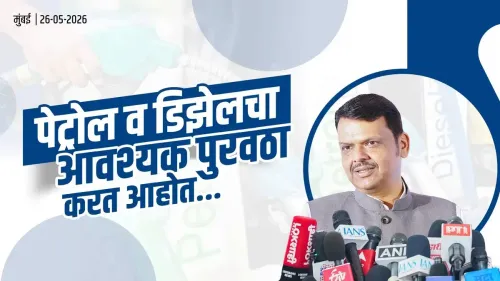
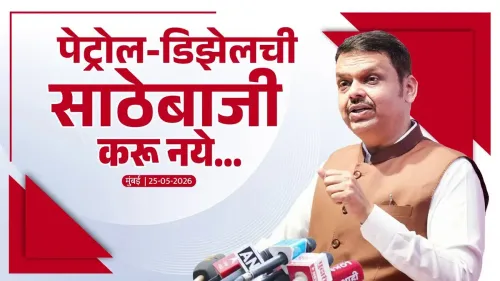
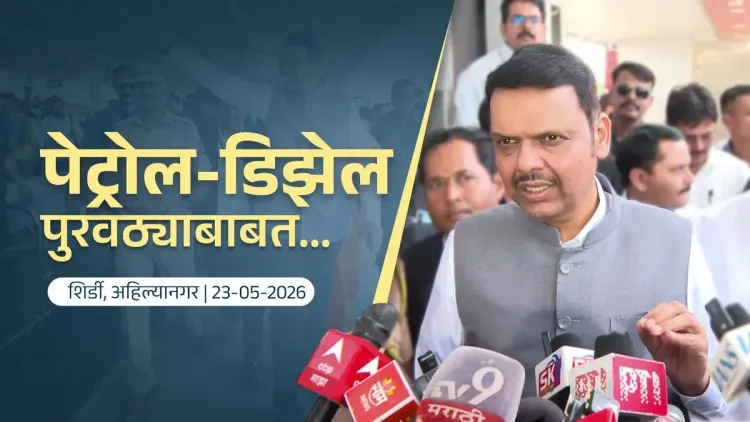
Maharashtra Chief Minister Devendra Fadnavis, visiting Shirdi on 23 May 2026, announced that district collectors have been directed to ensure uninterrupted petrol and diesel supply for farmers, with corrective measures already under way ahead of the kharif sowing season.
Key Takeaways
CM Devendra Fadnavis issued the directive from Shirdi, Ahilyanagar on 23 May 2026 .
District collectors across Maharashtra have been formally instructed to ensure petrol and diesel availability for farmers.
Remedial supply measures are already being implemented, according to the Chief Minister's statement.
The directive targets the critical pre-monsoon window when farmers rely heavily on diesel for irrigation pumps and tractors.
Ahilyanagar (formerly Ahmednagar) — the district where the statement was made — has a large agricultural population directly affected.
The move positions fuel access as an agricultural welfare priority for the Maharashtra state government.
Maharashtra Chief Minister Devendra Fadnavis, speaking from Shirdi in Ahilyanagar district on 23 May 2026, announced that district collectors across the state have been issued directives to ensure uninterrupted petrol and diesel supply to farmers, with remedial measures already being put in place.
Context
Posting on X, Fadnavis stated in Marathi and Hindi: 'शेतकऱ्यांना कोणताही त्रास होऊ नये यासाठी पेट्रोल-डिझेल पुरवठ्याबाबत जिल्हाधिकाऱ्यांना आवश्यक सूचना देण्यात आल्या आहेत' ['Necessary instructions have been issued to district collectors regarding petrol-diesel supply so that farmers face no difficulty, and required measures are being taken accordingly']. The statement, tagged #Maharashtra and #Ahilyanagar, was made during the Chief Minister's visit to the pilgrimage town of Shirdi.
The timing is significant: late May marks the pre-monsoon window when farmers across Maharashtra ramp up irrigation using diesel-powered pumps and prepare tractors for kharif sowing. Any disruption in fuel availability during this period can directly delay field preparation and crop planting schedules.
Policy Backdrop
State governments in India routinely coordinate with district administrations to safeguard essential commodity supply chains — including fuel — during peak agricultural cycles. Maharashtra has a documented history of such localised interventions, particularly in districts with large farming populations such as Ahilyanagar, formerly known as Ahmednagar.
District collectors hold statutory authority to direct fuel retailers and depot operators to prioritise agricultural demand, and can coordinate with oil marketing companies to expedite supply to rural areas. The current directive places that responsibility formally on the administrative machinery at the district level.
Stakeholders and Impact
The primary beneficiaries are the farming communities of Maharashtra, who depend on diesel for irrigation pumps, tractors, and the transport of agricultural inputs ahead of the monsoon. Ahilyanagar, a district with a substantial agricultural base, is directly in focus given the location of the Chief Minister's announcement.
District collectors are now the key administrative actors, tasked with monitoring fuel stock levels, coordinating with supply chains, and escalating shortfalls. The directive signals that the state government is treating fuel access as an agricultural welfare issue, not merely a logistics matter.
What's Next
The rollout of these instructions across all Maharashtra districts will be closely watched, particularly as the June 2026 monsoon onset approaches and kharif sowing activity intensifies. Further announcements on agricultural input availability — seeds, fertilisers, and credit access — are likely to follow as the state prepares its pre-monsoon support framework. Whether the directive translates into measurable improvement in rural fuel availability will depend on the speed and consistency of district-level implementation.
Point of View
Fadnavis is activating the state's administrative hierarchy as a welfare instrument, not just a logistics channel. Issuing the statement from Shirdi, a high-visibility pilgrimage centre in the heart of an agrarian district, amplifies its political resonance with rural constituencies. The move fits a broader pattern of the BJP-led Maharashtra government using visible, farmer-facing interventions to consolidate support in districts that were competitive in recent assembly elections. The real test will be whether district-level follow-through matches the announcement's urgency.
NationPress
6 Oct 2026
Frequently Asked Questions
Why did CM Fadnavis issue fuel supply instructions for Maharashtra farmers?
CM Fadnavis directed district collectors to ensure uninterrupted petrol and diesel supply so that farmers face no difficulty during the critical pre-monsoon and kharif sowing period, when diesel demand for irrigation pumps and tractors peaks.
Which districts are covered by the fuel supply directive?
The directive was issued to district collectors across Maharashtra. The announcement was made from Shirdi in Ahilyanagar district, which was specifically highlighted, but the instruction applies to the state's broader district administration.
What authority do district collectors have over fuel supply?
District collectors in India hold statutory powers to direct fuel retailers and coordinate with oil marketing companies to prioritise agricultural demand and expedite supply to rural areas during essential commodity shortages.
When was the Maharashtra fuel supply directive for farmers announced?
Chief Minister Devendra Fadnavis announced the directive on 23 May 2026, during a visit to Shirdi in Ahilyanagar district.
How does this affect farmers ahead of the monsoon season?
The directive aims to prevent disruptions in diesel supply that farmers depend on for irrigation pumps and tractors during the pre-monsoon field preparation and kharif sowing season, typically beginning in June.