CM Fadnavis Pays Tribute to Dadasaheb Phalke in Mumbai
Synopsis
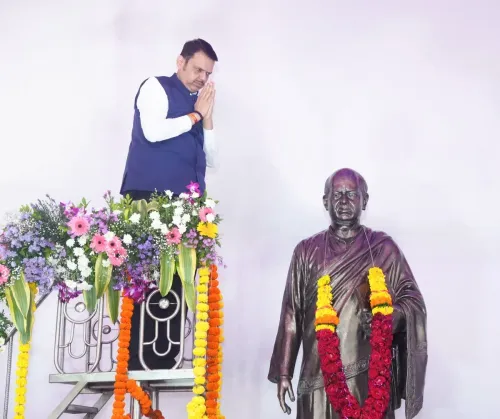
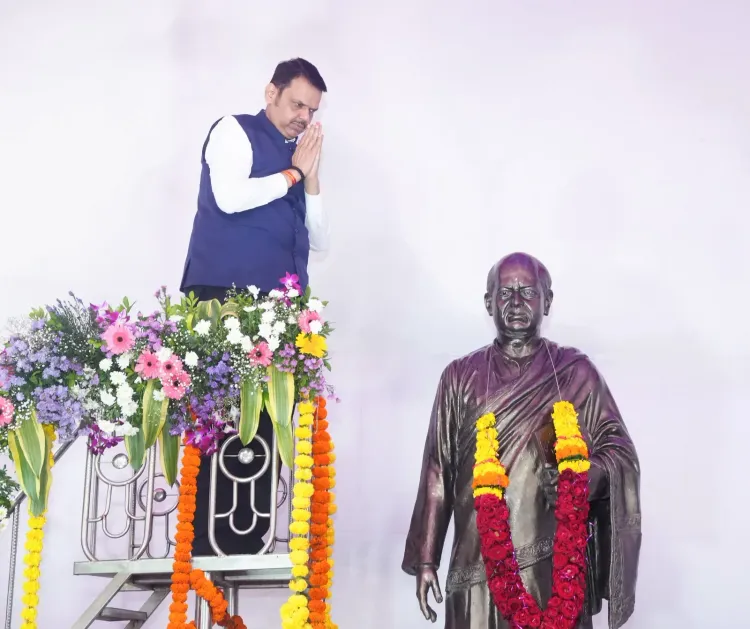
Chief Minister Devendra Fadnavis paid floral tributes to Dadasaheb Phalke at Chitranagari in Mumbai on 6 August 2026. Minister Ashish Shelar and other dignitaries attended the noon ceremony at the film complex named after the father of Indian cinema.
Key Takeaways
CM Devendra Fadnavis offered floral tributes at the statue of Dadasaheb Phalke at Dadasaheb Phalke Chitranagari, Mumbai on 6 August 2026 .
Ashish Shelar and other dignitaries were present at the noon ceremony.
Dadasaheb Phalke directed India's first feature film, Raja Harishchandra , in 1913 and is honoured annually through the Dadasaheb Phalke Award .
Dadasaheb Phalke Chitranagari is one of Mumbai's major active film production complexes, named after the cinema pioneer.
Maharashtra state leaders regularly engage with cultural and film-sector institutions, reflecting Mumbai's century-long centrality to Indian cinema.
At the studio complex that bears his name, Chief Minister Devendra Fadnavis stood before the statue of Dadasaheb Phalke on 6 August 2026 and offered floral tributes to the man who gave India its first feature film. The Chief Minister's Office of Maharashtra confirmed the visit took place at noon at Dadasaheb Phalke Chitranagari, Mumbai, with Minister Adv. Ashish Shelar and other dignitaries in attendance.
The Hindi portion of the post captured the gesture plainly: 'माल्यार्पण कर विनम्र अभिवादन किया' — 'offered a garland and paid humble respects.' The setting itself carried weight: Chitranagari, Mumbai's sprawling film production complex, is named after Phalke and remains one of the most active studio hubs in the country.
Who was Dadasaheb Phalke — and why the tribute endures
Dhundiraj Govind Phalke, known universally as Dadasaheb Phalke, directed Raja Harishchandra in 1913 — India's first full-length silent feature film. That single act of creation seeded an industry that today produces more films annually than any other country. His legacy is institutionalised in India's highest film honour, the Dadasaheb Phalke Award, presented each year at the National Film Awards.
Maharashtra's connection to that legacy is structural, not ceremonial. Mumbai has been the geographic and financial centre of Indian cinema for over a century, and Phalke himself worked out of the city. Chitranagari — the 'city of films' — is a living extension of that inheritance.
Shelar's presence and Maharashtra's film-sector engagement
Ashish Shelar, a senior minister in the Fadnavis cabinet, joined the Chief Minister at the event. State leaders in India regularly mark cultural occasions at memorial sites and statues, and visits to film infrastructure carry a particular signal in Maharashtra, where the entertainment industry is a significant economic and soft-power asset.
Such moments of public tribute keep the state government's relationship with the film community visible — especially as conversations around film policy, studio infrastructure, and production incentives remain live across several Indian states competing for shoot locations and investment.
The father of Indian cinema received his flowers in the city that turned his dream into an industry. What the state does next for that industry is the question his statue quietly poses.
Point of View
Such visible cultural gestures by the Fadnavis government reinforce Mumbai's claim as the natural home of Indian cinema. The presence of Minister Shelar, who handles a significant portfolio in the cabinet, elevates the event beyond a solo photo opportunity. Watchers of Maharashtra's film policy will note whether this visit precedes any concrete announcement on studio infrastructure or production incentives.
NationPress
20 Sept 2026
Frequently Asked Questions
Why did CM Devendra Fadnavis visit Dadasaheb Phalke Chitranagari?
CM Devendra Fadnavis visited Dadasaheb Phalke Chitranagari in Mumbai on 6 August 2026 to offer floral tributes at the statue of Dadasaheb Phalke , the father of Indian cinema, in a ceremonial act of homage.
Who is Dadasaheb Phalke and why is he called the father of Indian cinema?
Dadasaheb Phalke directed Raja Harishchandra in 1913 , India's first full-length silent feature film, earning him the title 'father of Indian cinema.' India's highest film honour, the Dadasaheb Phalke Award , is named after him.
Where is Dadasaheb Phalke Chitranagari located?
Dadasaheb Phalke Chitranagari is a film production complex located in Mumbai, Maharashtra , named after the cinema pioneer and one of the city's active studio hubs.
Who accompanied CM Fadnavis at the Dadasaheb Phalke tribute event?
Minister Adv. Ashish Shelar and other dignitaries accompanied CM Devendra Fadnavis at the tribute ceremony on 6 August 2026 .
What is the Dadasaheb Phalke Award?
The Dadasaheb Phalke Award is India's highest honour in cinema, presented annually at the National Film Awards to recognise lifetime contribution to Indian films.