CM Fadnavis Calls for Protection of Indigenous Cows on Conservation Day
Synopsis
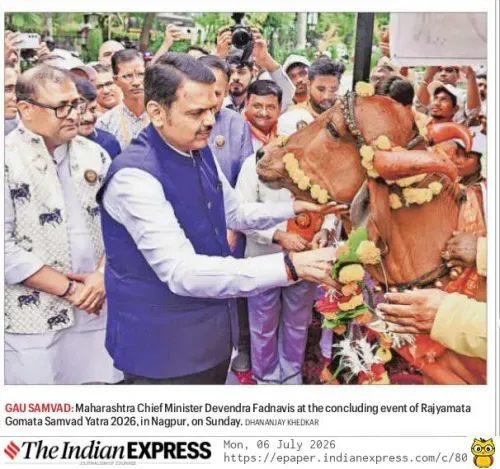
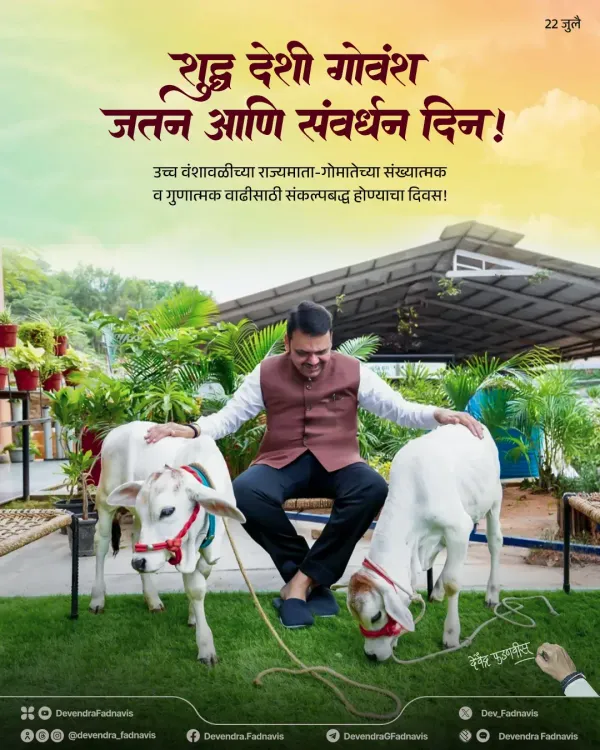
Maharashtra Chief Minister Devendra Fadnavis marked Shudh Desi Govansh Jatan and Sanvardhan Din on 22 July 2026, calling for collective resolve to protect indigenous cow breeds and linking their conservation to India's cultural heritage and agricultural sustainability.
Key Takeaways
Devendra Fadnavis posted on 22 July 2026 to mark Shudh Desi Govansh Jatan and Sanvardhan Din , dedicated to indigenous cow conservation.
He called for both quantitative and qualitative growth of high-pedigree native cattle, using the title Rajyamata Gomata — a designation specific to Maharashtra .
The post aligns with the Rashtriya Gokul Mission (2014) and the Rashtriya Kamdhenu Aayog (2019) , two central government frameworks for desi breed conservation.
Key stakeholders include livestock farmers and indigenous cattle breeders across Maharashtra's rural districts.
The messaging follows a consistent pattern in BJP-ruled states of linking bovine heritage to cultural identity and agricultural policy.
Follow-up state government orders on breed conservation centres or farmer subsidies are being watched by policy observers.
Maharashtra Chief Minister Devendra Fadnavis on Wednesday, 22 July 2026, marked Shudh Desi Govansh Jatan and Sanvardhan Din — a day dedicated to the conservation of indigenous cow breeds — with a pledge-driven message urging citizens to commit to the quantitative and qualitative growth of native cattle. The Chief Minister framed indigenous cows as a symbol of India's rich cultural heritage and called for collective resolve in their protection and preservation.
Context
Posting in a mix of English and Marathi, Fadnavis wrote: 'Indigenous cows are a symbol of India's rich cultural heritage; on Shudh Desi Govansh Jatan and Sanvardhan Din, let us pledge to protect and preserve them!' In Marathi, he added — चला, उच्च वंशावळीच्या राज्यमाता-गोमातेच्या संख्यात्मक व गुणात्मक वाढीसाठी, त्यांच्या संवर्धनासाठी संकल्पबद्ध होऊया! — ('Come, let us resolve for the numerical and qualitative growth of the high-pedigree Rajyamata-Gomata and her conservation!'). The post carried the hashtags #DesiCowConservation, #Kamdhenu, and #Maharashtra, signalling an alignment with both state and national-level conservation frameworks.
Policy Backdrop
The messaging connects directly to two central government initiatives. The Rashtriya Gokul Mission, launched in 2014, was designed to conserve and develop indigenous bovine breeds through selective breeding programmes and dedicated infrastructure support. Five years later, the Rashtriya Kamdhenu Aayog was constituted in 2019 to advise on promoting a cow-based economy and expanding desi cattle populations across states.
Maharashtra, a western Indian state with a large rural livestock sector, has seen successive governments implement cattle-related policies. The reference to Rajyamata Gomata — a title accorded to the indigenous cow in Maharashtra — reflects an existing legal and cultural framework within the state that elevates the status of native breeds beyond agriculture alone. The Chief Minister's invocation of 'high-pedigree' lineage (उच्च वंशावळ) points to breed-improvement goals alongside symbolic recognition.
Stakeholders and Impact
The primary stakeholders are livestock farmers and indigenous cattle breeders across Maharashtra's rural districts, who stand to benefit from any follow-up policy action — such as subsidies, breed conservation centres, or awareness drives — that the observance day may catalyse. For these communities, desi cow conservation is not merely cultural but directly linked to livelihoods, with native breeds often valued for A2 milk output, draught capacity, and lower input costs compared to crossbred animals.
The broader public messaging also targets urban consumers and civil society, framing indigenous cow conservation as a shared cultural responsibility rather than a purely agricultural concern. The hashtag #Kamdhenu — referencing the mythological wish-fulfilling cow — reinforces this cultural dimension for a wide digital audience.
What's Next
Observers will watch for any follow-up government orders from the Maharashtra administration regarding breed conservation centres, financial incentives for desi cattle rearers, or expanded goshala (cow shelter) infrastructure. At the national level, the release of updated livestock census figures will provide a data baseline against which the impact of conservation messaging and policy can be measured. Fadnavis's post, consistent with BJP-ruled states' pattern of linking bovine heritage to agricultural sustainability and cultural identity, signals that indigenous cattle conservation will remain a visible policy and cultural priority for the Maharashtra government in the months ahead.
Point of View
Indigenous cattle conservation — without the political friction of a formal announcement. By invoking the title 'Rajyamata Gomata' and the Kamdhenu symbol, the messaging simultaneously addresses rural livestock farmers through a welfare lens and urban audiences through a heritage lens. This dual framing has proven durable across multiple election cycles in Maharashtra and other BJP-ruled states. The real test will come in whether the observance translates into measurable policy action — subsidies, goshala infrastructure, or breed improvement targets — in the months that follow.
NationPress
20 Oct 2026
Frequently Asked Questions
What is Shudh Desi Govansh Jatan and Sanvardhan Din?
Shudh Desi Govansh Jatan and Sanvardhan Din is an observance dedicated to the protection and conservation of indigenous cow breeds in India, marked through official messaging and awareness campaigns focused on increasing both the numbers and quality of native cattle.
What did CM Devendra Fadnavis say about indigenous cows?
CM Devendra Fadnavis called indigenous cows a symbol of India's rich cultural heritage and urged citizens to pledge their commitment to the quantitative and qualitative growth of high-pedigree native breeds, using the Marathi title 'Rajyamata Gomata' for the indigenous cow.
What is the Rashtriya Gokul Mission?
The Rashtriya Gokul Mission is a central government scheme launched in 2014 to conserve and develop indigenous bovine breeds in India through selective breeding programmes and dedicated infrastructure support such as Gokul Grams.
What is the Rashtriya Kamdhenu Aayog?
The Rashtriya Kamdhenu Aayog is a body constituted by the central government in 2019 to advise on the promotion of a cow-based economy and the expansion of desi cattle populations across Indian states.
Why is the indigenous cow called Rajyamata Gomata in Maharashtra?
Maharashtra has accorded the indigenous cow the title 'Rajyamata Gomata' — meaning 'state mother, cow mother' — as part of a legal and cultural framework that elevates the status of native breeds, recognising their significance to the state's agricultural heritage and rural communities.