CM Bhajan Lal Hails India-New Zealand FTA Implementation

Synopsis
Rajasthan CM Bhajan Lal Sharma welcomed the India-New Zealand FTA implementation on 20 October 2026, highlighting 100% duty-free access for Indian goods and its potential to boost farmers, exporters, and the Make in India and Viksit Bharat agendas.
Key Takeaways
Rajasthan Chief Minister Bhajan Lal Sharma welcomed the implementation of the India-New Zealand Free Trade Agreement on 20 October 2026 .
The deal grants 100% duty-free access for Indian products in the New Zealand market.
Sharma said the agreement will open new markets for farmers, entrepreneurs, and exporters .
India-New Zealand FTA negotiations originally began in 2010 and were stalled for over a decade.
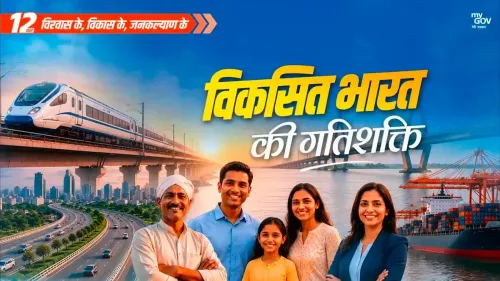
The agreement is framed as advancing both the Make in India manufacturing push and the broader Viksit Bharat development goal.
Key areas to watch include sector-specific tariff schedules, actual export growth, and the deal's review mechanisms.
A trade agreement more than a decade in the making has finally crossed the finish line — and Rajasthan Chief Minister Bhajan Lal Sharma says it signals nothing less than India's emergence as an undeniable global economic force. On Tuesday, 20 October 2026, the BJP leader took to X to welcome the implementation of the India-New Zealand Free Trade Agreement, calling it a landmark in India's march from Atmanirbhar Bharat (self-reliant India) to Viksit Bharat (developed India).
Sharma's post hailed Prime Minister Narendra Modi's 'visionary leadership' as the driving force behind the deal, noting that 100% duty-free access for Indian goods into New Zealand would 'open the doors of new markets for farmers, entrepreneurs and exporters.' Those are three constituencies that sit at the very heart of India's export ambitions — and the promise of zero tariffs is a direct shot at raising their global competitiveness.
A Stalled Pact That Finally Moved
The India-New Zealand FTA has a long and slow backstory. Negotiations were first launched in 2010 but stalled repeatedly over the following decade-and-a-half, casualties of divergent priorities on agriculture, services, and intellectual property. The agreement's implementation in 2026 closes that gap — making it one of the longer-gestating bilateral trade deals India has managed to bring over the line.
India has been on an FTA sprint in recent years, inking or reviving agreements with partners across the developed world as part of a deliberate strategy to raise its share of global trade. The Make in India initiative, launched in 2014, provides the manufacturing backbone that trade deals like this one are designed to accelerate: domestic production gets a demand boost when foreign tariff walls come down.
What Duty-Free Access Means for Indian Exporters
The centrepiece of Sharma's enthusiasm is the 100% duty-free access provision for Indian products in the New Zealand market. For exporters of textiles, pharmaceuticals, engineering goods, and agricultural produce — sectors where Indian producers have built competitive strength — elimination of import duties in a high-income market like New Zealand directly improves price competitiveness against rivals from other countries that have their own trade arrangements with Wellington.
Sharma framed the agreement as expanding possibilities for 'investment, job creation and industrial development,' suggesting the gains stretch well beyond the export ledger. Inbound investment interest, drawn by the formalised trade architecture, could compound the direct export benefits over time.
Fitting Into the Viksit Bharat Blueprint
The BJP government's overarching economic narrative runs from Atmanirbhar Bharat — building domestic self-sufficiency — to Viksit Bharat, the goal of becoming a fully developed economy. Trade agreements with developed-world partners are a deliberate bridge between those two poles: they validate domestic production capacity by exposing it to competitive international markets while simultaneously generating the export revenues and investment flows that fuel development.
Sharma's framing places the India-New Zealand FTA squarely inside that arc — not as an isolated diplomatic win, but as one more weight on the scale as India builds toward its 2047 developed-nation target. What happens next on the ground — actual export volume growth, sector-specific tariff schedules taking effect, and whether review mechanisms hold — will determine whether the ambition translates into measurable gains for the farmers and entrepreneurs Sharma has named.
Point of View
Arriving more than fifteen years after negotiations began, fits into a broader BJP-era strategy of using bilateral trade agreements to validate and accelerate domestic manufacturing — connecting Make in India's supply-side ambitions directly to demand-side market access abroad. For Rajasthan, a state with significant agricultural and textile export potential, zero-tariff access to a high-income market carries real constituency value, explaining Sharma's enthusiastic endorsement. The framing of the deal within the Viksit Bharat 2047 narrative is also deliberate: it positions trade liberalisation not as a concession to globalisation but as an instrument of national development — a politically useful recast. The harder test, as with all FTAs, will be whether the tariff wins translate into measurable export growth or whether structural bottlenecks — logistics, quality certification, trade finance — blunt the gains before they reach the farmers and exporters named in Sharma's post.
NationPress
20 Oct 2026
Frequently Asked Questions
What is the India-New Zealand Free Trade Agreement?
The India-New Zealand FTA is a bilateral trade agreement that grants Indian goods 100% duty-free access to the New Zealand market. Negotiations began in 2010 but stalled for over a decade before implementation.
How does the India-New Zealand FTA benefit Indian farmers and exporters?
By eliminating import tariffs on Indian goods in New Zealand, the FTA improves price competitiveness for Indian agricultural produce, textiles, pharmaceuticals, and engineering goods in a high-income market.
What did Rajasthan CM Bhajan Lal Sharma say about the India-New Zealand FTA?
Sharma called the FTA's implementation a reflection of India's growing economic power, saying it will open new markets for farmers, entrepreneurs and exporters and give fresh momentum to Make in India.
What is Make in India and how does the New Zealand FTA connect to it?
Make in India is a central government initiative launched in 2014 to boost domestic manufacturing and exports. The New Zealand FTA creates new demand for Indian-made goods abroad, directly supporting the scheme's goals.
What is the Viksit Bharat goal mentioned in the context of this trade deal?
Viksit Bharat — 'Developed India' — is the Indian government's target of achieving developed-nation status by 2047. Trade agreements like the India-New Zealand FTA are positioned as key steps in that journey.