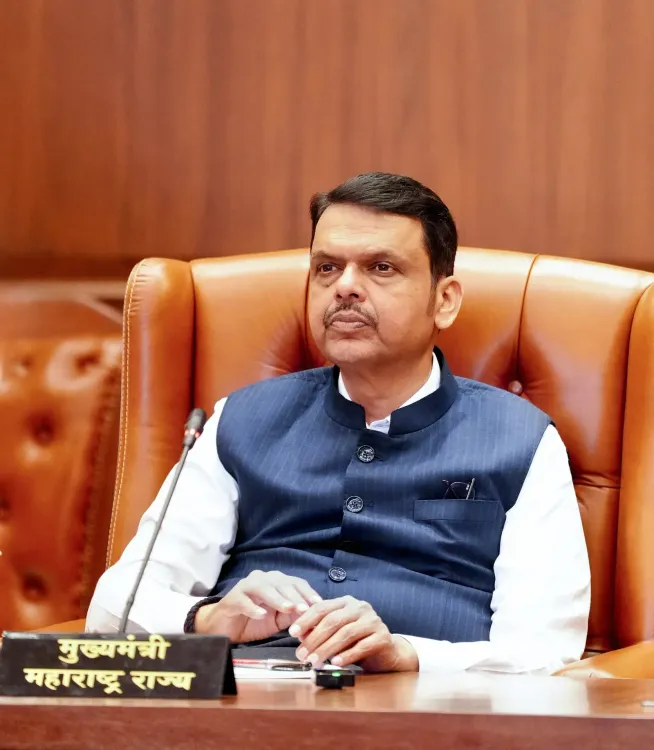
CM Fadnavis Chairs Green Maharashtra Commission Meet
Synopsis
Maharashtra CM Devendra Fadnavis chaired the Green Maharashtra Commission on 30 June 2026 at Vidhan Bhavan, directing GIS-based land mapping, PPP, and Gram Panchayat roadmaps to achieve an 18-crore-tree plantation target this year under the VB-G RAM G scheme.
Key Takeaways
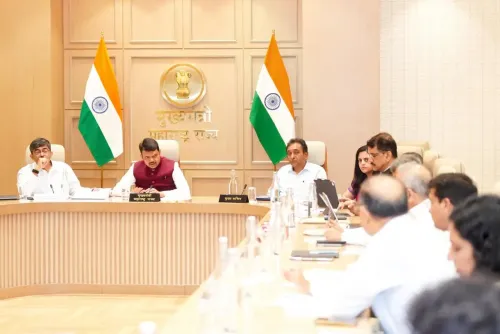
CM Devendra Fadnavis chaired a Green Maharashtra Commission meeting at Vidhan Bhavan, Mumbai on 30 June 2026 .
Maharashtra has set a target of planting 18 crore trees in 2026 , requiring coordinated state-wide action.
A GIS-based land bank has been created by mapping suitable land parcels across the state for systematic plantation.
Every Gram Panchayat has been directed to prepare a tree plantation roadmap under the VB-G RAM G scheme .
Public-private partnerships (PPP) with NGOs, private institutions, and agricultural universities are to be leveraged for sapling supply and land use.
Minister Ganesh Naik and senior officials attended the meeting, signalling cross-ministerial commitment to the initiative.
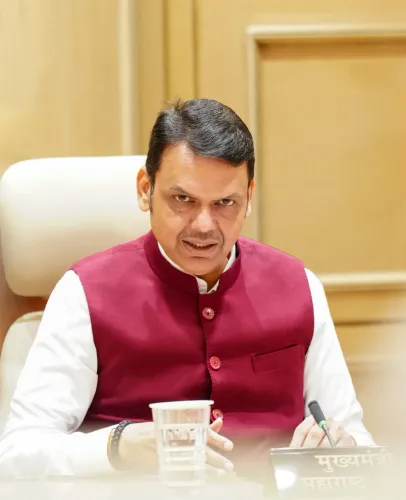
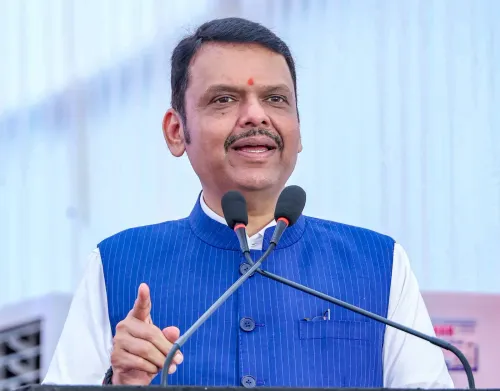
Maharashtra Chief Minister Devendra Fadnavis chaired a meeting of the Green Maharashtra Commission at Vidhan Bhavan, Mumbai, on Tuesday, 30 June 2026, directing officials to transform the state's tree plantation drive into a large-scale, sustainable movement powered by advanced technology, public-private partnerships, and Gram Panchayat-level planning.
Context
At the meeting, CM Fadnavis underscored the scale of the state's ambition — planting 18 crore trees in the current year — describing the target as requiring 'meticulous planning and coordinated participation from all stakeholders.' Minister Ganesh Naik and senior state officials were present at the deliberations. The Chief Minister stressed that seamless inter-departmental coordination would be central to achieving the goal.
Fadnavis specifically instructed that special emphasis be placed on the VB-G RAM G scheme, under which tree plantation is to be scaled up across the state. He directed that every Gram Panchayat prepare a dedicated tree plantation roadmap to ensure accountability and effective on-ground execution at the village level.
Policy Backdrop
A key infrastructure element highlighted at the meeting was a GIS-based 'land bank' — a digital mapping exercise that identifies suitable land parcels across Maharashtra for plantation activity. The land bank is designed to enable systematic and efficient deployment of saplings, removing guesswork from site selection.
The Chief Minister also directed that coordinated planning with private institutions, NGOs, and other stakeholders be undertaken to ensure adequate sapling availability before the next plantation season. He further emphasised optimal utilisation of land available with agricultural universities and other institutions for tree plantation purposes, broadening the base of participating entities beyond government departments alone.
Stakeholders and Impact
The push for public-private partnerships (PPP) signals an intent to move beyond purely government-funded plantation drives, drawing in corporate social responsibility commitments, civil society, and academic institutions. With Gram Panchayats tasked to prepare individual roadmaps, the initiative devolves responsibility to the grassroots level, potentially improving local ownership and survival rates of planted saplings.
The VB-G RAM G scheme and the GIS land bank together represent a shift toward data-driven, technology-enabled environmental governance in Maharashtra — a departure from earlier, largely manual plantation campaigns. The involvement of Minister Ganesh Naik, who oversees relevant portfolios, signals cross-ministerial buy-in for the programme.
What's Next
With the plantation season approaching, the immediate priority will be ensuring sapling supply chains are in place through NGO and private-sector coordination, as directed by CM Fadnavis. Gram Panchayats across Maharashtra are now expected to submit plantation roadmaps, which will serve as the operational backbone of the 18-crore-tree target for 2026.
The Green Maharashtra Commission's ability to enforce inter-departmental coordination and track GIS-mapped plantation sites will be closely watched as a test of whether the state can convert ambitious numerical targets into verifiable, sustained green cover — a challenge that has historically plagued large-scale plantation drives across India.
Point of View
The Fadnavis government is attempting to address the credibility deficit that has long shadowed India's large-scale tree plantation announcements — where targets are declared but survival audits rarely follow. The PPP mandate and the sapling supply-chain directive suggest the administration is aware that past drives faltered not at the planting stage but in logistics and follow-through. If the GIS land bank is made publicly auditable, it could set a governance benchmark for environmental programmes in large Indian states. The broader political signal is that the BJP-led Maharashtra government is positioning green infrastructure as a development pillar heading into a period of heightened scrutiny over urban air quality and climate commitments.
NationPress
29 Sept 2026
Frequently Asked Questions
What is the Green Maharashtra Commission?
The Green Maharashtra Commission is a state-level body overseeing Maharashtra's large-scale tree plantation and environmental sustainability programmes, chaired by the Chief Minister.
What is Maharashtra's tree plantation target for 2026?
Maharashtra has set a target of planting 18 crore trees in 2026, as directed by Chief Minister Devendra Fadnavis at the Green Maharashtra Commission meeting on 30 June 2026.
What is the VB-G RAM G scheme in Maharashtra?
The VB-G RAM G scheme is a Maharashtra government programme under which tree plantation is being scaled up across the state, with Gram Panchayats directed to prepare individual plantation roadmaps.
What is the GIS land bank for tree plantation in Maharashtra?
The GIS-based land bank is a digital mapping initiative that identifies and records suitable land parcels across Maharashtra for tree plantation, enabling systematic and efficient sapling deployment.
How will Gram Panchayats be involved in Maharashtra's tree plantation drive?
CM Fadnavis has directed every Gram Panchayat in Maharashtra to prepare a dedicated tree plantation roadmap, devolving accountability to the village level and ensuring ground-level execution of the 18-crore-tree target.