CM Fadnavis Pushes to Unlock Mumbai Airport Funnel Zone Redevelopment
Synopsis
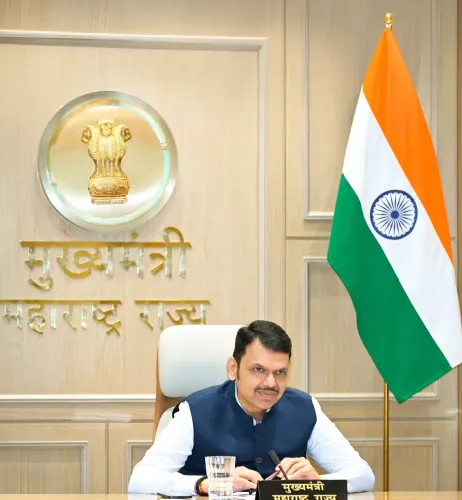
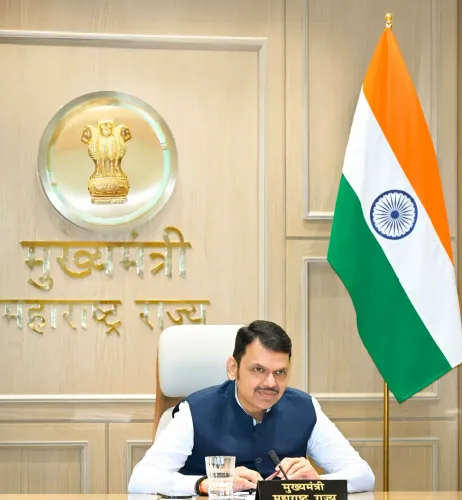
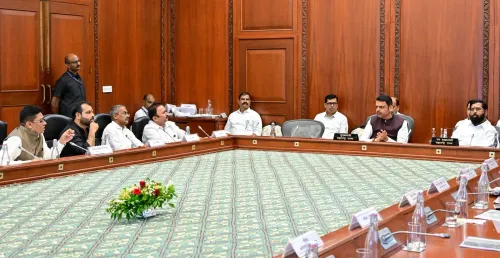
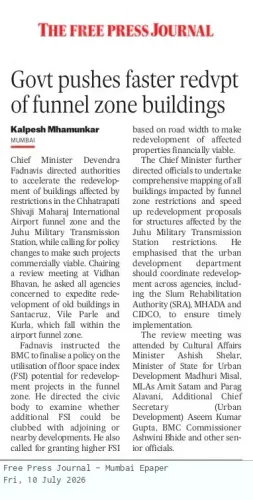
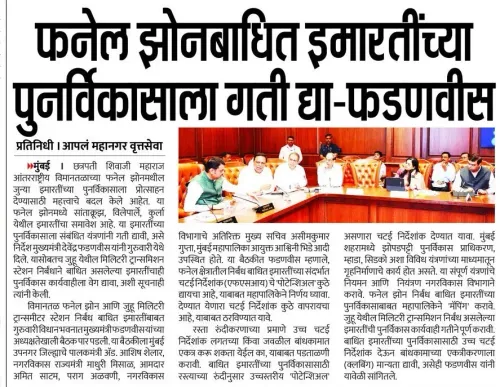
Chief Minister Devendra Fadnavis on 9 July 2026 chaired a Vidhan Bhavan meeting directing the BMC to map airport funnel-zone buildings in Santacruz, Vile Parle and Kurla, and to enable higher FSI clubbing to accelerate redevelopment stalled by CSIA and Juhu Military Transmitter Station restrictions.
Key Takeaways
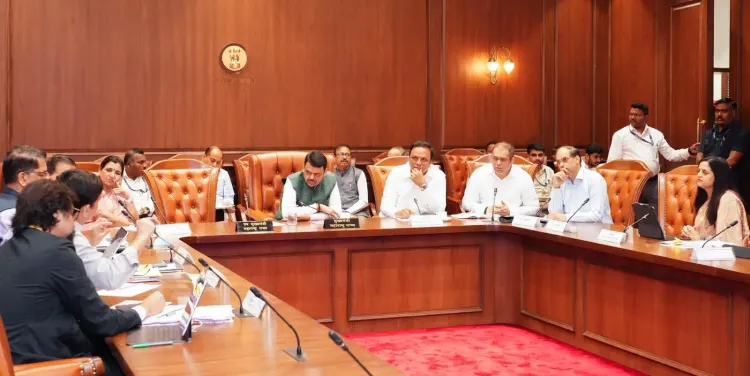
CM Devendra Fadnavis chaired a meeting at Vidhan Bhavan, Mumbai on 9 July 2026 on redevelopment of buildings restricted by the CSIA airport funnel zone and the Juhu Military Transmitter Station .
Buildings in Santacruz, Vile Parle, and Kurla fall within the airport funnel zone and have long been barred from full-height redevelopment.
The BMC has been directed to map all affected buildings and decide where FSI 'potential' is to be granted and utilised.
Higher FSI clubbing — consolidating FSI with adjacent developments, similar to road-widening norms — is to be explored and formally approved for affected zones.
The Urban Development Department is to uniformly regulate all housing agencies — SRA, MHADA, CIDCO — operating in Mumbai.
Redevelopment proceedings for Juhu Military Transmitter Station -affected buildings are to be completed swiftly with higher FSI and clubbing permissions.
The Chief Minister's Office of Maharashtra announced on 9 July 2026 that Chief Minister Devendra Fadnavis chaired a high-level meeting at Vidhan Bhavan, Mumbai, directing agencies to accelerate redevelopment of buildings restricted by the Chhatrapati Shivaji Maharaj International Airport funnel zone and the Juhu Military Transmitter Station.
Context
The meeting addressed a long-standing urban constraint: buildings in Santacruz, Vile Parle, and Kurla have faced strict height limits because they fall within the airport's funnel zone — the protected airspace corridor around CSIA's runways. Separately, structures near the Juhu Military Transmitter Station have been similarly stalled by defence-related restrictions. CM Fadnavis directed all concerned agencies to 'पुनर्विकासाला गती द्यावी' (accelerate the redevelopment process) without delay.
The post quoted the Chief Minister's instructions: relevant agencies must speed up redevelopment proceedings for buildings affected by both the airport funnel zone and the Juhu transmitter station restrictions.
Policy Backdrop
Mumbai's airport funnel zone height restrictions have been in force since the expansion of CSIA's runways in the early 2000s, creating a belt of structurally deteriorating buildings whose owners could not rebuild to viable heights. The meeting introduced key changes to encourage redevelopment of these old structures by revising how Floor Space Index (FSI) — locally known as chatai nirdeshank — is allocated and used.
CM Fadnavis directed the Brihanmumbai Municipal Corporation (BMC) to decide where the 'potential' FSI for funnel-zone-affected buildings should be granted and where it may be utilised. He also asked the BMC to explore whether higher FSI, on the model of road-widening schemes, could be 'clubbed' — consolidated — with adjacent or nearby construction projects. Buildings affected by the restrictions are to be granted higher FSI in proportion to the road width in front of them, and clubbing of such FSI with nearby developments is to be formally approved.
For the Juhu Military Transmitter Station zone, the Chief Minister directed that redevelopment proceedings be completed swiftly and that higher FSI with clubbing permissions be extended to affected buildings there as well.
Stakeholders and Impact
The decisions directly affect building owners and residents in Santacruz, Vile Parle, Kurla, and Juhu — dense, middle-income and upper-middle-income neighbourhoods where many structures are decades old but have been unable to be legally rebuilt to modern heights. The BMC was specifically tasked with conducting a mapping exercise of all funnel-zone-affected buildings as a prerequisite for implementing FSI transfers and clubbing approvals.
CM Fadnavis also directed that housing redevelopment in Mumbai — carried out through multiple agencies including the Slum Rehabilitation Authority (SRA), MHADA, and CIDCO — must be regulated and monitored uniformly by the Urban Development Department, bringing greater coordination across the city's fragmented housing ecosystem.
The meeting was attended by Minister Adv. Ashish Shelar, Minister of State Madhuri Misal, MLA Ameet Satam, MLA Parag Alavani, and senior government officials.
What's Next
The immediate follow-up rests with the BMC, which must complete the mapping of funnel-zone buildings and issue formal decisions on FSI potential transfer and clubbing rules. Coordination with defence authorities on the Juhu Military Transmitter Station restrictions will also be critical before redevelopment in that zone can formally proceed.
If implemented, the changes could unlock redevelopment of a significant number of ageing buildings across some of Mumbai's most densely populated western suburbs, easing housing supply constraints that have persisted for over two decades under legacy aviation and defence regulations.
Point of View
The government is essentially creating a transferable-development-rights mechanism tailored to restricted zones, which could significantly improve redevelopment economics for building owners who have waited decades. The directive to bring SRA, MHADA, and CIDCO under unified Urban Development Department oversight addresses a chronic coordination failure in Mumbai's housing delivery system. Whether the BMC mapping exercise and defence authority negotiations translate into on-ground approvals will be the real test of this political momentum.
NationPress
8 Oct 2026
Frequently Asked Questions
What is the airport funnel zone in Mumbai?
The airport funnel zone is the protected airspace corridor around the runways of Chhatrapati Shivaji Maharaj International Airport that imposes strict height restrictions on buildings in Santacruz, Vile Parle, and Kurla to ensure aircraft safety during takeoff and landing.
Which areas are affected by the CSIA funnel zone building restrictions?
Buildings in Santacruz, Vile Parle, and Kurla in Mumbai fall within the CSIA funnel zone and have faced height and construction limits that have prevented full redevelopment for decades.
What is FSI clubbing and why does it matter for Mumbai redevelopment?
FSI (Floor Space Index) clubbing allows the additional FSI granted to a restricted building to be consolidated with a nearby or adjacent development, making redevelopment financially viable even when the original plot cannot absorb the full FSI due to height limits.
What is the Juhu Military Transmitter Station and how does it affect buildings?
The Juhu Military Transmitter Station is a defence facility in Juhu, Mumbai, whose operational requirements impose construction restrictions on surrounding buildings, preventing their redevelopment or vertical expansion.
What has the Maharashtra government decided about Mumbai housing agencies like SRA and MHADA?
CM Devendra Fadnavis directed that all housing agencies operating in Mumbai — including the Slum Rehabilitation Authority (SRA) , MHADA , and CIDCO — be regulated and monitored uniformly by the Urban Development Department to improve coordination.