CM Fadnavis Chairs Meet on Juhu Funnel Zone Building Rehab
Synopsis
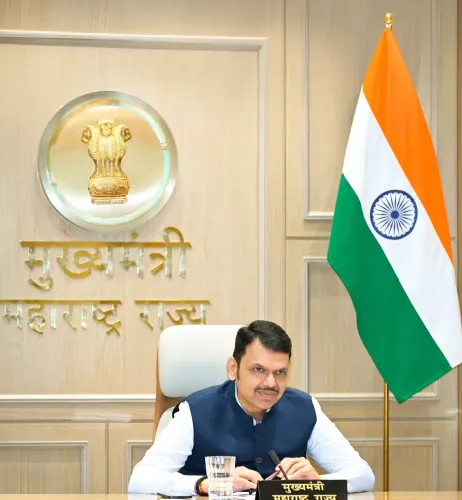
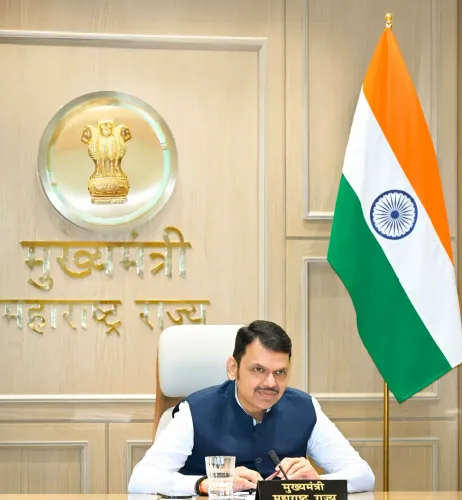
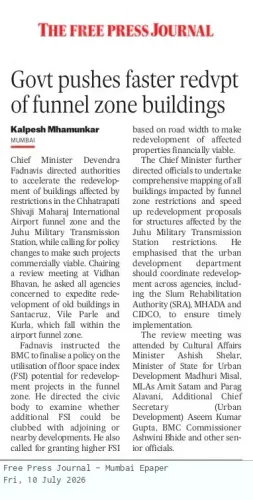
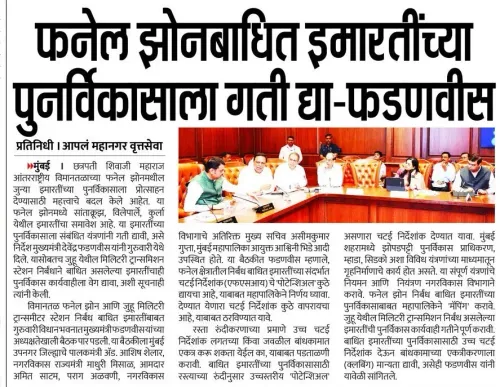
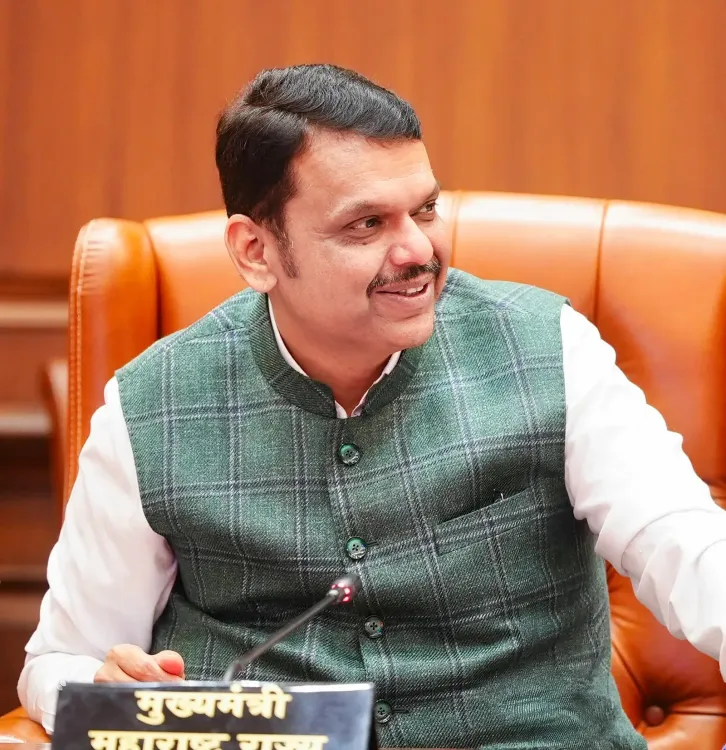
Chief Minister Devendra Fadnavis chaired a meeting at Vidhan Bhavan on 9 July 2026 with ministers and MLAs to address rehabilitation of Juhu buildings stalled by Airport Funnel Zone and Military Transmitter Station restrictions — a long-standing urban redevelopment challenge in western Mumbai.
Key Takeaways
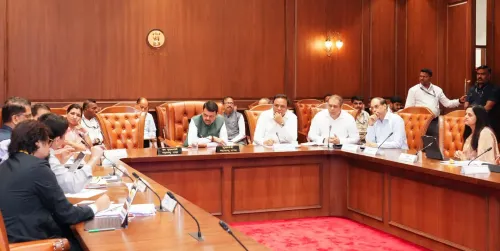
CM Devendra Fadnavis chaired the meeting at Vidhan Bhavan, Mumbai on 9 July 2026 at 12:55 pm .
The meeting focused on rehabilitation of buildings in Juhu affected by Airport Funnel Zone and Military Transmitter Station restrictions.
Attendees included Minister Ashish Shelar , MoS Madhuri Misal , MLA Ameet Satam , MLA Parag Alavani , and senior officials.
Height and land-use curbs in Juhu stem from Chhatrapati Shivaji Maharaj International Airport 's approach corridors and a defence transmitter exclusion zone.
Any rehabilitation package will require coordination between the state government, Airports Authority of India , and the Ministry of Defence .
Follow-up notifications from the Urban Development Department or MHADA are expected to outline next steps.
The Chief Minister's Office of Maharashtra announced on 9 July 2026 that Chief Minister Devendra Fadnavis chaired a high-level meeting at Vidhan Bhavan, Mumbai, to address the rehabilitation of buildings affected by restrictions imposed by the Airport Funnel Zone and the Military Transmitter Station in Juhu.
The meeting, held at 12:55 pm, was attended by Minister Ashish Shelar, Minister of State Madhuri Misal, MLA Ameet Satam, MLA Parag Alavani, and senior government officials. The trilingual post — in English, Marathi, and Hindi — underscored the cross-community significance of the issue for Juhu and its surrounding suburbs.
Context
Juhu, a densely populated suburb in western Mumbai, sits within the approach corridors of Chhatrapati Shivaji Maharaj International Airport and in proximity to a defence transmitter installation. These dual constraints — aviation safety height limits and military exclusion zones — have long prevented residents and building owners from redeveloping or even carrying out routine repairs on their properties.
The post states the meeting was convened 'विमानतळ फनेल झोन तसेच जुहू येथील मिलिटरी ट्रान्समीटर स्टेशनच्या निर्बंधांमुळे बाधित इमारतींच्या पुनर्वसनासंदर्भात' [regarding the rehabilitation of buildings affected by restrictions of the Airport Funnel Zone and the Military Transmitter Station at Juhu].
Policy Backdrop
Height and land-use restrictions in Mumbai's western suburbs were formalised during the 2006–2012 redevelopment of the airport under a public-private partnership model. Buildings falling within the funnel zone — the protected airspace approach corridor — are barred from exceeding prescribed heights, effectively freezing redevelopment in high-density residential pockets.
Maharashtra administrations have periodically revisited these constraints, seeking coordination between the state's Urban Development Department, airport authorities, and defence establishments. Such reviews are complex because any revision to funnel-zone maps requires clearance from the Airports Authority of India and, separately, from the Ministry of Defence for transmitter-related exclusions.
Stakeholders and Impact
The primary stakeholders are Juhu residents and building owners whose properties have remained in a legal and structural limbo — unable to be demolished, rebuilt, or sold at market value due to the dual restrictions. MLA Ameet Satam, who represents the Andheri-Juhu constituency, has been a consistent voice for these constituents at the legislative level.
Minister Ashish Shelar oversees urban development portfolios with direct bearing on local body approvals, making his presence at the meeting significant for any downstream policy notification. MoS Madhuri Misal's attendance signals executive-level commitment to moving the matter beyond deliberation.
What's Next
Observers will watch for follow-up notifications from the Urban Development Department or MHADA outlining a concrete rehabilitation package, revised funnel-zone boundary maps, or a coordinated inter-ministerial framework involving defence authorities. Any formal scheme would need alignment between the state government, the airport operator, and the central defence establishment before affected residents see on-ground relief.
The Fadnavis administration's decision to hold this review at Vidhan Bhavan — the seat of the Maharashtra legislature — signals an intent to give the issue institutional weight and legislative visibility ahead of any formal policy announcement.
Point of View
The meeting reflects the political salience of Juhu's stalled redevelopment for the ruling alliance in Mumbai's western suburbs. Resolving funnel-zone restrictions requires navigating central government turf — both aviation and defence — making this as much a centre-state coordination challenge as a state policy one. Progress, if any, will be a test of the Fadnavis administration's ability to unlock urban redevelopment in zones where state authority alone is insufficient.
NationPress
8 Oct 2026
Frequently Asked Questions
What is the Airport Funnel Zone in Juhu, Mumbai?
The Airport Funnel Zone is a protected airspace corridor around Chhatrapati Shivaji Maharaj International Airport that imposes strict height limits on buildings in its approach path, including parts of Juhu . Buildings within this zone cannot be built above prescribed heights, which has frozen redevelopment in several residential pockets of western Mumbai.
Why are Juhu buildings affected by Military Transmitter Station restrictions?
A Military Transmitter Station in Juhu imposes a separate exclusion zone around its installation, restricting construction and land use in the vicinity to protect defence communications infrastructure. Residents and building owners in the affected area cannot redevelop their properties without clearance from defence authorities.
What did CM Fadnavis's meeting on 9 July 2026 decide for Juhu residents?
The meeting chaired by CM Devendra Fadnavis at Vidhan Bhavan on 9 July 2026 reviewed the rehabilitation of buildings affected by both the Airport Funnel Zone and Military Transmitter Station restrictions in Juhu. No specific scheme details or timelines have been confirmed from the public record as yet; follow-up notifications from the Urban Development Department or MHADA are awaited.
Who attended the Maharashtra government meeting on Juhu building rehabilitation?
Minister Ashish Shelar , Minister of State Madhuri Misal , MLA Ameet Satam , MLA Parag Alavani , and senior government officials attended the meeting alongside CM Devendra Fadnavis .
What agency needs to approve changes to Mumbai's airport funnel zone maps?
Any revision to funnel-zone boundary maps requires clearance from the Airports Authority of India at the central level, while restrictions linked to the Military Transmitter Station fall under the purview of the Ministry of Defence . Both approvals are needed before the Maharashtra state government can offer substantive relief to affected building owners.