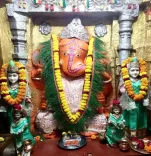
CM Fadnavis Frames Shirdi as Faith and Strength Hub
Synopsis
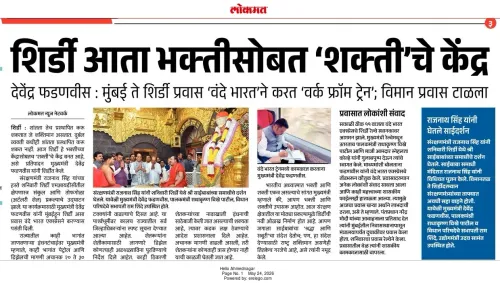
Chief Minister Devendra Fadnavis, via the CMO Maharashtra handle, described Shirdi as a centre of both devotion and strength on 24 May 2026, signalling the state's intent to develop the pilgrimage town as a broader economic and civic hub alongside its spiritual identity.
Key Takeaways
The CMO Maharashtra reposted a statement by CM Devendra Fadnavis on 24 May 2026 positioning Shirdi as a centre of strength alongside devotion.
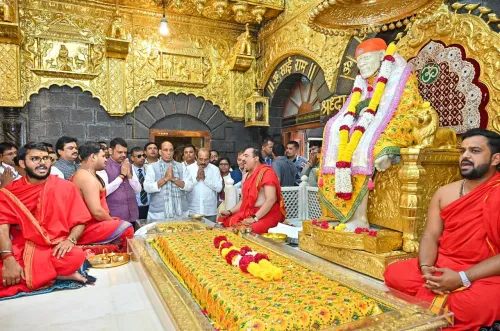
Shirdi in Ahmednagar district hosts the Sai Baba temple , one of India's most visited pilgrimage sites, drawing millions of visitors annually.
Maharashtra governments have consistently invested in pilgrimage infrastructure around Shirdi across multiple five-year plans.
The post's hashtags reference the Nibe Group , suggesting a possible private-sector dimension, though no specific project has been officially confirmed.
Potential follow-up announcements may include budget allocations or tenders for Shirdi-area roads, power, and civic amenities.
The state's approach pairs the site's spiritual character with economic development to drive regional growth in Ahmednagar district .
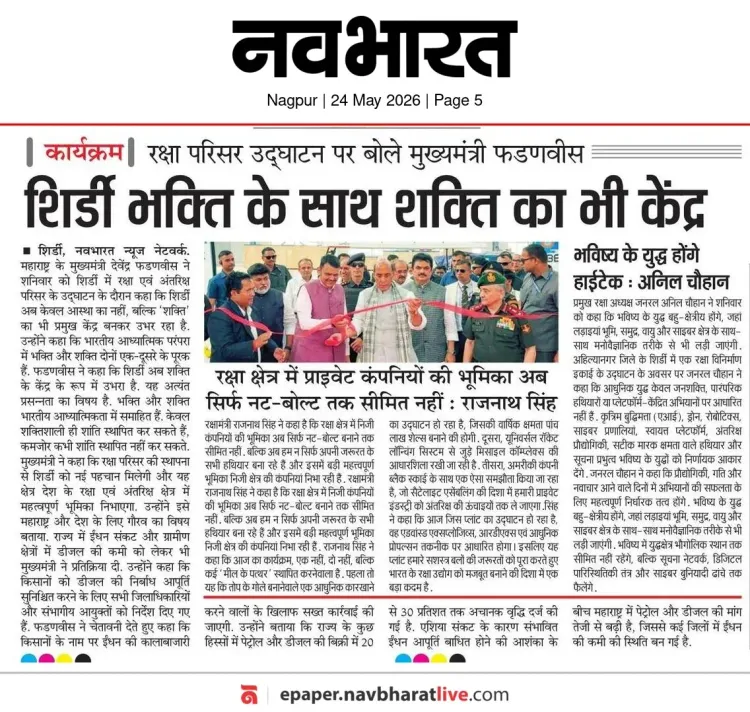
The Chief Minister's Office of Maharashtra on Sunday, 24 May 2026 reposted a statement attributed to Chief Minister Devendra Fadnavis describing Shirdi as not merely a centre of devotion but also a centre of strength, signalling the state government's intent to position the pilgrimage town as a broader development anchor.
The post, shared from the official CMO handle, carried the Hindi phrase 'Shirdi bhakti ke saath shakti ka bhi kendra' ('Shirdi is a centre of strength alongside devotion'), pairing the spiritual identity of the town with an assertion of its growing civic and economic importance.
Context
Shirdi, located in the Ahmednagar district of Maharashtra, is home to the Sai Baba temple, one of the most visited religious sites in India, drawing millions of pilgrims annually. The town's economy is heavily tied to religious tourism, with hospitality, transport, and local trade revolving around visitor footfall. Chief Minister Devendra Fadnavis has in previous terms championed infrastructure upgrades across the state, and Shirdi has repeatedly featured in connectivity and amenity improvement plans.
Policy Backdrop
Maharashtra governments across successive administrations have invested in upgrading pilgrimage infrastructure around Shirdi, spanning road connectivity, power supply, and civic amenities, as part of broader five-year development frameworks. The current state government under Fadnavis has continued this lineage, framing religious tourism as a lever for regional economic activity without altering the site's spiritual character. The pairing of 'bhakti' (devotion) and 'shakti' (strength) in the Chief Minister's framing reflects a deliberate dual narrative: honouring the sacred while asserting developmental ambition.
Stakeholders and Impact
The primary beneficiaries of any Shirdi-focused development push are the estimated millions of pilgrims who visit annually, along with the local economy of traders, hoteliers, and transport operators who depend on steady visitor volumes. Improved infrastructure and civic services directly affect the quality of the pilgrimage experience and the town's capacity to absorb growing footfall. Broader Ahmednagar district stakeholders, including residents and local businesses beyond the temple precinct, also stand to gain from enhanced connectivity and public works.
What's Next
The statement from the CMO is likely a precursor to more concrete announcements, with possible follow-up allocations in upcoming state budget sessions or tender notifications for Shirdi-area civic and infrastructure works. Observers will watch whether the 'strength' framing translates into specific project commitments, including airport capacity, road widening, or tourism facility upgrades around the Sai Baba temple complex. The involvement of the Nibe Group, referenced in the post's hashtags, may point to a private-sector partnership dimension, though no specific project details have been officially confirmed.
As Maharashtra continues to leverage its cultural assets for regional growth, Shirdi's evolution from a purely spiritual destination into a multi-dimensional development hub will serve as a test case for how the state balances religious heritage with economic modernisation.
Point of View
A strategy Maharashtra has pursued across administrations but which the current government appears keen to accelerate. The dual framing allows the BJP-led government to simultaneously appeal to its core devotional constituency and to investors or infrastructure partners interested in the region's growth potential. The reference to the Nibe Group in the post's hashtags hints at a public-private partnership dimension that, if confirmed, would mark a more structured commercialisation of Shirdi's tourism ecosystem than previous upgrades. Taken together, this positions Shirdi not just as a pilgrimage stop but as a model for how Maharashtra intends to monetise cultural heritage without diluting its religious identity.
NationPress
7 Oct 2026
Frequently Asked Questions
What did CM Devendra Fadnavis say about Shirdi?
CM Devendra Fadnavis described Shirdi as a centre of both devotion and strength, using the Hindi phrase 'Shirdi bhakti ke saath shakti ka bhi kendra', signalling the state government's intent to develop the town beyond its purely spiritual identity.
Why is Shirdi important for Maharashtra?
Shirdi, home to the Sai Baba temple in Ahmednagar district, attracts millions of pilgrims every year, making it one of Maharashtra's most significant religious tourism destinations and a major driver of the local economy.
What development plans exist for Shirdi?
Maharashtra governments have repeatedly included Shirdi in infrastructure and connectivity upgrades across successive five-year plans, covering roads, power supply, and civic amenities to support growing pilgrim volumes.
What is the Nibe Group's connection to Shirdi?
The Nibe Group was referenced in the hashtags of the CMO Maharashtra post about Shirdi, suggesting a possible private-sector involvement, though no specific project or partnership has been officially confirmed.
How does Maharashtra use religious tourism for economic growth?
The state government pairs the spiritual identity of pilgrimage sites like Shirdi with improved infrastructure and amenities to drive regional economic activity, positioning cultural assets as engines of local development without altering their religious character.