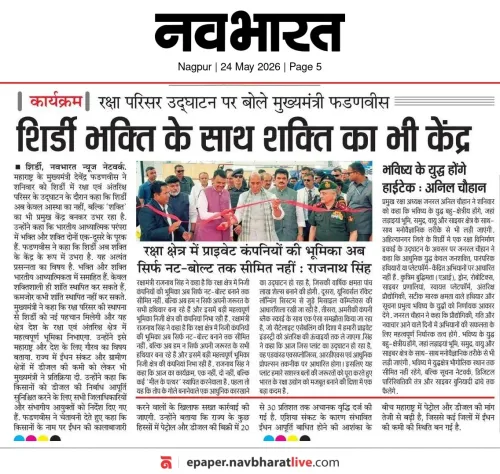
CM Fadnavis: Shirdi Now a Centre of 'Shakti' Alongside Devotion
Synopsis
Chief Minister Devendra Fadnavis has declared Shirdi a centre of 'Shakti' alongside devotion, signalling Maharashtra's intent to develop the Sai Baba pilgrimage town with expanded infrastructure — pairing its spiritual identity with physical and economic capacity.
Key Takeaways
The Chief Minister's Office of Maharashtra posted on 24 May 2026 declaring Shirdi a centre of both devotion and 'Shakti'.
Chief Minister Devendra Fadnavis is the named author of the message, directed at the CMO's official handle.
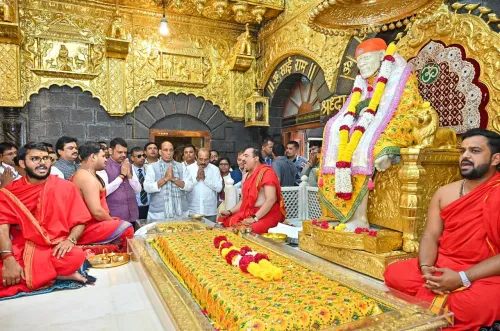
Shirdi, home to the Sai Baba Temple in Ahmednagar district , draws millions of pilgrims annually.
Maharashtra has a policy pattern of pairing major temple towns with infrastructure upgrades to boost local economies.
Specific project details, funding figures, and timelines had not been publicly disclosed at the time of the announcement.
Stakeholders include pilgrims, local hospitality businesses, and transport operators whose livelihoods depend on temple footfall.
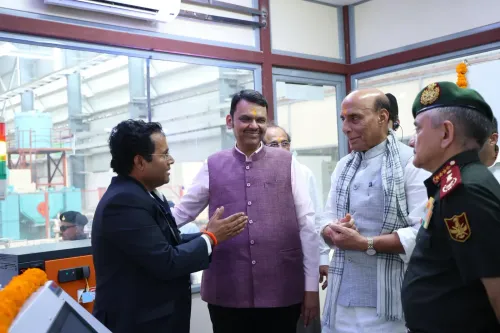
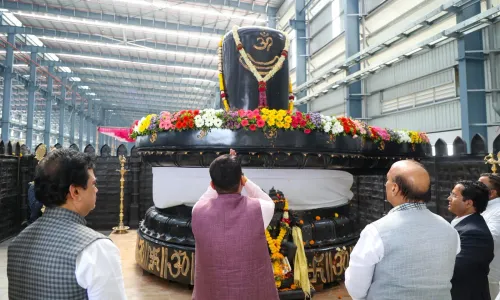
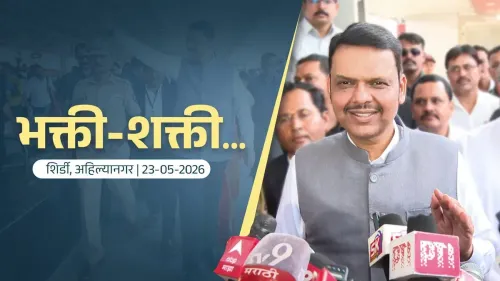
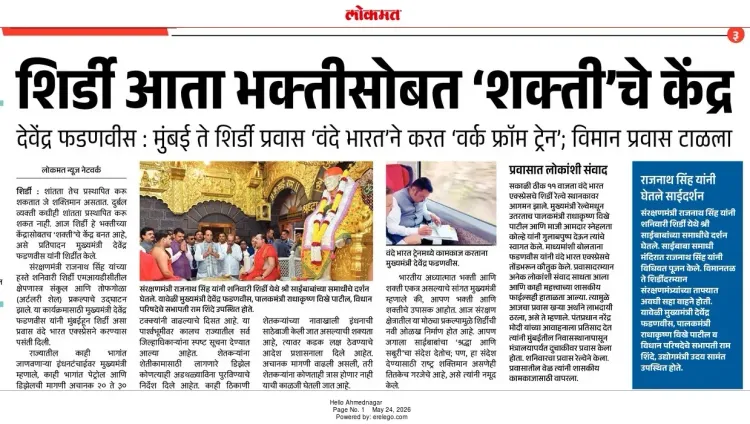
The Chief Minister's Office of Maharashtra on Sunday, 24 May 2026, shared a message from Chief Minister Devendra Fadnavis declaring that Shirdi — the revered pilgrimage town in Ahmednagar district — is now being developed as a centre of both devotion and 'Shakti' (strength or power), signalling a fresh push to pair the town's spiritual identity with physical and infrastructural capacity.
The post, written in Marathi, stated: 'Shirdi aata bhaktisoba 'Shakti'che kendra' — translated as 'Shirdi is now a centre of Shakti alongside devotion.' The brevity of the message, directed at the CMO's handle, suggests an announcement or development tied to an ongoing infrastructure or empowerment initiative at the site.
Context
Shirdi is one of Maharashtra's most visited pilgrimage destinations, drawing millions of devotees annually to the Sai Baba Temple. The town sits at the intersection of faith and large-scale public movement, making it a recurring focus of state-level planning. Chief Minister Devendra Fadnavis has across his tenures consistently prioritised development projects that blend religious tourism with modern civic infrastructure.
The pairing of the word 'bhakti' (devotion) with 'Shakti' (strength or power) in the official communication is deliberate — a framing that positions Shirdi not merely as a site of worship but as an emerging node of capability, whether economic, infrastructural, or social.
Policy Backdrop
Maharashtra governments have a documented pattern of upgrading amenities, road connectivity, and public facilities around major temple towns to manage high pilgrim footfall and stimulate local economies. Shirdi has previously been the subject of proposals covering road widening, accommodation expansion, and improved transit links to nearby cities including Pune and Nashik.
Across India, state administrations have increasingly treated pilgrimage corridors as economic assets, channelling infrastructure spending to convert devotional traffic into sustained local commercial activity. Maharashtra's approach at Shirdi follows this broader national template, though the specific project or allocation referenced in this post had not been detailed in the public record at the time of publication.
Stakeholders and Impact
The primary beneficiaries of any Shirdi development push are the millions of pilgrims who visit annually, along with the town's dense ecosystem of hospitality businesses, vendors, transport operators, and local residents whose livelihoods are tied to temple footfall. Improved infrastructure typically reduces congestion, shortens travel times, and raises the quality of the visitor experience.
Local tourism businesses stand to gain from increased dwell time and higher visitor spending if amenities improve. For the state government, a developed Shirdi also carries political resonance — demonstrating tangible delivery in a constituency with deep emotional significance for Maharashtra's population.
What's Next
Observers will watch for formal project announcements, funding allocations, or timeline disclosures that give concrete shape to the 'Shakti' framing used in the Chief Minister's message. Maharashtra's infrastructure pipeline for pilgrimage towns has in the past included road upgrades, multi-level parking, and improved water and sanitation facilities.
Whether this post marks the launch of a new scheme, the inauguration of a completed project, or the beginning of a policy consultation will become clearer as the Chief Minister's Office releases further details. The signal from the top, however, is unambiguous: Shirdi's development is a stated priority of the Fadnavis administration.
Point of View
Without committing to a specific project before details are ready. Framing a pilgrimage town as a centre of 'power' taps into the broader national vocabulary of temple-corridor development that has proven electorally potent across states. For Maharashtra, where Shirdi carries cross-caste and cross-community devotional significance, this is low-risk, high-visibility messaging. The real test will be whether concrete infrastructure announcements follow, or whether the 'Shakti' label remains aspirational branding.
NationPress
9 Oct 2026
Frequently Asked Questions
What did CM Devendra Fadnavis say about Shirdi?
Chief Minister Devendra Fadnavis declared, via the Chief Minister's Office of Maharashtra on 24 May 2026, that Shirdi is now a centre of 'Shakti' (strength) alongside devotion, signalling a development push at the pilgrimage town.
What does 'Shakti' mean in the context of Shirdi's development?
'Shakti' translates from Marathi and Hindi as strength or power. In this context it appears to position Shirdi as a hub of infrastructural or economic capacity alongside its established spiritual identity, though specific project details were not disclosed in the post.
What infrastructure exists or is planned for Shirdi?
Maharashtra governments have previously announced road upgrades, improved transit links, accommodation expansion, and better civic amenities for Shirdi. The specific projects tied to this May 2026 announcement had not been detailed publicly at the time of the post.
Why is Shirdi important to Maharashtra?
Shirdi is home to the Sai Baba Temple in Ahmednagar district and is one of Maharashtra's most visited pilgrimage sites, drawing millions of devotees annually and supporting a large local economy of hospitality, transport, and retail businesses.
How does Maharashtra's approach to Shirdi fit national policy trends?
State governments across India have increasingly treated pilgrimage corridors as economic assets, investing in infrastructure to convert devotional footfall into sustained local commercial activity. Maharashtra's focus on Shirdi follows this well-established national pattern.