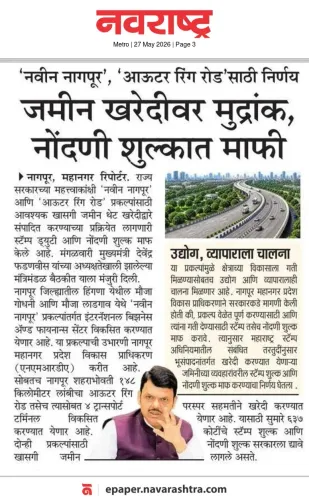
CM Fadnavis Waives Stamp Duty on New Nagpur Ring Road Land Acquisition
Synopsis
The Maharashtra cabinet, under Chief Minister Devendra Fadnavis, has waived stamp duty and registration charges on land acquisition for the New Nagpur Outer Ring Road, aiming to accelerate land procurement and fast-track the circumferential highway project around Nagpur.
Key Takeaways
The Maharashtra cabinet approved a waiver of stamp duty and registration fees on land acquisition for the New Nagpur Outer Ring Road on 27 May 2026 .
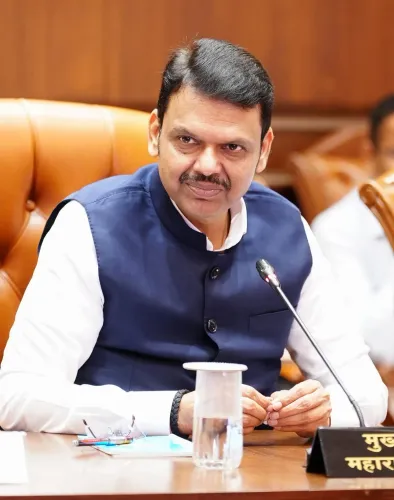
Chief Minister Devendra Fadnavis tagged in the official CMO announcement, underscoring his personal ownership of the decision.
The waiver directly benefits landowners along the ring road alignment by removing transaction costs tied to acquisition.
Maharashtra has used similar stamp-duty exemptions for metro and highway projects in Pune and Mumbai since the 2010s .
Formal land acquisition notifications, budget allocation, and tendering remain the key steps before construction can begin.
The ring road is intended to decongest Nagpur and open peripheral zones to industrial and residential growth.
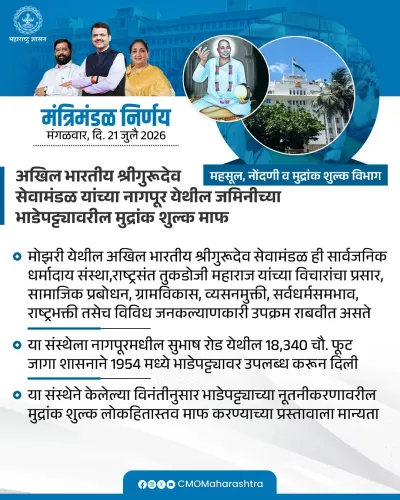
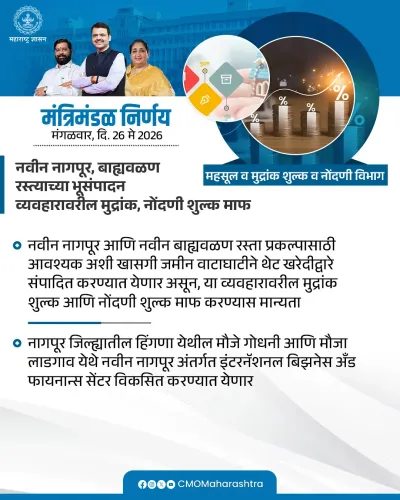
The Chief Minister's Office of Maharashtra announced on Wednesday, 27 May 2026 that the state cabinet has approved a waiver of stamp duty and registration charges on land acquisition for the New Nagpur Outer Ring Road project, a move aimed at accelerating land procurement for the proposed circumferential highway around Nagpur.
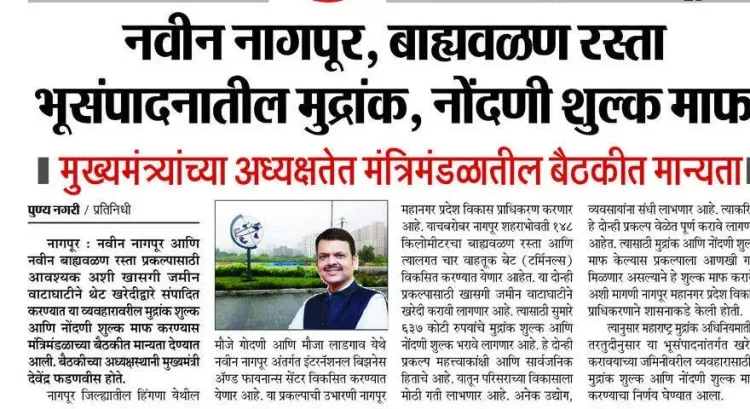
The official CMO post, tagging Chief Minister Devendra Fadnavis, read: 'नवीन नागपूर, बाह्यवळण रस्ता भूसंपादनातील मुद्रांक, नोंदणी शुल्क माफ' — translated as 'New Nagpur, Outer Ring Road land acquisition stamp duty and registration fee waived.'
Context
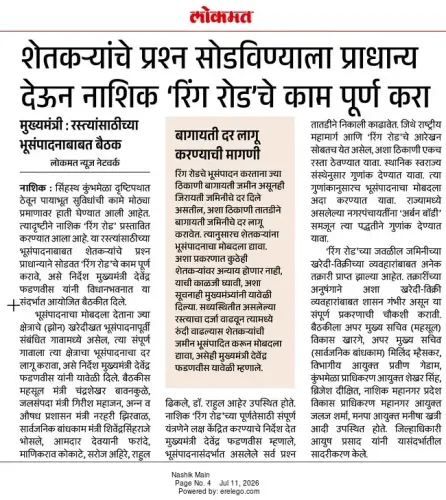
The New Nagpur Outer Ring Road is a proposed circumferential highway designed to improve connectivity around Nagpur and support the city's urban expansion. Land acquisition for large infrastructure corridors in Maharashtra has historically been slowed by disputes over transaction costs borne by landowners, making fiscal waivers a recurring policy instrument to reduce friction in the process. The cabinet decision, announced under the #CabinetDecision tag, exempts landowners from paying stamp duty and registration fees when their land is acquired for this project — effectively reducing the financial burden on those parting with property for the ring road.Policy Backdrop
Maharashtra has deployed stamp-duty and registration-fee exemptions on land acquisition for infrastructure projects since the 2010s, applying similar measures to metro rail corridors and expressway projects in the Pune and Mumbai metropolitan regions. The approach has been consistently used to cut project timelines by reducing landowner resistance and pre-empting litigation over transaction costs. Chief Minister Devendra Fadnavis, a BJP leader with multiple terms at the helm of Maharashtra and a strong political base in the Vidarbha region — of which Nagpur is the principal city — has prioritised infrastructure development in and around Nagpur across his tenures. The outer ring road fits within that broader developmental agenda for the region.Stakeholders and Impact
The primary beneficiaries of the waiver are landowners in the villages and peri-urban zones along the proposed ring road alignment near Nagpur. By removing stamp duty and registration charges from acquisition transactions, the state reduces the effective cost of compliance for landowners and potentially shortens negotiation timelines for the acquiring authority. Infrastructure contractors and urban planners tracking Nagpur's growth corridor stand to benefit indirectly, as faster land acquisition translates to earlier project commencement. The ring road is expected to ease traffic congestion in the city and open up peripheral zones for industrial and residential development.What's Next
The cabinet approval of the fiscal waiver is an enabling step; the critical milestones ahead include the issuance of formal land acquisition notifications under the relevant state or central land acquisition law, followed by budget allocations and tendering for construction. How swiftly the revenue and public works departments translate this cabinet decision into on-ground acquisition proceedings will determine whether the New Nagpur Outer Ring Road moves from policy to construction within the current government's term. The move signals that the Fadnavis administration intends to use fiscal incentives — rather than purely statutory compulsion — as the primary lever to build landowner consent and speed up one of Nagpur's most consequential connectivity projects.Point of View
Reduce resistance, reduce delays. For Chief Minister Fadnavis, the political calculus is equally clear: Nagpur is his home turf, and visible infrastructure momentum there reinforces his regional credibility ahead of any electoral cycle. The decision also fits a broader national pattern of state governments using fiscal tools rather than coercive acquisition to build social licence for highway and ring-road projects. The real test, however, is execution — Maharashtra has announced ring-road and bypass projects before that languished at the acquisition stage despite policy incentives.
NationPress
12 Oct 2026
Frequently Asked Questions
What is the New Nagpur Outer Ring Road project?
The New Nagpur Outer Ring Road is a proposed circumferential highway around Nagpur designed to improve city connectivity, ease traffic congestion, and support urban and industrial expansion in the surrounding region.
What did the Maharashtra cabinet decide on 27 May 2026 regarding Nagpur?
The Maharashtra cabinet approved a waiver of stamp duty and registration fees on land acquisition transactions for the New Nagpur Outer Ring Road, reducing the financial burden on landowners whose property is being acquired for the project.
Who announced the stamp duty waiver for the Nagpur ring road?
The Chief Minister's Office of Maharashtra announced the decision on 27 May 2026, tagging Chief Minister Devendra Fadnavis in the official post on X.
How does waiving stamp duty help speed up land acquisition in Maharashtra?
Removing stamp duty and registration charges lowers the cost borne by landowners in acquisition transactions, reducing disputes and resistance that typically delay infrastructure projects. Maharashtra has used this tool for metro and highway projects since the 2010s.
What are the next steps after the cabinet approves a stamp duty waiver for a road project?
After cabinet approval, the state must issue formal land acquisition notifications, allocate budget for compensation, and complete tendering before construction can begin — each stage carrying its own timeline and potential delays.