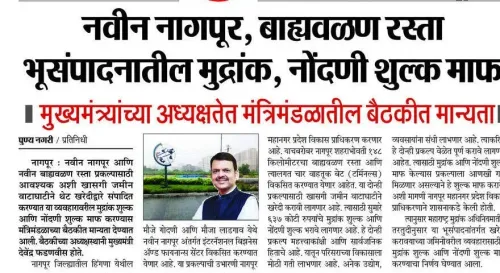
Maharashtra Cabinet Waives Stamp Duty, Registration Fee on Land Purchases
Synopsis
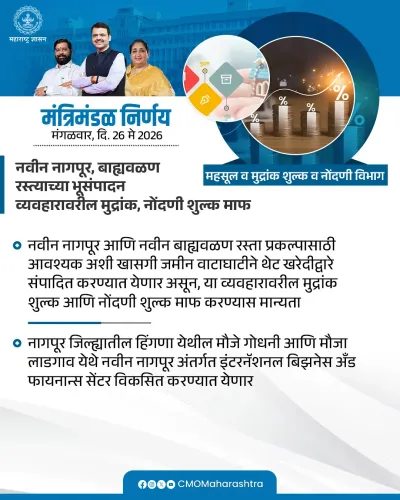
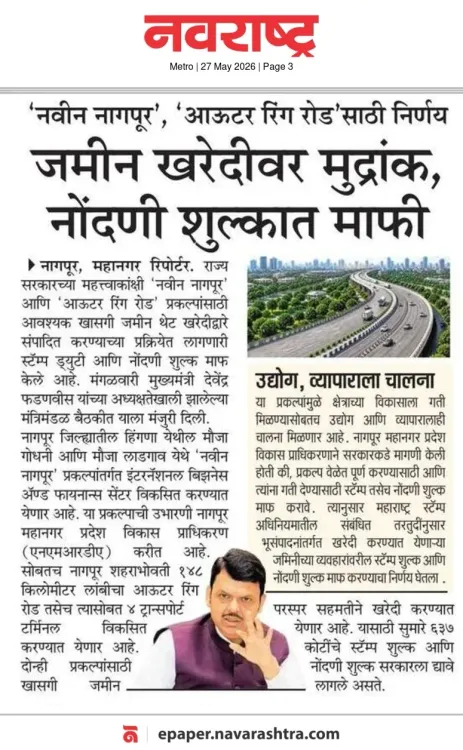
The Chief Minister's Office of Maharashtra announced on 27 May 2026 that the state cabinet has approved an exemption on stamp duty and registration charges for land purchases. The move, tagged to CM Devendra Fadnavis, follows Maharashtra's history of using stamp duty cuts to boost property markets.
Key Takeaways
The Maharashtra cabinet approved an exemption on stamp duty and registration charges for land purchases, announced on 27 May 2026 .
The decision was shared by the official Chief Minister's Office of Maharashtra account, tagging CM Devendra Fadnavis .
Stamp duty in Maharashtra typically ranges from 5 to 7 per cent of property value, making waivers a significant cost relief for buyers.
Maharashtra previously used a similar stamp duty reduction in 2020 to revive the real estate sector during the pandemic slowdown.
Key details — including eligible land categories, duration of the exemption, and revenue impact — are expected in a formal government resolution.
Beneficiaries include residential land buyers, real estate developers, and industrial investors acquiring land in Maharashtra.
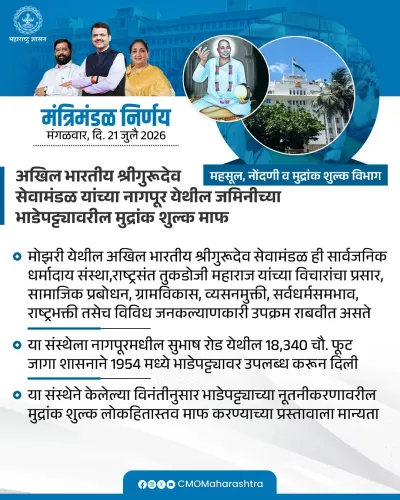
The Chief Minister's Office of Maharashtra announced on Wednesday, 27 May 2026 that the state cabinet has approved an exemption on stamp duty and registration charges for land purchases, a significant fiscal relief measure for buyers across the state. The decision was shared via the official CMO Maharashtra account, tagging Chief Minister Devendra Fadnavis.
Context
The post, written in Marathi, states: 'Jamin kharedivar mudrank, nondani shulkat mafi' — meaning 'Exemption in stamp duty and registration charges on land purchase.' The announcement is tagged under #CabinetDecision, indicating this is a formal policy outcome from a state cabinet meeting chaired by Chief Minister Devendra Fadnavis.
Stamp duty and registration fees are among the most significant transaction costs in Indian real estate, often ranging from 5 to 7 per cent of the property value in Maharashtra. A waiver or reduction directly lowers the upfront cost burden for land buyers, from individual homebuyers to industrial investors.
Policy Backdrop
Maharashtra has a history of deploying stamp duty adjustments as a fiscal lever. In 2020, the state government introduced temporary reductions in stamp duty rates on property registrations to revive a sluggish real estate market during the pandemic-induced economic slowdown. That intervention was credited with a notable uptick in property registration volumes.
State governments across India periodically recalibrate stamp duty and registration charges to stimulate transaction activity, attract industrial investment, and improve housing affordability. Maharashtra, as one of India's largest property markets, sees outsized impact from such policy shifts.
Stakeholders and Impact
Land buyers — both residential and commercial — stand to benefit most immediately, as the exemption reduces out-of-pocket costs at the point of transaction. Real estate developers are also key stakeholders, as lower transaction costs tend to improve buyer sentiment and accelerate sales velocity.
The relief could also benefit industrial and infrastructure project developers acquiring land for manufacturing or logistics, sectors the Maharashtra government has actively courted through investment summits. The precise categories of land covered — agricultural, residential, commercial, or industrial — and the duration of the exemption are details that will determine the measure's actual reach.
What's Next
The state finance and revenue departments are expected to issue a detailed government resolution (GR) specifying eligibility criteria, the categories of land transactions covered, the duration of the exemption, and any revenue impact assessment. Observers will watch whether the measure is time-bound — as was the case with the 2020 intervention — or structured as a permanent reform.
With Maharashtra's property registration revenues forming a substantial part of state own-tax receipts, the fiscal cost of the waiver will be a closely watched metric. A targeted, well-defined exemption could strike a balance between stimulating the market and protecting state revenues.
Point of View
The state has consistently positioned fiscal incentives as a tool for both housing affordability and industrial investment attraction. The move signals that the government is willing to absorb short-term revenue pressure in exchange for higher transaction volumes and broader economic activity. The real test will be in the details — a broad, open-ended waiver sends a stronger market signal than a narrowly targeted or time-limited one.
NationPress
24 Sept 2026
Frequently Asked Questions
What is the Maharashtra stamp duty exemption announced in May 2026?
The Maharashtra cabinet approved a waiver of stamp duty and registration charges on land purchases, as announced by the Chief Minister's Office on 27 May 2026. Specific details on eligible categories and duration are expected in a government resolution.
Who announced the stamp duty waiver in Maharashtra?
The announcement was made by the official Chief Minister's Office of Maharashtra account on X, tagging Chief Minister Devendra Fadnavis, indicating the decision came from a state cabinet meeting.
How much is stamp duty on land purchase in Maharashtra?
Stamp duty in Maharashtra typically ranges from 5 to 7 per cent of the property value, making it one of the largest upfront costs in a land transaction. The new waiver is intended to reduce this burden for buyers.
Has Maharashtra waived stamp duty before?
Yes. In 2020, the Maharashtra government reduced stamp duty rates on property registrations to support the real estate sector during the pandemic-induced economic slowdown, a move that boosted registration volumes.
Who benefits from the Maharashtra land registration fee waiver?
The primary beneficiaries are residential land buyers, real estate developers, and industrial investors acquiring land in Maharashtra, all of whom face lower upfront transaction costs as a result of the exemption.