Faith leaders at New York summit warn of surging global hatred
Synopsis
At Madison Square Garden, Jewish, Christian and Muslim leaders warned that technology is supercharging humanity's oldest hatreds — and that religious communities themselves must first look inward before preaching unity outward. RSS chief Mohan Bhagwat's presence at the 'Universal Oneness' summit added a notable Indian dimension to a gathering drawing faith representatives from 30 countries.
Key Takeaways
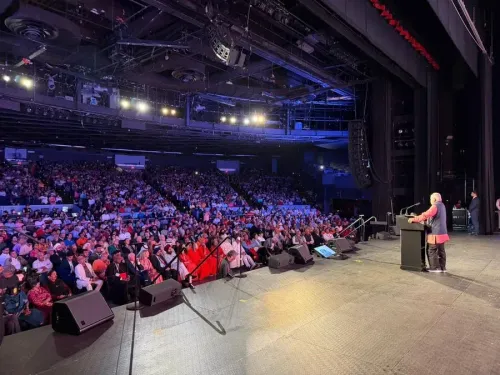
The 'Universal Oneness' interfaith summit was held at Madison Square Garden, New York on 30 August .
Baba Jain of the World Council of Religious Leaders presented a call to action backed by more than 200 representatives from 30 countries .
Imam Sharif warned that hatred now spreads 'faster than ever' through technology, alongside ancient prejudices such as tribalism and arrogance.
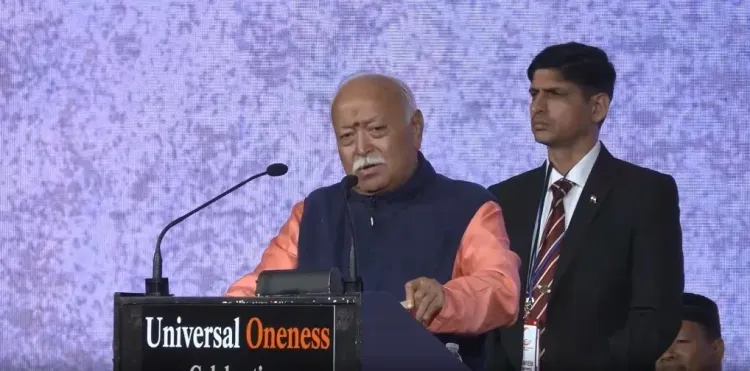
RSS chief Mohan Bhagwat attended; the RSS is currently marking its centenary , having been founded in 1925 .
The programme used Raksha Bandhan symbolism to promote bonds of care and mutual responsibility across religious communities.
Prominent religious leaders from across the world issued an urgent warning on 30 August that hatred is spreading faster than ever, amplified by technology and armed conflict, during the 'Universal Oneness' interfaith gathering at Madison Square Garden in New York. Jewish, Christian and Muslim speakers called for dialogue, compassion and a renewed recognition of humanity's shared identity — even as wars, mass displacement and rising prejudice test global solidarity.
A Call to Action Across 30 Countries
Baba Jain, Founding Secretary-General of the World Council of Religious Leaders, presented a collective call to action developed after consultations with more than 200 representatives of major faiths from 30 countries. He acknowledged the double-edged nature of religion itself.
'We know the extraordinary power of faith to heal, reconcile, and inspire. And the painful truth that religion has sometimes been used to divide, exclude, and justify violence,' Jain said. He urged faith communities to first examine the words, teachings, institutions and practices within their own traditions, and pledged that religious leaders 'will reject the use of religion to justify hatred, humiliation, dehumanisation or violence.'
Jain also called for building cross-community relationships before crises erupt, and for bringing young people together across religious and cultural boundaries. 'The person we know is harder to hate,' he said.
Technology Accelerating Ancient Prejudices
Imam Sharif warned that digital platforms were turbocharging humanity's oldest impulses rather than dissolving them. 'Hatred travels across borders and through our screens faster than ever before. Technology is advancing with breathtaking speed, all while humanity is still struggling with ancient diseases of the heart — greed, prejudice, arrogance, tribalism, dehumanisation and the thirst for domination,' he said.
Sharif drew a sharp distinction between unity and uniformity. 'We do not have to become the same in order to belong to one another. Unity does not require conformity. Conviction does not require contempt,' he said. He measured the summit's success not in its attendance but in what participants would do after leaving: 'The question is what will be different tomorrow because we were here today.'
Voices from the Pulpit and the Pew
Reverend Thorne said people were repeatedly being told whom to fear, blame or exclude — and that the gathering's very act of convening was a counter-statement. 'Every time human beings choose to gather instead of retreat, to listen instead of shout, to understand instead of condemn, something sacred happens,' she said. 'Before our titles, before our religions, before our politics, before the borders on a map, we are human beings, children of God.'
Rabbi Blumenthal drew on Jewish teaching, arguing that every human being carried godliness and possessed infinite value. 'Every one of us is equal, valued and loved because when God looks at us, it is like God looking at a mirror,' he said. He also linked social fracture to a deeper emotional crisis: 'I am convinced that much of what troubles us in our society today is that we are lonely,' he said, urging people to seek 'connection, love, and respect for one another.'
RSS Chief Bhagwat Among Attendees
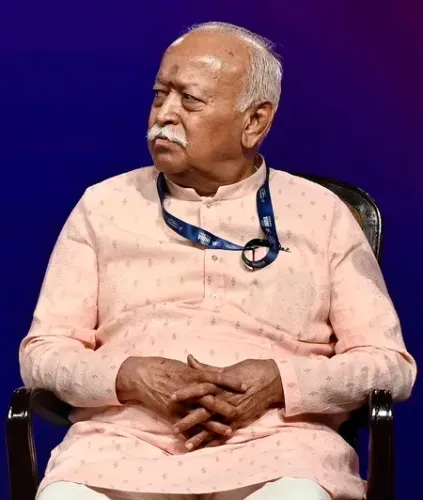
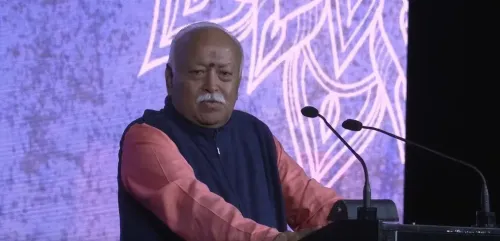
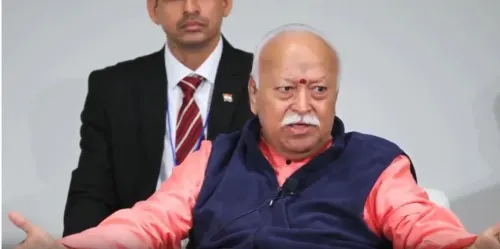
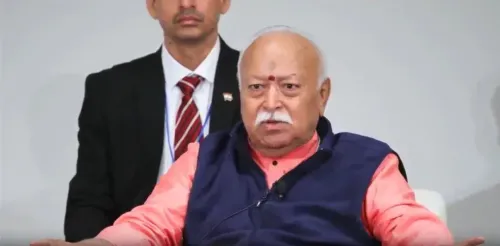
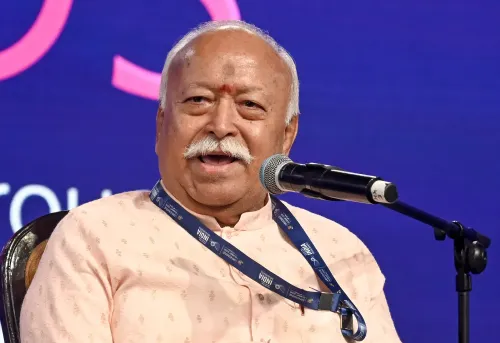
The gathering was attended by Rashtriya Swayamsevak Sangh (RSS) chief Mohan Bhagwat, alongside religious representatives from several countries. Bhagwat has led the RSS since 2009; the organisation, founded in 1925, is currently marking its centenary, using the milestone to underscore its message of social organisation and service.
The programme incorporated the symbolism of Raksha Bandhan — the tying of a rakhi — as a metaphor for care, protection and mutual responsibility, encouraging participants to extend that bond beyond family to neighbours, strangers and people of different faiths.
What Comes Next
The summit's organisers indicated that the call to action presented by Jain would be circulated among participating faith bodies for adoption at the community level. Whether the momentum of a single high-profile gathering translates into sustained interfaith cooperation — particularly in regions experiencing active conflict — remains the central question for the global religious community.
Point of View
Not just a victim of misuse by bad actors. That self-reckoning is rare at interfaith gatherings, which tend toward affirmation over accountability. Imam Sharif's framing — that technology has not upgraded humanity, only accelerated its worst impulses — is a pointed rebuke to the techno-optimist consensus. Mohan Bhagwat's attendance is symbolically significant given the RSS's domestic political associations, but the summit's test, as Sharif noted, is what participants do after they leave the building.
NationPress
14 Oct 2026
Frequently Asked Questions
What was the 'Universal Oneness' summit in New York?
It was an interfaith gathering held at Madison Square Garden in New York on 30 August, bringing together Jewish, Christian and Muslim leaders alongside representatives from 30 countries to address rising global hatred, conflict and the misuse of religion. The event was organised under the auspices of the World Council of Religious Leaders.
Why did Mohan Bhagwat attend the New York interfaith summit?
RSS chief Mohan Bhagwat attended the 'Universal Oneness' gathering as one of several international religious representatives. The RSS is currently marking its centenary — having been founded in 1925 — and has used the milestone to highlight its message of social organisation and service.
What did Baba Jain call for at the summit?
Baba Jain, Founding Secretary-General of the World Council of Religious Leaders, presented a collective call to action developed with more than 200 representatives of major faiths from 30 countries. He urged faith leaders to reject the use of religion to justify hatred or violence, and to build interfaith relationships before crises arise.
How does technology factor into the rising global hatred that leaders warned about?
Imam Sharif warned that hatred now travels across borders and through digital screens faster than ever, arguing that technological advancement has amplified ancient human impulses such as tribalism, arrogance and dehumanisation rather than eliminating them.
What is the significance of Raksha Bandhan being used at the summit?
Organisers used the Hindu tradition of Raksha Bandhan — the tying of a rakhi — as a cross-cultural symbol of care, protection and mutual responsibility. Participants were encouraged to extend that bond beyond their own families to neighbours, strangers and people of different faiths.