National family welfare mission proposed for 2027–2037
Synopsis
A proposed 10-year national mission would connect voluntary family planning with parental welfare, child development and women's economic independence. Submitted by Karnataka planning commission member S. Mohanadass Hegde, it rules out compulsory family-size restrictions and changes to reservation policies.
Key Takeaways
Mohanadass Hegde submitted the proposed national mission to Prime Minister Narendra Modi for consideration.
The proposed 10-year mission would run from 2027 to 2037 .
The framework links voluntary family planning with parental welfare, child development and women's empowerment.
The proposal rejects compulsory family-size restrictions and does not seek changes to existing reservation policies.
The Union Ministry of Health and Family Welfare is proposed as the nodal ministry, subject to government consideration.
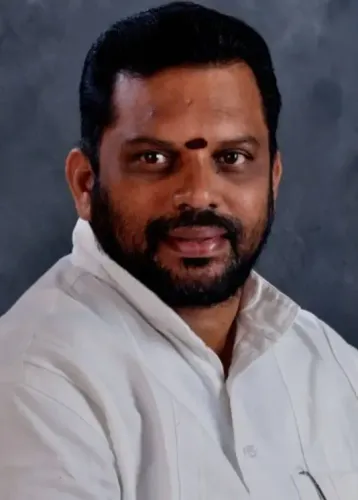
A national family welfare mission covering family planning, parental welfare and child development has been proposed to Prime Minister Narendra Modi for the period 2027–2037. S. Mohanadass Hegde, a member of the Karnataka State Policy and Planning Commission, submitted the proposal for consideration by the Centre.
The proposed National Family Planning, Parental Welfare and Child Development Mission (NFPCDM) seeks to bring reproductive healthcare, women's empowerment and family economic security within a single national framework. It has been submitted for preliminary examination, not announced as an approved government programme.
Scope of the proposed mission
The 10-year proposal links voluntary family planning and responsible parenthood with maternal and reproductive healthcare, parental welfare and child development. It presents family planning as a means to improve public health, reduce poverty and strengthen families, rather than treating it solely as a matter of population stabilisation.
Its stated objectives include helping people make informed, voluntary reproductive choices and improving maternal healthcare and childcare. It also seeks stronger nutrition, education and protection for children, alongside skills, employment and financial independence for women.
The proposal's broader vision is to move from a focus on family planning towards family development, and from population stabilisation towards human capital development. Those aims are presented as part of an effort to build healthier families by 2037.
Benefits and programmes suggested
Among the measures suggested are an Integrated National Family Development Framework and a Comprehensive Parental Welfare Package. The proposal also outlines a Child Development Savings and Education Support Scheme and a National Family Welfare and Population Development Dashboard.
Another element would help eligible citizens access existing reservation benefits, affirmative-action measures, scholarships, educational opportunities and welfare schemes. The proposal does not advocate changes to existing reservation policies.
Taken together, the suggested measures cover both services and access to existing benefits. The source does not specify how the proposed package, savings scheme or dashboard would operate, or what funding they would receive.
Reproductive choice and safeguards
The proposal emphasises reproductive autonomy, privacy and non-discrimination. It also calls for equal opportunities for every child irrespective of family size.
It explicitly does not advocate compulsory family-size restrictions. That distinction is central to the stated approach: informed and voluntary choices are listed among its objectives, rather than mandatory limits on families.
Government review and implementation
The recommended implementation period runs from 2027 to 2037. Under the proposal, the Union Ministry of Health and Family Welfare would act as the nodal ministry, coordinating with other central ministries and state governments.
The submission is intended for a preliminary assessment of its policy, legal, administrative and financial feasibility. No approval, implementation schedule beyond the proposed period, or funding commitment has been specified in the source.
The next step is consideration by the Union government, including whether the proposed framework is feasible and should proceed further.
Point of View
But its value will depend on whether services reach the people who need them. The explicit rejection of compulsory family-size limits is an important safeguard that would need to be reflected in any eventual implementation. The Centre should scrutinise costs, coordination and protection of privacy before deciding whether the proposal can become workable policy.
NationPress
23 Nov 2026
Frequently Asked Questions
What is the proposed national family welfare mission?
It is a proposed 10-year framework linking voluntary family planning with parental welfare, child development, women's empowerment and family economic security. S. Mohanadass Hegde submitted it to Prime Minister Narendra Modi for consideration.
When would the proposed mission run?
The proposal recommends running the mission from 2027 to 2037. It has been submitted for preliminary examination and has not been presented as an approved programme.
Does the proposal include compulsory family-size restrictions?
No, the proposal does not advocate compulsory family-size restrictions. It emphasises reproductive autonomy, privacy, non-discrimination and equal opportunities for children regardless of family size.
Who could be affected by the proposed mission?
The proposal addresses families, parents, children and women through suggested healthcare, welfare, education and economic-support measures. It also proposes helping eligible citizens access existing benefits and schemes.
What happens next to the family welfare mission proposal?
The proposal has been submitted to the Union government for consideration and preliminary feasibility examination. The assessment covers policy, legal, administrative and financial aspects.