NCW recommends gender-neutral child care leave, 5 lakh creches by 2030

Synopsis
India's NCW has handed the Centre a 37-point blueprint that could fundamentally reshape working parenthood — splitting 730 days of child care leave equally between both parents, mandating paid paternity leave in the private sector, and targeting 5 lakh crèche seats by 2030. With over 90% of women workers still outside effective maternity coverage, the report frames this not as a women's issue alone, but a shared parenting and workforce imperative.
Key Takeaways
The NCW submitted a 37-point report on maternity and child care laws to DoPT , the Ministry of Women and Child Development , and the Ministry of Labour and Employment .
A National Childcare Infrastructure Mission is proposed to create 5 lakh crèche seats by 2030 through Union–State cooperation.
The 730-day Child Care Leave framework would be split equally — 365 days each — between both working parents under a gender-neutral model.
Mandatory paid paternity leave is recommended for private and unorganised sectors .
Over 90% of women workers currently fall outside effective maternity coverage; the NCW recommends extending benefits to gig and platform workers .
Leave for adoptive and commissioning mothers is proposed to increase from 12 weeks to 26 weeks .
The National Commission for Women (NCW) has submitted a sweeping 37-point recommendatory report to the Central government, calling for gender-neutral Child Care Leave (CCL) in the private sector, mandatory paid paternity leave, and the creation of 5 lakh crèche seats by 2030. The recommendations, submitted to the Department of Personnel and Training (DoPT), the Ministry of Women and Child Development, and the Ministry of Labour and Employment, aim to overhaul India's maternity and childcare protection framework.
Key Recommendations at a Glance
The NCW's report spans nine key areas, including maternity benefits, paternity leave, childcare infrastructure, nursing and lactation support, private-sector coverage, legal harmonisation, and workplace discrimination prevention. The Commission has proposed a National Childcare Infrastructure Mission to create 5 lakh crèche seats by 2030 through Union–State cooperation. It has also called for extending maternity and childcare benefits to informal, gig, and platform workers, noting that over 90% of women workers currently remain outside effective coverage.
A Shift Towards Shared Parenting
In one of the most significant structural shifts proposed, the NCW has recommended transforming the existing women-centric CCL framework into a gender-neutral Child Care Leave system available to either parent. Under the proposal, the existing 730-day CCL structure would be divided equally — 365 days each for both working parents — or pooled into a common entitlement where both parents are employed in the same organisation. For children aged 0–2 years, the report further proposes a 60:40 shared-care model between primary and secondary caregivers. The Commission also recommended introducing mandatory paid paternity leave in private and unorganised sectors, recognising fathers as essential participants in early childcare.
Expanding Protections for Adoptive and Commissioning Mothers
The report calls for parity in maternity benefits across biological, adoptive, and commissioning mothers. Notably, it recommends increasing leave for adoptive and commissioning mothers from 12 weeks to 26 weeks — aligning their entitlement with that of biological mothers. It also calls for amending Section 60(4) of the Social Security Code, 2020 in light of a Supreme Court ruling concerning adoptive mothers, advocating a child-centric caregiving framework over distinctions based solely on biological motherhood.
Formalising Legal Entitlements
The NCW has recommended operationalising Section 109 of the Code on Social Security, 2020 through a dedicated Maternity and Childcare Fund, supported jointly by the State and employers. It has also proposed making the Pradhan Mantri Matru Vandana Yojana (PMMVY) a universal and legally enforceable entitlement — a move that would shift the scheme from discretionary benefit to statutory right. The recommendations are grounded in Section 10 of the National Commission for Women Act, 1990, which empowers the Commission to review laws affecting women and propose legislative amendments.
Background and Process
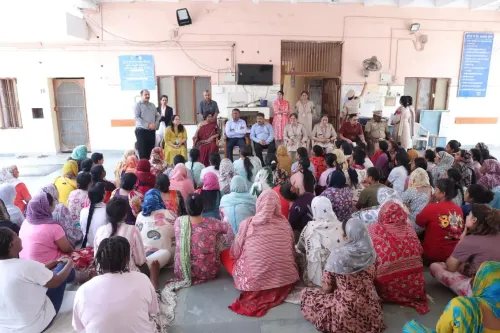
The recommendations emerged from deliberations at the National Consultation on Laws Relating to Maternity and Child Care, held on 5 May 2026 at the Ambedkar International Centre in New Delhi. The report now awaits response from the three ministries to which it has been submitted. How quickly the Centre acts — particularly on private-sector mandates and the crèche mission — will determine whether these proposals translate into enforceable policy.
Point of View
It implicitly challenges the architecture of India's labour law, which has historically treated caregiving as a maternal obligation. The private-sector mandate is the hardest lift — employers consistently resist legislated leave costs, and India's enforcement of existing maternity rules remains patchy. The proposal to make PMMVY a legally enforceable entitlement, if adopted, would be the most consequential shift, converting a politically convenient welfare scheme into a justiciable right. The crèche target of 5 lakh seats by 2030 sounds large until you consider that India has an estimated 160 million children under six — the ambition, while welcome, barely scratches the surface.
NationPress
2 Oct 2026
Frequently Asked Questions
What has the NCW recommended on child care leave?
The NCW has recommended converting the existing women-only Child Care Leave into a gender-neutral entitlement available to either parent, splitting the current 730-day CCL equally — 365 days each. For children aged 0–2, a 60:40 shared-care model between primary and secondary caregivers has also been proposed.
What is the proposed National Childcare Infrastructure Mission?
The NCW has proposed a National Childcare Infrastructure Mission to create 5 lakh crèche seats by 2030 through Union–State cooperation. The goal is to provide accessible childcare infrastructure, particularly for working mothers in the informal and gig economy.
Who would be covered by the new maternity and paternity recommendations?
The recommendations aim to extend coverage well beyond the formal workforce. The NCW has specifically called for benefits to reach informal, gig, and platform workers — a group that represents over 90% of India's women workers who currently lack effective maternity protection.
What changes are proposed for adoptive and commissioning mothers?
The NCW has recommended increasing maternity leave for adoptive and commissioning mothers from 12 weeks to 26 weeks, bringing parity with biological mothers. It also calls for amending Section 60(4) of the Social Security Code, 2020 following a Supreme Court ruling on adoptive mothers.
What is the current status of these recommendations?
The NCW submitted the report to DoPT, the Ministry of Women and Child Development, and the Ministry of Labour and Employment. The recommendations are advisory in nature; the Central government will decide whether to translate them into legislation or policy. No timeline for a government response has been announced.