NCW targets zero child marriage by 2030, praises Tripura's steps
Synopsis
India's child marriage rate sits at 23.3 per cent nationally — and above 40 per cent in states like Tripura. The NCW has now put a hard deadline on the problem: zero by 2030, with a 10 per cent cut by end-2026. The Tripura visit also surfaced a less-discussed dimension: the state's porous border makes it a trafficking hotspot, prompting a rare joint BSF-NCW capacity-building push involving over 300 personnel.
Key Takeaways
NCW Chairperson Vijaya Rahatkar set a target of zero child marriage across India by 2030 , with a 10 per cent reduction interim goal by end- 2026 .
India's national child marriage average stands at 23.3 per cent ; West Bengal , Bihar , and Tripura each record over 40 per cent of women married before age 18 .
Rahatkar met Chief Minister Manik Saha , Chief Secretary J.K.
Sinha , and senior BSF officials during her three-day Tripura visit .
A joint BSF-NCW anti-human trafficking workshop at Fatikchhera drew more than 300 BSF personnel on 30 July .
Women in distress can reach the 112 Emergency Response Support System (24/7) or the 181 Women's Helpline for support.
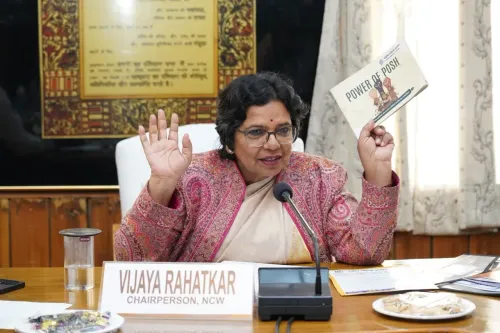
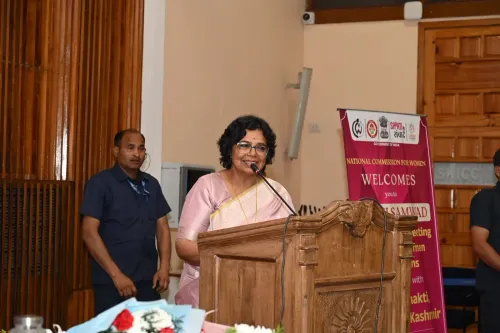
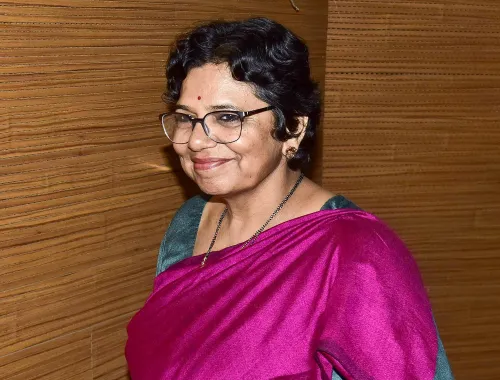
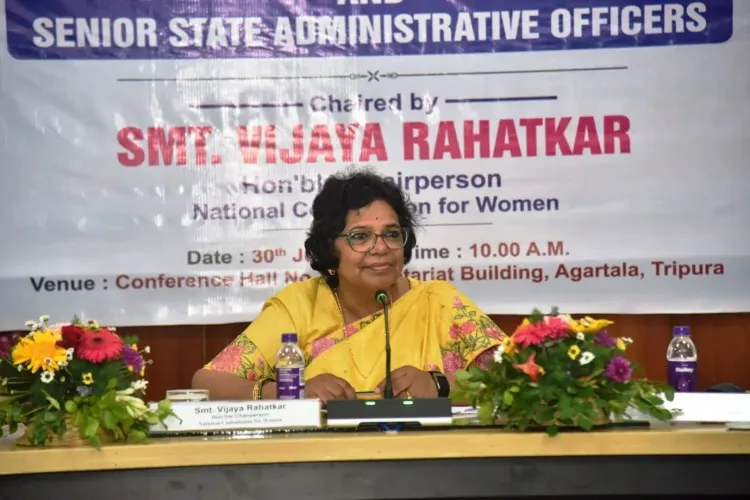
National Commission for Women (NCW) Chairperson Vijaya Rahatkar on Thursday, 30 July announced that the Commission has set a firm target of eliminating child marriage across India by 2030, with an interim benchmark of a 10 per cent reduction by the end of 2026. The declaration came at the close of her three-day visit to Tripura, where she addressed a press conference in Agartala and reviewed the state's progress on women's safety and empowerment.
The National Picture on Child Marriage
According to officials, the national average for child marriage currently stands at 23.3 per cent. States including West Bengal, Bihar, and Tripura record among the highest prevalence rates, with more than 40 per cent of women in these states married before reaching the age of 18. Rahatkar acknowledged the scale of the challenge but described Tripura's government as working with 'dedication and determination' to bring the figure down to zero by the 2030 deadline.
Key Meetings and Engagements in Tripura
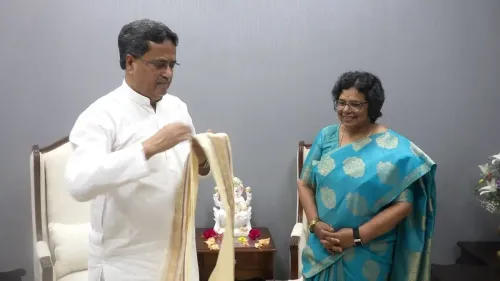
During her visit, Rahatkar held substantive discussions with Chief Secretary J.K. Sinha and Special Secretary of the Social Education and Social Welfare Department Tapan Kumar Das at the State Guest House, covering initiatives on women's welfare, safety, and empowerment. On Tuesday, she met Tripura Chief Minister Manik Saha to review the state's ongoing measures to protect the rights and dignity of women and girl children.
She also visited Udaipur in Gomati district on Wednesday, where she met Lakhpati Didis and members of women-led Self-Help Groups (SHGs), expressing deep appreciation for their contributions to sustainable income generation and rural economic self-reliance.
Anti-Trafficking Push at the Border
Describing Tripura as a sensitive border state particularly vulnerable to the trafficking of women and girls, Rahatkar met senior Border Security Force (BSF) officials to discuss measures for strengthening cross-border vigilance. She participated in an anti-human trafficking workshop organised by the 42nd Battalion of the BSF at Fatikcherra in West Tripura district, stressing the need for coordinated action among security agencies, civil administration, and local communities.
A separate Capacity Building Workshop on anti-human trafficking was jointly organised by BSF Tripura Frontier and the NCW on Thursday at Fatikchhera. More than 300 BSF personnel from various sectors and units attended, with NCW experts conducting two technical sessions covering legal frameworks, victim identification, rescue and rehabilitation, investigation procedures, and inter-agency coordination. An interactive open house discussion followed, allowing field personnel to exchange experiences with specialists.
Helplines and Support Mechanisms Highlighted
Rahatkar urged women facing harassment, domestic violence, or any form of abuse to report incidents to the police or appropriate authorities without fear. She highlighted two key support channels: the 112 Emergency Response Support System, which operates round the clock, and the 181 Women's Helpline, which provides counselling, protection, and related services.
What Comes Next
The NCW's twin-track approach — state-level engagement combined with security-agency capacity building — reflects a broader push to move beyond awareness campaigns toward enforcement and institutional coordination. With Tripura's child marriage rate still above the national average, the state will remain a focal point in the Commission's 2030 roadmap. Whether the 10 per cent reduction target for 2026 is met will serve as an early indicator of the strategy's effectiveness.
Point of View
But the distance to travel is steep — Tripura's rate is nearly double the national average, and past awareness campaigns have not moved the needle decisively. The pairing of a state-level political review with a BSF capacity-building exercise is notable: it signals that the Commission recognises trafficking and child marriage as structurally linked in border states, not separate problems. The real accountability test will come when the 2026 interim figure is audited — and whether the 10 per cent reduction is measured against a verified baseline or a headline number.
NationPress
14 Sept 2026
Frequently Asked Questions
What is the NCW's target for eliminating child marriage in India?
The NCW has set a target of reducing child marriage to zero across India by 2030, with an interim goal of a 10 per cent reduction by the end of 2026. The targets were announced by NCW Chairperson Vijaya Rahatkar during her visit to Agartala on 30 July.
What is the current child marriage rate in India and Tripura?
According to officials, India's national child marriage average stands at 23.3 per cent. Tripura, along with West Bengal and Bihar, records one of the highest rates, with more than 40 per cent of women in these states married before the age of 18.
Why is Tripura considered particularly vulnerable to human trafficking?
Tripura shares a long international border, making it susceptible to cross-border trafficking of women and girls. NCW Chairperson Rahatkar met senior BSF officials to strengthen vigilance, and a joint BSF-NCW anti-trafficking workshop was held at Fatikchhera, attended by over 300 BSF personnel.
What helplines are available for women facing abuse in India?
Women in distress can contact the 112 Emergency Response Support System, which operates around the clock, or the 181 Women's Helpline for counselling, protection, and other support services. Rahatkar urged women to report harassment or domestic violence to police without fear.
Who did NCW Chairperson Vijaya Rahatkar meet during her Tripura visit?
During her three-day visit, Rahatkar met Tripura Chief Minister Manik Saha, Chief Secretary J.K. Sinha, Special Secretary Tapan Kumar Das, and senior BSF officials. She also interacted with Lakhpati Didis and Self-Help Group members in Udaipur, Gomati district.