NCW recommends National Commission for Prisons in landmark women's prison reform report

Synopsis
The NCW's most comprehensive prison reform report in years doesn't just tweak rules — it calls for an entirely new statutory body to oversee India's custodial system. From raising the age limit for children living with incarcerated mothers to ensuring birth certificates don't list prisons as birthplaces, the 145-recommendation report reframes incarceration through a rights and dignity lens.
Key Takeaways
The National Commission for Women (NCW) has submitted its Law Review 2025–26 Report on Laws Relating to Women in Prisons to the Ministry of Home Affairs and Ministry of Women and Child Development .
The report recommends creating an independent statutory National Commission for Prisons to oversee custodial accountability with a focus on women prisoners.
Of more than 200 suggestions gathered through nationwide consultations, 145 were incorporated into the final report.
The age limit for children residing with incarcerated mothers is proposed to rise from 6 years to 10 years ; birth certificates of prison-born children would not mention prisons as the place of birth.
At least 50 per cent of prison personnel should be women, including senior roles such as women Inspectors General , under the proposed reforms.
Separate women's prisons are recommended in states where the number of women prisoners exceeds 50 .
The National Commission for Women (NCW) has called for a sweeping overhaul of India's prison system through a gender-responsive lens, submitting its Law Review 2025–26 Report on Laws Relating to Women in Prisons to the Ministry of Home Affairs and the Ministry of Women and Child Development. At the heart of the report is a demand for an independent statutory National Commission for Prisons to monitor custodial institutions with a dedicated focus on women prisoners.
Key Recommendations at a Glance
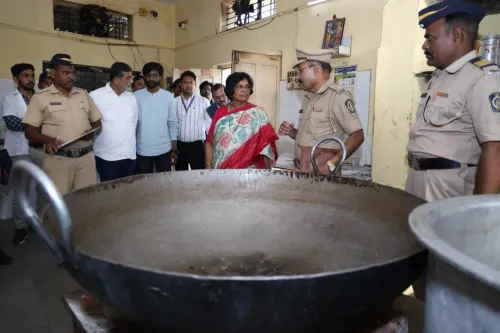
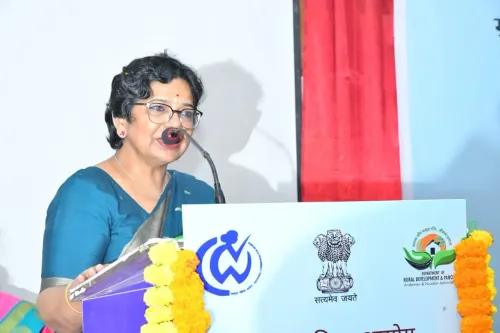
The report, headed by NCW Chairperson Vijaya Rahatkar, proposes amendments to at least nine laws, including the Model Prisons and Correctional Services Act, 2023, the Prisons Act, 1894, the Bharatiya Nyaya Sanhita, 2023, the Mental Healthcare Act, 2017, and the Transgender Persons (Protection of Rights) Act, 2019. The proposed National Commission for Prisons would be empowered to oversee correctional reforms, protect prisoner rights, and enforce accountability across custodial institutions.
The report draws on a nationwide consultation process that spanned regional sessions in Patiala, Noida, Dehradun, Aizawl, Hyderabad, Patna, Panaji, and Bhopal, culminating in a national consultation at Sri Vijaya Puram in the Andaman and Nicobar Islands on 22 November 2025. Of more than 200 suggestions received, 145 were shortlisted and incorporated into the final report.
Healthcare and Mental Health Reforms
On healthcare, the NCW has recommended the permanent posting of medical officers, psychiatrists, gynaecologists, nurses, and allied health professionals in prisons. Mandatory screening for breast cancer, cervical cancer, HIV, Hepatitis-B, and anaemia has been proposed for all women inmates. The report also calls for integrating telemedicine services and digital health monitoring systems with district healthcare networks.
Mental health receives dedicated attention, with proposals for trauma-informed care systems, comprehensive psychological services, post-release counselling, and the appointment of female mental health professionals specifically for women prisoners.
Protections for Pregnant Women, Children, and Transgender Detainees
The report recommends mandatory institutional deliveries in external hospitals and full pre-natal and post-natal care for pregnant inmates. Notably, it proposes that birth certificates of children born during incarceration should not list prisons as the place of birth — a significant dignity-related reform.
The age limit for children residing with incarcerated mothers is proposed to be raised from six years to ten years, with enhanced nutrition, education, and developmental support. Maternity benefits would be extended to both undertrial and convicted women prisoners under the proposal.
For transgender detainees, the NCW recommends searches conducted exclusively by women officers, separate accommodation, gender-sensitive healthcare, and explicit safeguards against discrimination and harassment.
Access to Justice and Prison Administration
On bail and undertrial reform, the report recommends mandatory release on personal bonds for indigent women undertrials in bailable offences, and a presumption in favour of bail for women accused of offences not punishable by death or life imprisonment — with special consideration for pregnant women, lactating mothers, and women with dependent children.
Structurally, the NCW has called for at least 50 per cent of prison personnel to be women, including the appointment of senior women officers such as women Inspectors General and Deputy Inspectors General. Platforms such as 'Nari Bandhi Sabha' and quarterly 'Maha Panchayats' are proposed to enable direct communication between women inmates and prison authorities.
The report also recommends establishing separate women's prisons in states where the number of women prisoners exceeds 50, along with district-level Released Prisoners' Aid Societies to support post-release reintegration. The recommendations were made under Section 10(1)(d) of the National Commission for Women Act, 1990, which empowers the NCW to review laws affecting women and propose reforms.
What Comes Next
The report now awaits consideration by the Ministry of Home Affairs and the Ministry of Women and Child Development. Whether the government acts on the landmark proposal for a statutory National Commission for Prisons — and the timeline for any legislative amendments — will determine how far this reform agenda translates into practice.
Point of View
Yet the Prisons Act of 1894 — a colonial-era statute — still governs custodial administration in several states. The NCW's push for a statutory National Commission for Prisons is the most structurally ambitious proposal in this space in years, but its fate hinges entirely on legislative will. The recommendation to raise the child-stay age limit and strip prisons from birth certificates reflects a long-overdue dignity shift — yet these are precisely the reforms that tend to stall in inter-ministerial consultations. The real accountability test is whether the Ministry of Home Affairs treats this report as a policy input or a shelf document.
NationPress
26 Oct 2026
Frequently Asked Questions
What is the NCW's Law Review 2025–26 Report on Women in Prisons?
It is a comprehensive reform report submitted by the National Commission for Women to the Ministry of Home Affairs and the Ministry of Women and Child Development, recommending gender-responsive changes to India's prison system. The report incorporates 145 suggestions drawn from nationwide consultations and proposes amendments to nine laws, including the Prisons Act, 1894 and the Bharatiya Nyaya Sanhita, 2023.
What is the proposed National Commission for Prisons?
The NCW has recommended creating an independent statutory body called the National Commission for Prisons to monitor prison administration, protect prisoner rights, and oversee correctional reforms, with a special focus on women prisoners. It would function as an accountability mechanism for custodial institutions across India.
What protections are proposed for pregnant women and children in prisons?
The report recommends mandatory institutional deliveries in external hospitals, full pre-natal and post-natal care, and an increase in the age limit for children residing with incarcerated mothers from six years to ten years. It also proposes that birth certificates of children born during incarceration should not mention prisons as the place of birth.
What reforms does the NCW recommend for transgender prisoners?
The NCW recommends that searches of transgender detainees be conducted only by women officers in a manner that preserves privacy and dignity. It also calls for separate accommodation, gender-sensitive healthcare, and explicit safeguards against discrimination and harassment for transgender prisoners.
How were the NCW's recommendations developed?
The NCW conducted regional consultations in eight cities — Patiala, Noida, Dehradun, Aizawl, Hyderabad, Patna, Panaji, and Bhopal — involving prison officials, judicial officers, legal experts, and civil society. The process concluded with a national consultation at Sri Vijaya Puram in the Andaman and Nicobar Islands on 22 November 2025, from which 145 of over 200 suggestions were finalised.