West Bengal's Hill Constituencies Face Unique Five-Way Election Battle
Synopsis
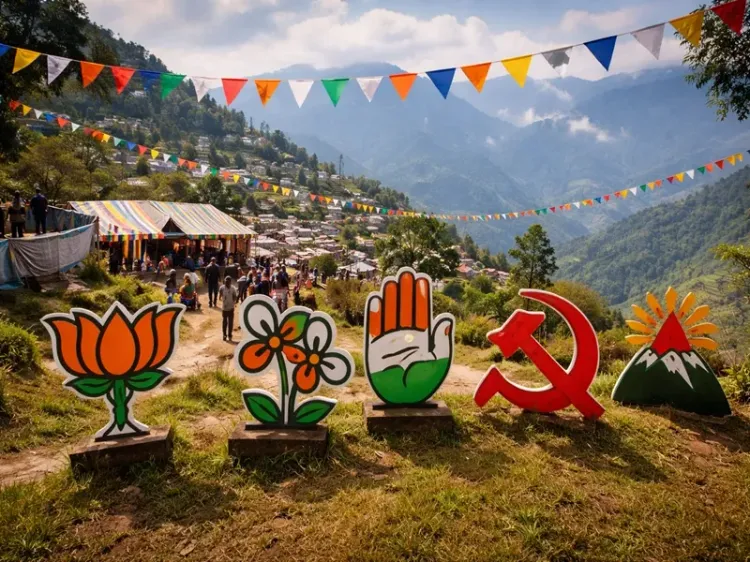
As elections approach in West Bengal, the hill constituencies of Darjeeling, Kalimpong, and Kurseong are experiencing a rare five-cornered contest, complicating the political landscape. With multiple parties in contention, the stakes have never been higher for Gorkha voters.
Key Takeaways
Unique electoral landscape: West Bengal's hill constituencies are experiencing a five-way contest.
Multiple contenders: Key parties include BJP, GJM, BGPM, IGJF, Left Front, and Congress.
Impact of IGJF: Their entry complicates existing electoral dynamics and vote shares.
Gorkha voter influence: They are pivotal in determining the election outcomes in these regions.
Focus on Gorkhaland: The IGJF champions the demand for a separate Gorkhaland state.
Kolkata, March 30 (NationPress) As the majority of the 294 Assembly constituencies in West Bengal gear up for elections in two phases next month, the hill areas of Darjeeling, Kalimpong, and Kurseong are poised for a unique five-way contest.
In most regions, the primary contenders are the Trinamool Congress, Bharatiya Janata Party (BJP), the CPI-M-led Left Front, the All India Secular Front (AISF) alliance, along with the Congress.
However, in Kurseong, Kalimpong, and Darjeeling, there is a distinct five-cornered battle unfolding.
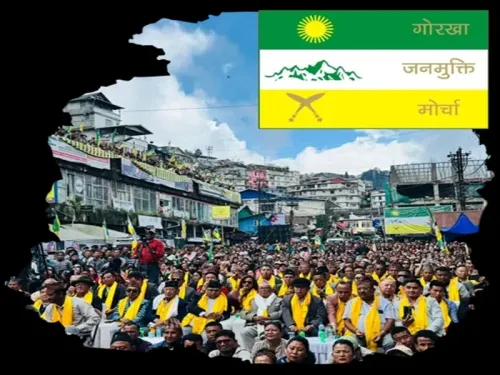
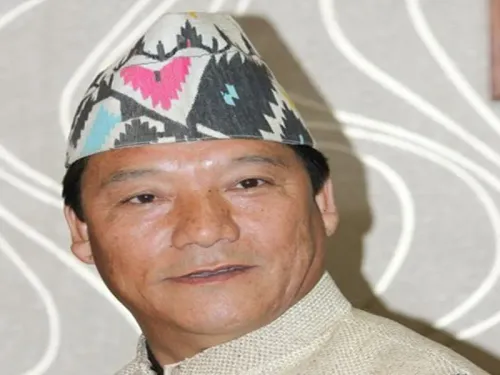
In these hill constituencies, the competing forces include the BJP, supported by the Bimal Gurung-founded Gorkha Janmukti Morcha (GJM); the Anit Thapa-led Bharatiya Gorkha Prajatantrik Morcha (BGPM); the Ajoy Edwards-founded Indian Gorkha Janshakti Front (IGJF); the Left Front-AISF alliance; and the Congress party.
Political analysts believe that the IGJF’s independent candidacy has added complexity for both the GJM-backed BJP and the Trinamool Congress-supported BGPM, particularly in the Gorkha-majority regions of Darjeeling, Kalimpong, and Kurseong, where Gorkha voters significantly influence electoral results.
Officially, each party contending claims that the IGJF's participation eases their path to victory in these constituencies.
The BJP and its ally GJM assert that the IGJF is seen as an anti-BJP entity in the hills, suggesting that its candidates will siphon off votes from those opposing both the BJP and GJM.
Conversely, BGPM and the Trinamool Congress argue that the IGJF will primarily impact the core voter base of the BJP-GJM alliance, thereby enhancing the prospects for BGPM-Trinamool Congress candidates.
However, IGJF leader Ajoy Edwards contests both interpretations. He argues that Gorkha voters are disillusioned by years of unfulfilled commitments regarding a sustainable political resolution, including the long-standing demand for a separate Gorkhaland state.
In this context, voters may lean towards an alternative political force that can effectively present hill-related issues in the Assembly.
“Our candidates are not here to disrupt anyone’s vote share. Our aim is to win all three seats. Our primary agenda is to achieve a separate Gorkhaland state. Initially, we sought collaboration among hill parties, but there was no consensus. Hence, we are contesting independently. Our focus is the development of the hills and establishing a separate state,” Edwards stated.
Meanwhile, GJM General Secretary Roshan Giri mentioned that their party has chosen to back BJP candidates in the hill constituencies to work towards a permanent political solution, including the establishment of Gorkhaland. “Only the BJP has consistently supported the formation of smaller states, which can aid us in achieving that goal,” Giri asserted.
For BGPM founder Anit Thapa, the party's emphasis is on development in the hills, which he believes necessitates the support of the ruling Trinamool Congress.
Point of View
The unfolding electoral scenario in West Bengal's hill constituencies reveals a complex and competitive environment. With multiple parties vying for power, the significance of Gorkha voters cannot be understated, as their choices could redefine the political landscape.
NationPress
15 Oct 2026
Frequently Asked Questions
What are the main parties contesting in the hill constituencies?
The primary parties contesting in Darjeeling, Kalimpong, and Kurseong include the BJP, Gorkha Janmukti Morcha (GJM), Bharatiya Gorkha Prajatantrik Morcha (BGPM), Indian Gorkha Janshakti Front (IGJF), Left Front-AISF alliance, and Congress.
What is the significance of the IGJF's participation?
The IGJF's independent candidacy complicates the electoral dynamics by potentially affecting the vote share of both the BJP-GJM alliance and the BGPM-Trinamool Congress candidates.
What is the main agenda of the IGJF?
The IGJF's primary agenda is to advocate for a separate Gorkhaland state and ensure effective representation of hill issues in the Assembly.
Why are Gorkha voters important in this election?
Gorkha voters play a crucial role in determining electoral outcomes in these constituencies, influencing which parties can secure victory.
How are the BJP and GJM approaching the elections?
The BJP, alongside its ally GJM, is focusing on securing a permanent political solution, including the demand for Gorkhaland, while supporting candidates in the hill constituencies.