Why is a Political Row Erupting in Bengal Over the Gorkhaland Dialogue Interlocutor?
Synopsis
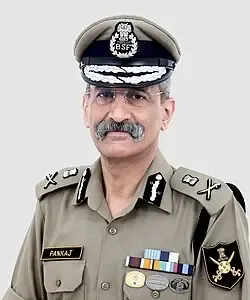
The recent appointment of Pankaj Kumar Singh as the interlocutor for Gorkhaland talks has stirred a political storm in West Bengal. Key players like BJP and hill parties welcome it, while the Trinamool Congress criticizes it as a political maneuver. This article delves into the implications of this decision and the ongoing debate surrounding Gorkhaland.
Key Takeaways
Pankaj Kumar Singh has been appointed as the interlocutor for Gorkhaland talks.
The proposed Gorkhaland state would include regions in North Bengal .
The decision has received mixed reactions from political parties.
The move is seen as a crucial step towards addressing the Gorkhaland demand.
Opposition parties suspect political motives behind the timing.
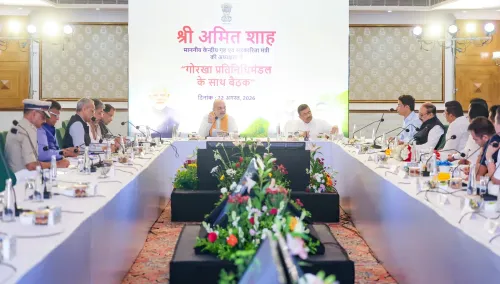
Kolkata, Oct 18 (NationPress) A political turmoil has ignited in West Bengal following the Centre's choice to designate Pankaj Kumar Singh, the former Deputy National Security Advisor and ex-Director General of the Border Security Force, as the interlocutor for tripartite discussions aimed at a permanent political resolution to the enduring demand for a distinct Gorkhaland state.
The envisioned state is expected to encompass the hills of Darjeeling, Kalimpong, and Kurseong, alongside portions of the Terai and Dooars regions in North Bengal.
The permanent political resolution also aspires to incorporate 11 hill-based tribes from North Bengal into the scheduled caste category.
This decision has garnered support from the Bharatiya Janata Party and two hill-based factions, namely the Gorkha Janmukti Morcha (GJM) led by Bimal Gurung and the Gorkha National Liberation Front (GNLF).
Raju Bista, a two-time BJP Lok Sabha member from Darjeeling, characterized the initiative as unprecedented, emphasizing that this is the inaugural instance of the Union government appointing an interlocutor to facilitate a lasting political resolution.
“This demonstrates the Union government's commitment to addressing the complexities surrounding this matter. The initiative will bolster efforts to secure a permanent political resolution,” he stated.
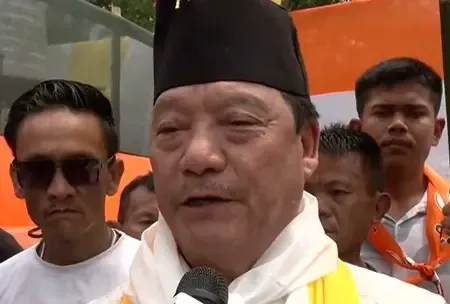
Bimal Gurung also acknowledged the decision, asserting that the populace of the hills had long sought the Union government's involvement in this issue, and the appointment of an interlocutor signifies the initial step in that direction.
GNLF chief Mann Ghising expressed gratitude to the Union government for designating the interlocutor, deeming it a positive move towards fostering dialogue on a lasting political resolution.
Conversely, the Trinamool Congress and its ally in the hills, the Bharatiya Gorkha Prajatantrik Morcha (BGPM), which currently oversees the Gorkhaland Territorial Administration (GTA), have dismissed the Union government's action as a political gimmick ahead of the pivotal West Bengal Assembly elections next year.
BGPM founder and GTA chief executive Anit Thapa remarked that the Centre should have appointed an interlocutor much earlier. “The timing of this decision raises suspicions that the initiative is merely superficial. Previously, the Union government overlooked our repeated requests to commence discussions on the topic,” he stated.
Trinamool Congress leader from Darjeeling and the Mayor of Siliguri Municipal Corporation, Gautam Deb, asserted that this move would not benefit the hill population. “The residents of the hills desire development, which the state government, led by Chief Minister Mamata Banerjee, is ensuring. This announcement from the Centre is nothing more than a political ploy ahead of the elections,” he added.
Point of View
I observe that the current political dynamics in West Bengal surrounding the Gorkhaland issue illustrate the multifaceted challenges of regional governance. The appointment of an interlocutor by the Union government is a pivotal step that could pave the way for dialogue, yet skepticism remains prevalent among opposition parties. It's essential for all stakeholders to engage in constructive discussions to achieve a viable solution that respects the aspirations of the hill communities.
NationPress
24 Sept 2026
Frequently Asked Questions
What is the significance of the Gorkhaland demand?
The Gorkhaland demand is significant as it seeks a separate state for the Gorkha community, aiming for better representation, governance, and cultural preservation.
Who is Pankaj Kumar Singh?
Pankaj Kumar Singh is a former Deputy National Security Advisor and ex-Director General of the Border Security Force, appointed as the interlocutor for Gorkhaland discussions.
What are the reactions from political parties regarding this appointment?
While the BJP and some hill parties have welcomed the appointment, the Trinamool Congress and its allies have criticized it as a political gimmick.
What is the role of the interlocutor in these talks?
The interlocutor's role is to facilitate dialogue between the concerned parties to find a permanent political solution to the Gorkhaland issue.
What impact could this have on the upcoming elections?
This development could significantly influence voter sentiment, with parties leveraging their stances on the Gorkhaland issue to rally support ahead of the elections.