FM Sitharaman Reviews New Mangalore Port Operations
Synopsis
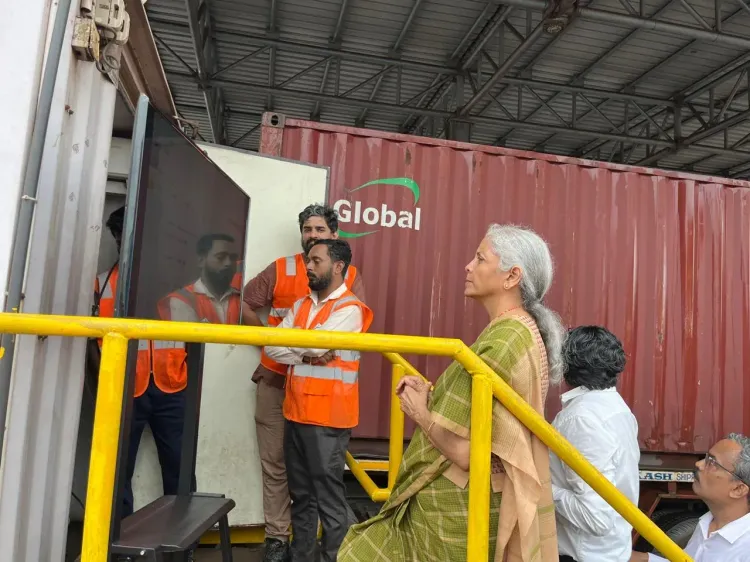
Union Finance Minister Nirmala Sitharaman visited New Mangalore Port in Panambur, Mangaluru on June 13, 2026, reviewing its operations and infrastructure. CBIC Chairman Vivek Chaturvedi was also present, underscoring the Finance Ministry's focus on customs facilitation and trade efficiency at one of Karnataka's key major ports.
Key Takeaways
Nirmala Sitharaman visited New Mangalore Port in Panambur, Mangaluru on June 13, 2026 .
Vivek Chaturvedi , Chairman of CBIC , accompanied the Finance Minister, indicating a customs and trade facilitation dimension to the review.
New Mangalore Port is one of India's 12 major ports , handling petroleum, coal, and containers for Karnataka 's industrial hinterland.
The port has seen infrastructure upgrades under the Sagarmala Project (2015) and gained greater autonomy under the Major Port Authorities Act, 2021 .
The visit may inform upcoming policy decisions on port capacity expansion and customs simplification in the next Union Budget .
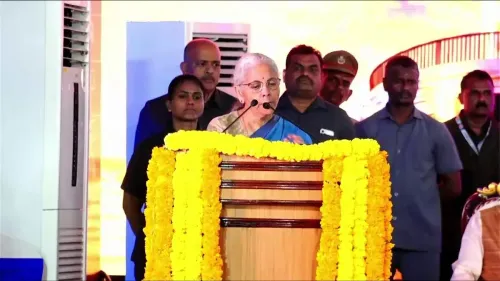
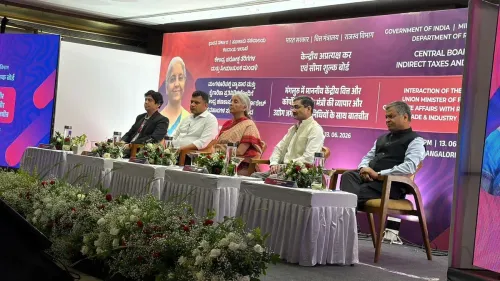
Union Finance Minister Nirmala Sitharaman visited the New Mangalore Port in Panambur, Mangaluru on Saturday, June 13, 2026, reviewing its operations, infrastructure, and ongoing activities. Vivek Chaturvedi, Chairman of the Central Board of Indirect Taxes and Customs (CBIC), accompanied her during the visit.
Context
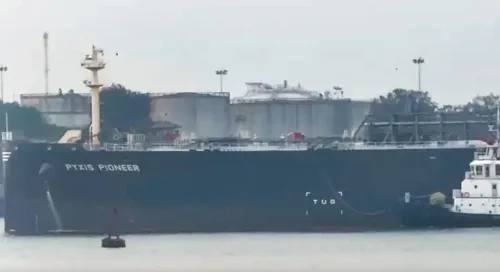
New Mangalore Port is one of India's 12 major ports, situated at Panambur on the Karnataka coast. It serves as a critical gateway for bulk cargo including petroleum products, coal, and containerised goods, supporting the industrial and export economy of Karnataka and its hinterland. The port's operational efficiency directly affects logistics costs for exporters and importers across the region.
The presence of CBIC Chairman Vivek Chaturvedi alongside the Finance Minister signals that customs facilitation and trade compliance procedures were among the matters under review. The CBIC, which functions under the Ministry of Finance, oversees customs operations at all major Indian ports and plays a central role in determining turnaround efficiency for cargo.
Policy Backdrop
The visit comes against a backdrop of sustained central government focus on port modernisation. The Sagarmala Project, launched in 2015 by the Ministry of Ports, Shipping and Waterways, has channelled investment into port-led coastal economic development, with New Mangalore Port among the beneficiaries of incremental infrastructure upgrades under the programme.
The Major Port Authorities Act, 2021 granted greater operational autonomy to major ports, including New Mangalore, enabling faster decision-making on capacity expansion and commercial agreements. The National Logistics Policy of 2022 further set targets to reduce India's logistics costs as a share of GDP, with port efficiency identified as a key lever. Finance Ministry engagement at the port level reflects the intersection of customs revenue, trade facilitation, and broader fiscal objectives.
Stakeholders and Impact
Karnataka's exporters — spanning sectors such as iron ore, petroleum products, and agricultural commodities — depend heavily on New Mangalore Port for competitive access to global markets. Logistics firms and port operators stand to be directly affected by any changes in customs procedures or infrastructure investment priorities that may follow from the ministerial review.
For the broader trade ecosystem, Finance Ministry-level attention to a major port often precedes policy signals on customs simplification, duty drawback mechanisms, or capital allocation in the annual Union Budget. Coastal communities and workers employed in port-linked industries in Mangaluru also have a stake in the port's long-term development trajectory.
What's Next
Observers will watch for any announcements on approved capacity expansion projects at New Mangalore Port and potential customs process simplifications that could emerge from the review. With the next Union Budget cycle on the horizon, the visit may inform fiscal decisions on port infrastructure funding and trade facilitation measures relevant to Karnataka's coastal economy.
Point of View
Logistics costs, or capital allocation. The visit fits a broader pattern of the Finance Ministry tightening its operational grip on trade infrastructure ahead of the Budget cycle. For Karnataka, it signals that New Mangalore Port's role in the state's export competitiveness is on the central government's radar. The dual focus on infrastructure and indirect taxation oversight suggests the government is linking port efficiency with revenue and trade facilitation objectives simultaneously.
NationPress
19 Sept 2026
Frequently Asked Questions
Why did Nirmala Sitharaman visit New Mangalore Port?
Finance Minister Nirmala Sitharaman visited New Mangalore Port in Panambur, Mangaluru on June 13, 2026, to review its operations, infrastructure, and ongoing activities, accompanied by CBIC Chairman Vivek Chaturvedi.
What is New Mangalore Port known for?
New Mangalore Port is one of India's 12 major ports, located in Panambur, Mangaluru. It handles bulk cargo including petroleum products, coal, and containers, and is central to Karnataka's trade, logistics, and coastal economic development.
What is the role of CBIC at Indian ports?
The Central Board of Indirect Taxes and Customs (CBIC), under the Finance Ministry, oversees customs procedures and trade facilitation at Indian ports. Its chairman's presence during the port review signals attention to customs efficiency and compliance processes.
What is the Sagarmala Project and how does it relate to New Mangalore Port?
The Sagarmala Project was launched in 2015 to modernise India's ports and promote port-led coastal development. New Mangalore Port has received infrastructure upgrades under the project as part of efforts to reduce cargo turnaround time and improve multimodal connectivity.
What policy changes could follow from the Finance Minister's port visit?
Such ministerial reviews often precede announcements on customs simplification, duty drawback adjustments, or port infrastructure funding in the Union Budget. Progress on capacity expansion projects at New Mangalore Port is among the outcomes to watch.