Sitharaman Highlights Bengaluru–Chennai Expressway's 71-km Karnataka Stretch
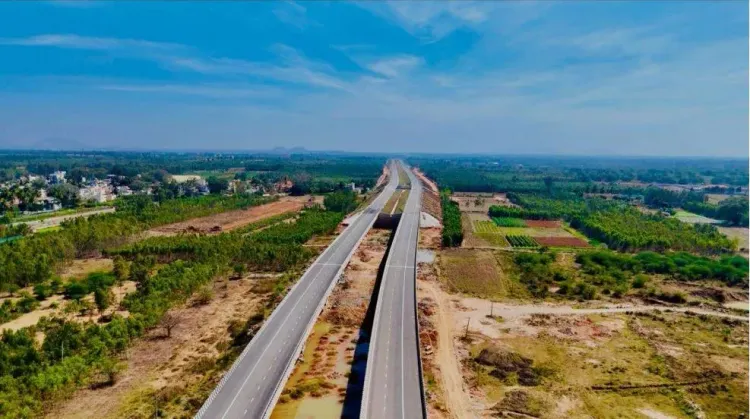
Synopsis
Finance Minister Nirmala Sitharaman has detailed the Bengaluru–Chennai Expressway's 71-km Karnataka stretch — split across three packages from Hoskote to Bethamangala — as a CBIC priority corridor linking industrial parks, the Narasapura estate, Aerospace and Defence Parks, and the proposed Dobbaspet MMLP.
Key Takeaways
The Bengaluru–Chennai Expressway is designated a priority corridor under the Chennai–Bengaluru Industrial Corridor (CBIC) .
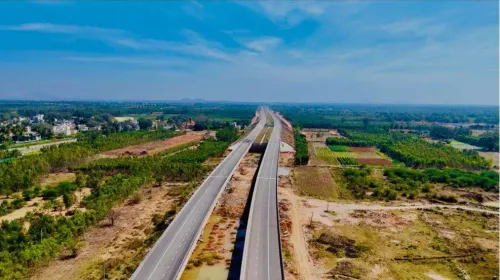
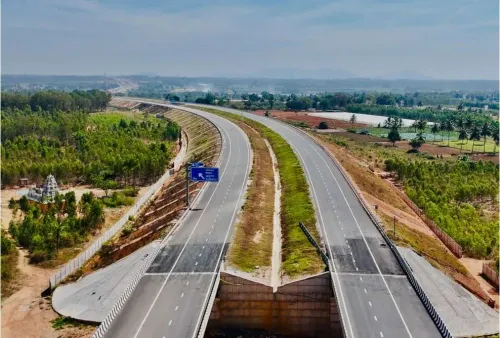
The Karnataka segment spans 71 km , starting at Hoskote near the NH-4/NH-207 junction.
Three packages cover Hoskote–Malur (26.4 km) , Malur–Bangarpet (27.1 km) , and Bangarpet–Bethamangala (17.5 km) .
The corridor connects the Narasapura Industrial Area and Karnataka's Aerospace and Defence Parks to the expressway network.
Access to the proposed MMLP at Dobbaspet is enabled via the Bengaluru Ring Road network.
The project falls under the Bharatmala Pariyojana framework, aligned with the Make in India industrial corridor programme.
Union Finance Minister Nirmala Sitharaman on Sunday, 14 June 2026 shared details of the Bengaluru–Chennai Expressway project's Karnataka segment, highlighting its role as a priority corridor under the Chennai–Bengaluru Industrial Corridor (CBIC) and its connectivity to major industrial and logistics hubs across the region.
Context
The post, part of a thread tagged #12YearsOfSeva, outlines that the expressway originates at Hoskote, near the junction of NH-4 and NH-207 in Karnataka. The Karnataka portion spans 71 km and is divided into three construction packages: Hoskote–Malur (26.4 km), Malur–Bangarpet (27.1 km), and Bangarpet–Bethamangala (17.5 km).
Sitharaman notes the project enhances connectivity to industrial and logistics nodes including Hoskote, Malur, Bangarpet, the Narasapura Industrial Area, and Karnataka's Aerospace and Defence Parks. It also improves access to the proposed Multimodal Logistics Park (MMLP) at Dobbaspet via the Bengaluru Ring Road network.
Policy Backdrop
The Bengaluru–Chennai Expressway is a greenfield project conceived to sharply reduce travel time between the two metro cities while threading through high-density manufacturing zones. It sits within the broader Bharatmala Pariyojana, approved in 2017, which prioritises expressway development along freight-intensive corridors across India.
The Chennai–Bengaluru Industrial Corridor is one of the National Industrial Corridors identified under the Make in India programme. Designating this expressway as a CBIC priority corridor signals an intent to synchronise road infrastructure with planned manufacturing clusters and investment zones along the route.
Stakeholders and Impact
The corridor directly serves manufacturing units concentrated in the Narasapura Industrial Area, which hosts automotive and allied industries, and the Aerospace and Defence Parks in Karnataka — a cluster of strategic importance to India's defence manufacturing push. Logistics operators stand to benefit from faster, high-capacity road linkages that reduce freight turnaround times.
The proposed MMLP at Dobbaspet is designed as an integrated rail-road-warehousing hub. Its connection to the expressway via the Bengaluru Ring Road network is intended to create a seamless multimodal freight chain, lowering last-mile logistics costs for industries along the corridor.
What's Next
Attention will now turn to the completion timelines and funding disbursements for the three Karnataka packages, as well as land acquisition progress and bidding status for the Dobbaspet MMLP. The expressway's full impact will depend on how quickly ancillary infrastructure — including the ring road linkages and the logistics park — comes online alongside the road itself.
If the corridor is delivered on schedule, it could meaningfully reduce logistics costs for industries in Karnataka and Tamil Nadu, reinforcing the investment case for the broader Chennai–Bengaluru Industrial Corridor.
Point of View
The post links a physical road project to two of the government's flagship economic narratives — industrial corridor development and logistics cost reduction. The focus on Aerospace and Defence Parks and the Dobbaspet MMLP also signals a broader 'plug-and-play' infrastructure argument: that roads, industrial estates and logistics hubs are being built as an integrated system rather than in isolation. Whether construction timelines and land acquisition on the ground match the policy framing will be the real test of this narrative.
NationPress
14 Sept 2026
Frequently Asked Questions
What is the Bengaluru–Chennai Expressway and where does it start in Karnataka?
The Bengaluru–Chennai Expressway is a greenfield high-speed road project connecting the two cities. Its Karnataka section originates at Hoskote , near the junction of NH-4 and NH-207 .
How long is the Karnataka portion of the Bengaluru–Chennai Expressway?
The Karnataka portion is 71 km long, divided into three packages: Hoskote–Malur (26.4 km), Malur–Bangarpet (27.1 km), and Bangarpet–Bethamangala (17.5 km).
What is the Chennai–Bengaluru Industrial Corridor (CBIC)?
The CBIC is one of India's National Industrial Corridors, planned under the Make in India programme to develop manufacturing clusters and economic linkages between Chennai and Bengaluru.
What is the Multimodal Logistics Park at Dobbaspet?
The MMLP at Dobbaspet is a proposed integrated logistics facility near Bengaluru designed to handle rail, road and warehousing operations, connected to the expressway via the Bengaluru Ring Road network.
Why did Nirmala Sitharaman post about the Bengaluru–Chennai Expressway?
The post is part of a thread under #12YearsOfSeva , a BJP campaign documenting infrastructure and governance achievements over the past twelve years of the party's time in government at the Centre.