Bengaluru-Chennai Expressway to boost industrial, logistics hubs: FM Sitharaman
Synopsis
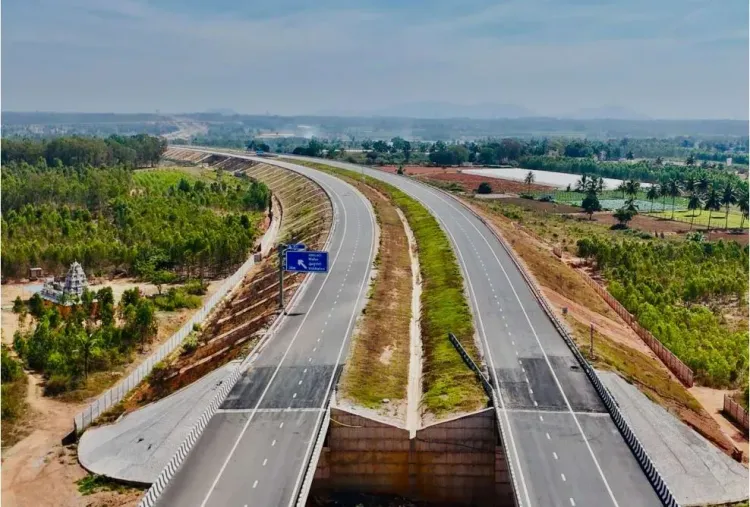
Finance Minister Nirmala Sitharaman's visit to the Bengaluru-Chennai Expressway site puts a spotlight on a 71-km Karnataka corridor that links Aerospace and Defence Parks, the Narasapura Industrial Area, and a proposed Multimodal Logistics Park — making it one of the most strategically loaded stretches of Bharatmala Pariyojana Phase-I.
Key Takeaways
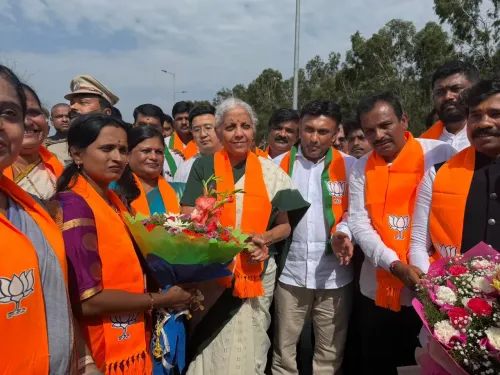
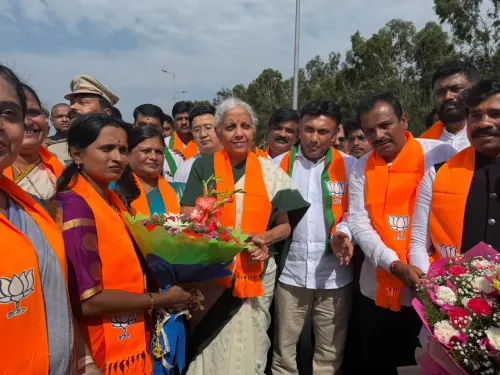
Finance Minister Nirmala Sitharaman visited the Bengaluru-Chennai Expressway site at Devanahalli, Karnataka on 14 June under the 'Pragati Path Yatre Darshan' programme.
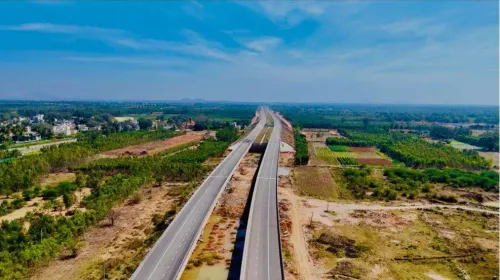
The greenfield project is being developed under Bharatmala Pariyojana Phase-I to connect Bengaluru and Chennai .
The Karnataka stretch spans 71 km across three packages: Hoskote-Malur (26.4 km) , Malur-Bangarpet (27.1 km) , and Bangarpet-Bethamangala (17.5 km) .
The corridor links key hubs including Narasapura Industrial Area , Aerospace and Defence Parks , and the proposed MMLP at Dobbaspet .
The expressway is a priority corridor under the Chennai-Bengaluru Industrial Corridor (CBIC) .
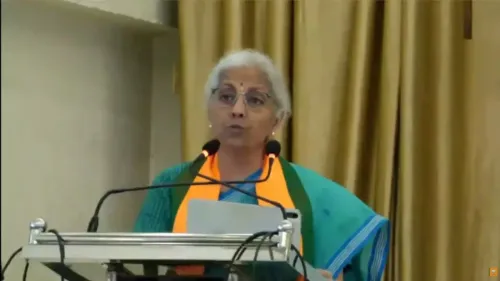
Finance Minister Nirmala Sitharaman on Sunday, 14 June said the Bengaluru-Chennai Expressway will significantly strengthen connectivity to major industrial and logistics hubs across Karnataka and Tamil Nadu, accelerating economic activity and infrastructure development in the southern corridor. Sitharaman made the remarks during a site visit under the 'Pragati Path Yatre Darshan' programme at Devanahalli in Karnataka.
What the Expressway Covers
The greenfield project is being developed under Bharatmala Pariyojana Phase-I to provide high-speed, seamless connectivity between Bengaluru and Chennai — two of India's foremost economic and industrial centres. The project originates at Hoskote, near the junction of National Highway-4 and National Highway-207 in Karnataka.
The Karnataka stretch spans approximately 71 km and is divided into three packages: Hoskote-Malur (26.4 km), Malur-Bangarpet (27.1 km), and Bangarpet-Bethamangala (17.5 km).
Key Industrial and Logistics Hubs Linked
In a post on social media platform X, Sitharaman outlined the project's reach: 'The project enhances connectivity to major industrial and logistics hubs, including Hoskote, Malur, Bangarpet, the Narasapura Industrial Area, and the Aerospace and Defence Parks, while also improving access to the proposed Multimodal Logistics Park (MMLP) at Dobbaspet through the Bengaluru Ring Road network.'
Strategic Significance
The expressway has been identified as a priority corridor under the Chennai-Bengaluru Industrial Corridor (CBIC) and is listed among the flagship projects of the Prime Minister Narendra Modi-led government. Sitharaman visited the site alongside leaders of the Karnataka Bharatiya Janata Party (BJP), underscoring the National Democratic Alliance (NDA) government's emphasis on modern infrastructure to drive economic growth and improve ease of living.
Broader Infrastructure Push
Sitharaman said projects like the Bengaluru-Chennai Expressway reflect the government's commitment to building world-class transport infrastructure that boosts industrial development, logistics efficiency, and regional economic integration. This comes amid a wider national push under Bharatmala Pariyojana to upgrade highway corridors linking major manufacturing belts. Notably, the southern industrial corridor has seen accelerated investment interest, with the CBIC drawing commitments from electronics and defence sector players in recent years.
Point of View
And high-visibility infrastructure optics matter ahead of future electoral cycles. The more substantive question is execution: Bharatmala Phase-I has faced significant cost overruns and timeline slippages nationally, and the Bengaluru-Chennai corridor is no exception. Linking the CBIC to a credible completion timeline, not just a ministerial visit, is what will determine whether this corridor delivers on its industrial promise.
NationPress
13 Sept 2026
Frequently Asked Questions
What is the Bengaluru-Chennai Expressway project?
The Bengaluru-Chennai Expressway is a greenfield highway project under Bharatmala Pariyojana Phase-I designed to provide high-speed connectivity between Bengaluru and Chennai. It is also a designated priority corridor under the Chennai-Bengaluru Industrial Corridor (CBIC).
How long is the Karnataka stretch of the Bengaluru-Chennai Expressway?
The Karnataka stretch spans approximately 71 km and is divided into three packages: Hoskote-Malur (26.4 km), Malur-Bangarpet (27.1 km), and Bangarpet-Bethamangala (17.5 km). The project originates at Hoskote near the junction of National Highway-4 and National Highway-207.
Which industrial hubs will the expressway connect?
The expressway will improve connectivity to Hoskote, Malur, Bangarpet, the Narasapura Industrial Area, and the Aerospace and Defence Parks. It will also enhance access to the proposed Multimodal Logistics Park (MMLP) at Dobbaspet via the Bengaluru Ring Road network.
Why did Finance Minister Sitharaman visit the expressway site?
Sitharaman visited the Devanahalli corridor on 14 June as part of the 'Pragati Path Yatre Darshan' programme to review progress and highlight the NDA government's infrastructure push. She was accompanied by Karnataka BJP leaders during the visit.
What is the Chennai-Bengaluru Industrial Corridor (CBIC)?
The CBIC is a planned industrial corridor linking Chennai and Bengaluru, under which the Bengaluru-Chennai Expressway has been identified as a priority infrastructure project. It aims to attract manufacturing and logistics investment across the southern industrial belt.