FM Sitharaman visits Bengaluru–Chennai Expressway site in Karnataka
Synopsis
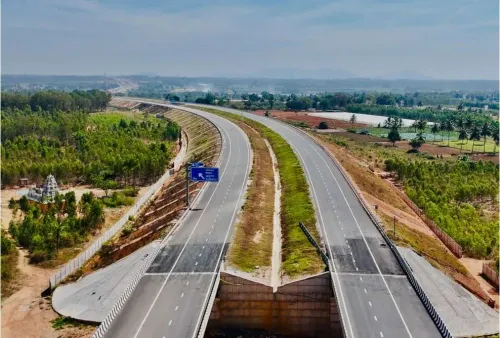
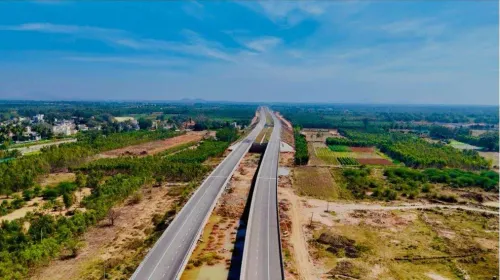
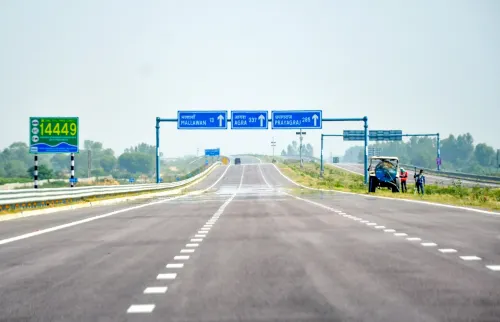
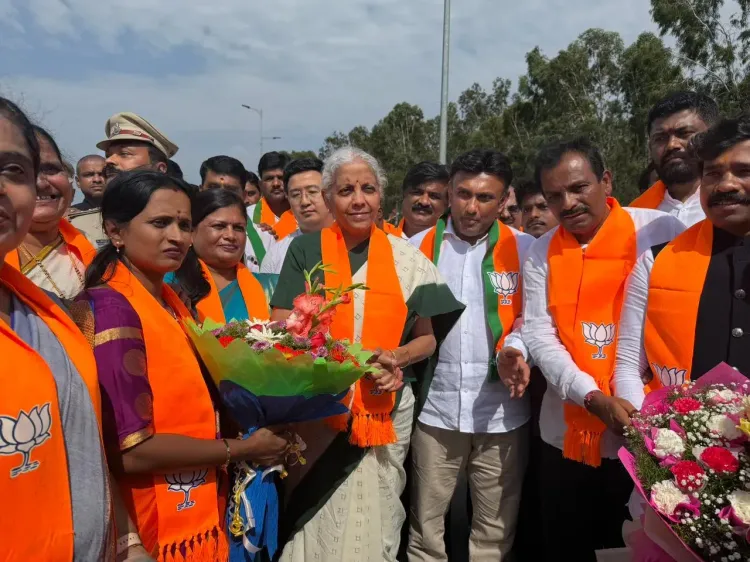
Union Finance Minister Nirmala Sitharaman visited the Bengaluru–Chennai Expressway site at Devanahalli, Karnataka, alongside BJP state leaders, spotlighting the flagship Bharatmala Phase-I Greenfield corridor meant to deliver high-speed connectivity between two of India's biggest economic and industrial hubs.
Key Takeaways
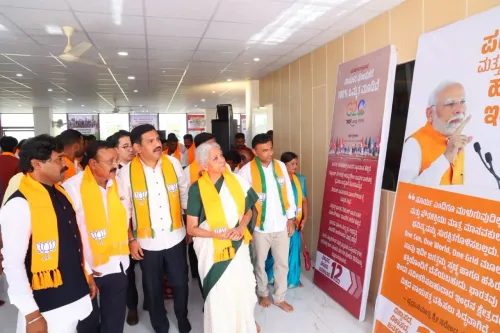
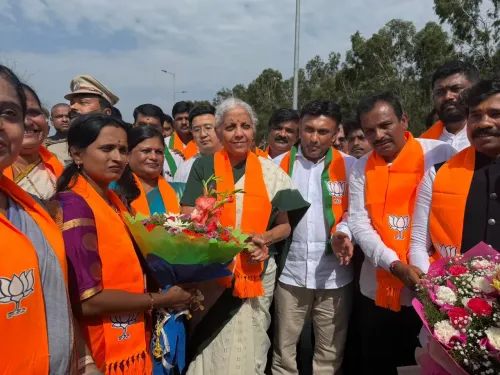
Union Finance Minister Nirmala Sitharaman visited the Bengaluru–Chennai Expressway site at Devanahalli, Karnataka on June 14, 2026 .
The expressway is a Greenfield project under Bharatmala Pariyojana Phase-I , which targets approximately 5,000 km of priority expressways across India.
Bharatmala Pariyojana was approved by the Union Cabinet in 2015 to develop around 34,800 km of national highways and expressways.
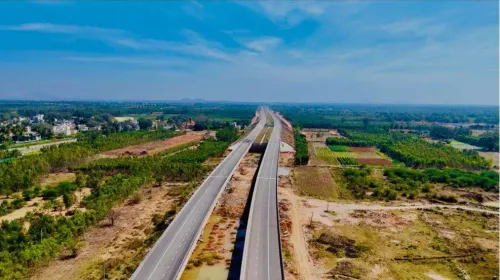
The corridor links Bengaluru and Chennai , two major IT and manufacturing hubs, and is expected to significantly cut road travel time between the cities.
The visit was conducted as part of what the party described as the 'Pragati Path Yatre Darshan' outreach programme, under the #12YearsOfSeva campaign.
Logistics firms and businesses along the Bengaluru–Chennai Industrial Corridor are among the key expected beneficiaries of the project.
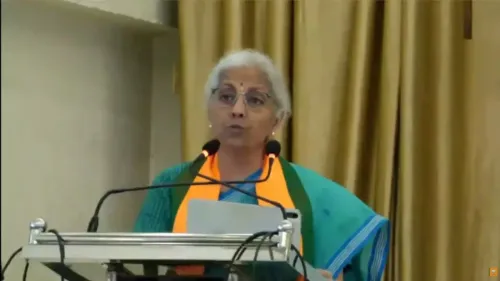
Union Finance Minister Nirmala Sitharaman visited the Bengaluru–Chennai Expressway site at Devanahalli, Karnataka, on Sunday, June 14, 2026, alongside BJP Karnataka leaders as part of a public outreach programme. The visit highlighted the flagship Greenfield expressway being developed under Bharatmala Pariyojana Phase-I to link two of India's largest economic centres.
Context
The Bengaluru–Chennai Expressway is a Greenfield corridor designed to provide high-speed, seamless connectivity between Bengaluru and Chennai, cities that together anchor India's information technology and advanced manufacturing economy. The project is part of Bharatmala Pariyojana Phase-I, under which the Union Cabinet identified approximately 5,000 km of priority expressways. Sitharaman, accompanied by state BJP leaders, inspected the project as part of what the party described as the 'Pragati Path Yatre Darshan' programme, a grassroots infrastructure outreach initiative.
Devanahalli, the site of the visit, lies in northern Bengaluru Urban district and is home to Kempegowda International Airport, making it a strategic node in the regional connectivity grid. The expressway corridor is expected to dramatically cut road travel time between the two cities, which currently takes roughly five to six hours on existing national highways.
Policy Backdrop
Bharatmala Pariyojana was approved by the Union Cabinet in 2015 as an umbrella programme to develop approximately 34,800 km of national highways and expressways across India. The programme marked a shift toward corridor-based, Greenfield highway development rather than incremental upgrades of legacy roads. The Bengaluru–Chennai corridor was listed among the priority routes under Phase-I given the high freight and passenger traffic between the two cities.
Sitharaman's post explicitly linked the project to Prime Minister Narendra Modi's government, stating that 'projects like the Bengaluru–Chennai Expressway reflect the Hon'ble PM's commitment to building quality infrastructure that accelerates growth and improves ease of living.' The visit also carried the hashtag #12YearsOfSeva, situating it within the BJP's broader messaging around a decade-plus of NDA governance.
Stakeholders and Impact
The expressway is expected to benefit logistics companies and businesses operating along the Bengaluru–Chennai Industrial Corridor, one of the country's most active manufacturing and export belts. Reduced travel time and lower logistics costs are among the primary projected gains, with potential ripple effects for the automobile, electronics, and textile sectors concentrated in the region.
The broader southern India connectivity grid that Bharatmala is building also includes links toward Hyderabad and major ports on the eastern and western coasts, positioning the Bengaluru–Chennai Expressway as one segment of a larger multimodal freight network. Residents in districts along the alignment stand to gain improved access to urban employment and services.
What's Next
Attention will now turn to the physical progress of the expressway's construction sections, land acquisition status, and any forthcoming announcements on tolling policy or project timelines. The visit by a senior Union Cabinet minister to an active construction corridor typically signals renewed political attention and may precede administrative or funding updates. Karnataka's role as a key southern state ahead of future electoral cycles adds a political dimension to the infrastructure push that observers will track closely.
Point of View
Accompanied by state BJP leaders, is as much a political signal as an administrative one — it puts a senior Union Cabinet face on a project that directly affects Karnataka's economic credibility ahead of future electoral cycles. The #12YearsOfSeva framing deliberately anchors the Bengaluru–Chennai Expressway within the NDA's decade-long infrastructure narrative, reinforcing the party's claim that large-scale Greenfield projects are a governance dividend. For the BJP, which is in opposition in Karnataka at the state level, co-opting a centrally funded infrastructure win is a calculated move to maintain relevance on economic issues. The visit also keeps pressure on project execution timelines by elevating public and bureaucratic attention to a corridor that still has significant construction ahead.
NationPress
13 Sept 2026
Frequently Asked Questions
What is the Bengaluru–Chennai Expressway?
The Bengaluru–Chennai Expressway is a Greenfield high-speed road corridor being built under Bharatmala Pariyojana Phase-I to connect Bengaluru and Chennai, two of India's largest economic and industrial cities, cutting road travel time significantly compared to existing highways.
What is Bharatmala Pariyojana?
Bharatmala Pariyojana is a Union Government umbrella programme approved in 2015 for the development of approximately 34,800 km of national highways and expressways across India, with Phase-I prioritising around 5,000 km of expressway corridors.
Why did Nirmala Sitharaman visit Devanahalli in Karnataka?
Finance Minister Nirmala Sitharaman visited the Bengaluru–Chennai Expressway site at Devanahalli as part of a public outreach programme described as 'Pragati Path Yatre Darshan,' aimed at showcasing central government infrastructure projects to citizens.
When is the Bengaluru–Chennai Expressway expected to be completed?
A confirmed completion date has not been officially stated in publicly verified records at this time; progress on construction sections, land acquisition, and tolling policy are among the key milestones being tracked.
What is the significance of Devanahalli for the Bengaluru–Chennai Expressway?
Devanahalli is a strategic node in northern Bengaluru Urban district, home to Kempegowda International Airport, and serves as an important starting point for the expressway corridor heading toward Chennai.