Sitharaman highlights Bengaluru-Chennai Expressway under CBIC
Synopsis
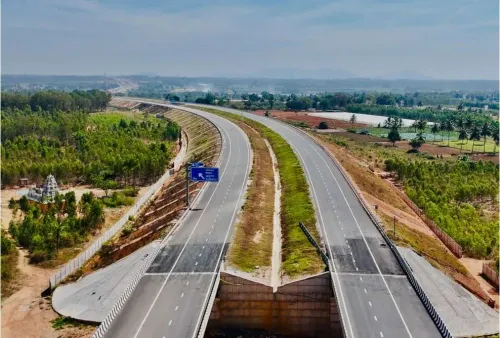
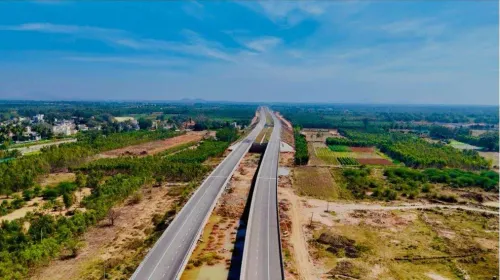
Finance Minister Nirmala Sitharaman has outlined the Bengaluru-Chennai Expressway's 71-km Karnataka segment under CBIC, covering three packages from Hosakote to Bethamangala and linking key industrial, aerospace, and logistics hubs including the proposed Dabaspet MMLP.
Key Takeaways
The Bengaluru-Chennai Expressway is designated a priority corridor under the Chennai-Bengaluru Industrial Corridor (CBIC) .
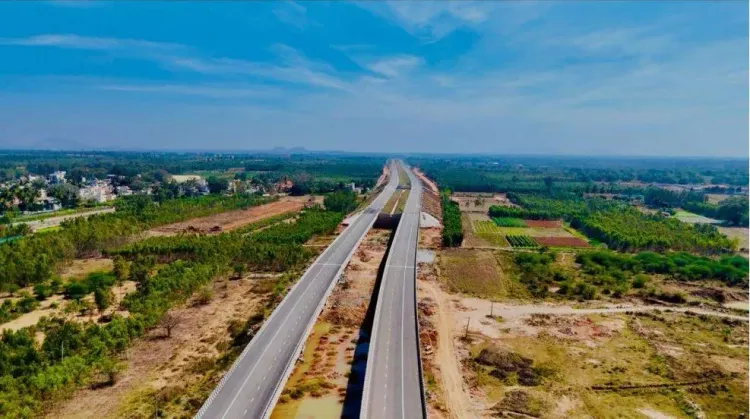
The Karnataka section is 71 km long, split into three packages: Hosakote–Malur (26.4 km) , Malur–Bangarapet (27.1 km) , and Bangarapet–Bethamangala (17.5 km) .
The expressway originates near Hosakote , at the junction of NH-4 and NH-207 in Karnataka.
The corridor will connect Narasapura Industrial Area and dedicated Aerospace and Defence Parks to the national highway network.
The proposed Multimodal Logistics Park (MMLP) at Dabaspet will gain improved access via Bengaluru's peripheral ring road network.
The post is part of the BJP's #12YearsOfSeva campaign highlighting central government infrastructure achievements.
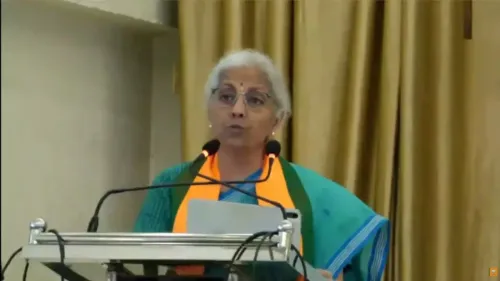
Union Finance Minister Nirmala Sitharaman on Sunday, 14 June 2026, shared details of the Bengaluru-Chennai Expressway project, highlighting its designation as a priority corridor under the Chennai-Bengaluru Industrial Corridor (CBIC). The post, part of a thread marked #12YearsOfSeva, outlined the Karnataka segment's alignment, package-wise breakdown, and connectivity benefits for key industrial and logistics hubs.
Context
Sitharaman's post — the second in a thread (2/n) — details that the expressway originates at Hosakote in Karnataka, near the junction of NH-4 and NH-207. The Karnataka section spans 71 km and is divided into three packages: Hosakote–Malur (26.4 km), Malur–Bangarapet (27.1 km), and Bangarapet–Bethamangala (17.5 km). The post was shared in Kannada, reflecting the corridor's direct relevance to Karnataka's industrial geography.
Policy Backdrop
The Chennai-Bengaluru Industrial Corridor is one of the flagship projects under India's National Industrial Corridor Development Programme, which was launched in 2011 to create industrial nodes along dedicated freight corridors and expressways. The CBIC received in-principle approval in the mid-2010s as one of five initial industrial corridors prioritised by the central government. The expressway component is also aligned with Bharatmala Pariyojana, approved in 2015, which targets the development of high-speed economic corridors linking major cities and ports.
Together, these programmes reflect a sustained central policy emphasis on cutting logistics costs and strengthening multimodal freight infrastructure across southern India. The Bengaluru-Chennai alignment is part of a broader network intended to connect western and eastern ports while supporting high-tech and defence manufacturing clusters.
Stakeholders and Impact
According to the post, the expressway will enhance connectivity to major industrial and logistics centres including Hosakote, Malur, Bangarapet, the Narasapura Industrial Area, and dedicated Aerospace and Defence Parks. These zones host automotive, engineering, aerospace, and defence manufacturing units, many of which are positioned under Atmanirbhar Bharat initiatives to attract high-value investment. Industrial manufacturers, logistics operators, and defence and aerospace firms stand to benefit from reduced transit times and improved freight access.
The post also notes that the project will provide improved connectivity to the proposed Multimodal Logistics Park (MMLP) at Dabaspet, accessible via Bengaluru's peripheral ring road network. The MMLP is designed to integrate road, rail, and other transport modes for efficient cargo handling, in line with national logistics policy frameworks.
What's Next
The phased structure of the Karnataka segment — across three packages totalling 71 km — suggests a staged tendering and construction approach. Progress on land acquisition, particularly for the Dabaspet MMLP, and the pace of package-wise construction will be key indicators of the corridor's delivery timeline. As the central government marks #12YearsOfSeva, infrastructure milestones along the CBIC alignment are likely to feature prominently in ongoing political and policy communication. Completion of this corridor could significantly reposition Karnataka's industrial heartland within India's national logistics and manufacturing network.
Point of View
Framing central infrastructure investment as a BJP governance dividend under the #12YearsOfSeva campaign. By anchoring the expressway within the CBIC framework and spotlighting industrial and defence clusters, the communication seeks to link economic corridors to the Atmanirbhar Bharat narrative. The three-package structure signals that the project is in an active planning or execution phase, though land acquisition and tendering timelines remain the critical variables. Politically, highlighting connectivity to aerospace, defence, and logistics hubs in Karnataka reinforces the Centre's pitch as a driver of high-value manufacturing in the state.
NationPress
13 Sept 2026
Frequently Asked Questions
What is the Bengaluru-Chennai Expressway project?
The Bengaluru-Chennai Expressway is a proposed high-speed corridor under the Chennai-Bengaluru Industrial Corridor (CBIC) designed to reduce travel time and boost freight movement between the two cities. The Karnataka section alone covers 71 km across three construction packages.
Where does the Bengaluru-Chennai Expressway start in Karnataka?
The expressway begins at Hosakote in Karnataka, near the junction of NH-4 and NH-207, as detailed in Finance Minister Nirmala Sitharaman's post.
What are the three packages of the Karnataka section of the expressway?
The 71-km Karnataka section is divided into Hosakote–Malur (26.4 km), Malur–Bangarapet (27.1 km), and Bangarapet–Bethamangala (17.5 km).
What is the Dabaspet Multimodal Logistics Park (MMLP)?
The Dabaspet MMLP is a proposed facility near Bengaluru's peripheral ring road network that will integrate road, rail, and other transport modes for cargo handling. The Bengaluru-Chennai Expressway is intended to improve connectivity to this hub.
What is the Chennai-Bengaluru Industrial Corridor (CBIC)?
CBIC is one of India's major industrial corridors under the National Industrial Corridor Development Programme, aimed at boosting manufacturing and logistics between Chennai and Bengaluru. It received in-principle approval in the mid-2010s as one of five initial priority corridors.