Sitharaman Highlights Karnataka's Infrastructure Push Since 2014
Synopsis
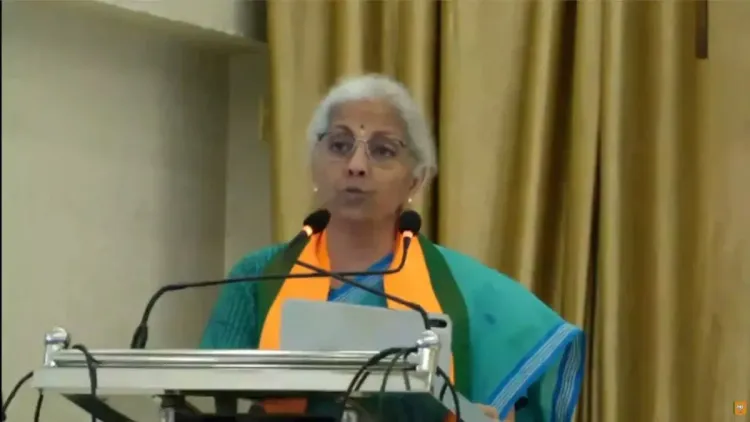
Union Finance Minister Nirmala Sitharaman, speaking in Bengaluru on 14 June 2026, highlighted Karnataka's infrastructure transformation since 2014 — citing 8,100 km of highways, near-complete rail electrification, PM MITRA Park in Kalaburagi, and 4.5 GW of renewable energy projects in Koppal and Gadag.
Key Takeaways
Finance Minister Nirmala Sitharaman spoke in Bengaluru on 14 June 2026 , outlining central government infrastructure investment in Karnataka since 2014 .
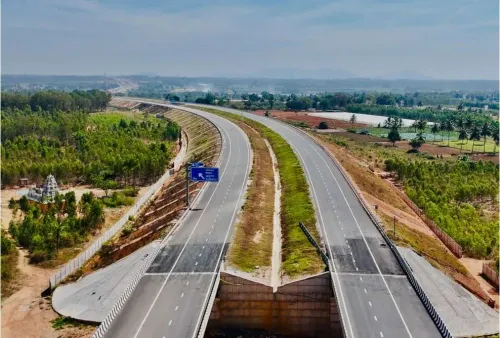
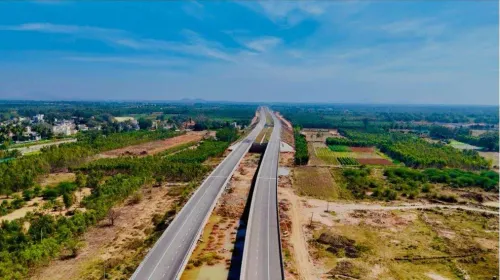
Over 8,100 km of National Highways and major expressways have been added in Karnataka under the Bharatmala Pariyojana .
Railway budget allocation has seen a nine-fold rise , with 96.5% rail electrification and more than 10 Vande Bharat trains now serving the state.
The PM MITRA textile park in Kalaburagi and the Tumakuru industrial node under the Chennai-Bengaluru Industrial Corridor are key manufacturing anchors.
4.5 GW of renewable energy projects in Koppal and Gadag districts contribute to India's 500 GW non-fossil energy target by 2030 .
The focus on districts beyond Bengaluru signals a deliberate push to decentralise Karnataka's development footprint.
Union Finance Minister Nirmala Sitharaman, speaking in Bengaluru on Sunday, 14 June 2026, outlined the scale of central government infrastructure investment in Karnataka since 2014, citing highway expansion, railway modernisation, airport upgrades, and renewable energy projects as markers of the state's accelerating development.
Context
Sitharaman's remarks enumerate a series of infrastructure milestones attributed to the central government's decade-long push in Karnataka. She cited over 8,100 km of National Highways, major expressways, and a nine-fold rise in railway budget allocation as evidence of deepening connectivity investment. She also pointed to 96.5% rail electrification and more than 10 Vande Bharat trains operating in the state, alongside world-class airports and new industrial corridors.
The Finance Minister specifically named Kalaburagi, Tumakuru, Koppal, and Gadag as sites of tangible progress, signalling an intent to highlight development beyond the state's traditional economic centre of Bengaluru.
Policy Backdrop
The highway expansion Sitharaman referenced falls under Bharatmala Pariyojana, launched in 2015 to accelerate national highway construction across India. Railway electrification has been a central government priority since 2017, with a target of 100% electrification pursued through successive rail budgets.
The PM MITRA Park in Kalaburagi — part of the Mega Integrated Textile Region and Apparel scheme announced in the Union Budget 2021-22 — is designed to attract textile manufacturing investment to a region historically underserved by industrial activity. The Tumakuru industrial node is a component of the Chennai-Bengaluru Industrial Corridor, aimed at decentralising manufacturing away from saturated metros.
The 4.5 GW renewable energy projects in Koppal and Gadag districts are part of India's broader national target of 500 GW of non-fossil energy capacity by 2030, with Karnataka's wind and solar potential making it a key contributor.
Stakeholders and Impact
The infrastructure build-out directly affects Karnataka's industries, rail commuters, renewable energy developers, and textile manufacturers. Industrial nodes in Tumakuru and Kalaburagi are intended to generate employment in districts that have lagged behind Bengaluru in attracting private investment.
Rail electrification and the expansion of Vande Bharat Express services — first introduced in 2019 — improve inter-city connectivity for commuters and reduce freight logistics costs for businesses operating along key corridors. Renewable energy capacity in Koppal and Gadag adds to Karnataka's power security while supporting national climate commitments.
What's Next
The physical and financial progress of the Kalaburagi PM MITRA Park and the Tumakuru industrial node will be closely tracked in upcoming quarterly project reports. Completion timelines for rail electrification across Karnataka routes and further Vande Bharat route additions in the south remain key indicators to watch.
Sitharaman's public enumeration of these projects in Bengaluru suggests the BJP is keen to build a visible development narrative in Karnataka — a state where the party is in opposition at the state level — ahead of future electoral cycles.
Point of View
Koppal, and Gadag, the party is appealing to voters in regions that have historically felt neglected. The enumeration of flagship central schemes — Bharatmala, PM MITRA, Vande Bharat — fits a broader BJP pattern of tying visible infrastructure to electoral brand-building ahead of state elections. Whether the ground-level execution of projects like the Kalaburagi PM MITRA Park matches the rhetorical pace will be the real test of this narrative.
NationPress
14 Sept 2026
Frequently Asked Questions
What infrastructure projects has the central government built in Karnataka since 2014?
According to Finance Minister Nirmala Sitharaman, the central government has built over 8,100 km of National Highways, achieved 96.5% rail electrification, deployed more than 10 Vande Bharat trains, upgraded airports, and developed industrial nodes in Tumakuru and Kalaburagi, along with 4.5 GW of renewable energy projects in Koppal and Gadag.
What is PM MITRA Park in Kalaburagi?
PM MITRA stands for Mega Integrated Textile Region and Apparel. The Kalaburagi park was announced in the Union Budget 2021-22 and is designed to attract large-scale textile manufacturing investment to northern Karnataka, a region that has historically lagged in industrial activity.
What is the Tumakuru industrial node?
The Tumakuru industrial node is part of the Chennai-Bengaluru Industrial Corridor, a central government initiative to develop manufacturing clusters along the highway connecting the two cities, aiming to decentralise investment away from Bengaluru.
How many Vande Bharat trains run in Karnataka?
Finance Minister Sitharaman stated that more than 10 Vande Bharat trains operate in Karnataka. The semi-high-speed Vande Bharat Express service was first introduced in 2019 and has been progressively expanded across southern states.
Why is Nirmala Sitharaman talking about Karnataka's development?
Sitharaman, a senior BJP leader, made these remarks in Bengaluru where the BJP is currently in opposition at the state level. Highlighting central government infrastructure investments is part of a broader effort to build the BJP's development narrative in Karnataka ahead of future elections.