Gadkari approves ₹1,123 cr for ROBs, flyovers on Delhi-Agra highway
Synopsis
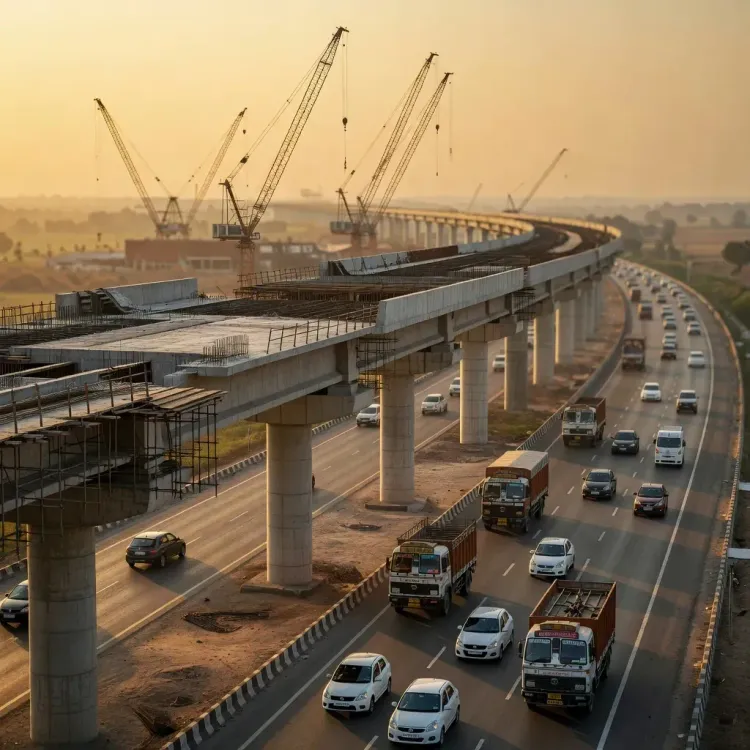
Union Minister Nitin Gadkari has approved ₹1,123.56 crore to construct 3 road overbridges, 4 flyovers, and 4 vehicle underpasses on the Delhi-Agra corridor across Haryana's Faridabad and Palwal districts and UP's Mathura and Agra districts, targeting a stretch carrying 68,000 vehicles daily.
Key Takeaways
₹1,123.56 crore sanctioned for grade-separation structures on the Delhi-Agra corridor on NH-44 and NH-19 .
Package includes 3 Road Over Bridges (ROBs) , 4 flyovers , and 4 Vehicle Underpasses (VUPs) across four districts.
Project spans Faridabad and Palwal in Haryana , and Mathura and Agra in Uttar Pradesh .
Corridor carries approximately 68,000 Passenger Car Units (PCU) per day — freight, industrial, commuter and tourist traffic combined.
ROBs will eliminate delays at railway level crossings; flyovers and VUPs will remove dangerous at-grade intersections.
Project is aligned with the PM Gati Shakti National Master Plan , launched in October 2021 for multimodal infrastructure coordination.
A corridor that sees nearly 68,000 passenger car units every single day is about to get a structural overhaul. Union Road Transport and Highways Minister Nitin Gadkari on Tuesday, 17 November 2026 announced a ₹1,123.56 crore approval to construct grade-separated structures — road overbridges, flyovers, and vehicle underpasses — across four districts straddling the Delhi-Agra corridor on National Highway-44 and National Highway-19.
Eleven structures, four districts, one choked corridor
The sanctioned package covers Faridabad and Palwal districts in Haryana and Mathura and Agra districts in Uttar Pradesh. Under the plan, 3 Road Over Bridges (ROBs), 4 flyovers, and 4 Vehicle Underpasses (VUPs) will be built at congestion nodes along the stretch. Service roads will run alongside, physically separating local traffic from through-traffic for the first time at these points.
The minister posted the full project details on X, noting in Hindi: 'यह परियोजना दिल्ली-आगरा कॉरिडोर पर कनेक्टिविटी और ट्रैफिक की कार्यक्षमता को बेहतर बनाएगी' — 'This project will improve connectivity and traffic efficiency on the Delhi-Agra corridor.' The post was tagged under #PragatiKaHighway and #GatiShakti, signalling alignment with the PM Gati Shakti National Master Plan, the multimodal infrastructure coordination framework launched in October 2021.
Why railway crossings and at-grade junctions are the real bottlenecks
The Delhi-Agra stretch is not a quiet road. It funnels freight bound for industrial belts in Mathura and Agra, daily commuters between satellite towns and the capital, and a steady stream of tourists headed to heritage sites. At level railway crossings, even a short goods-train halt cascades into multi-kilometre queues. The three ROBs in this package directly target that delay — once built, trains and vehicles will pass on entirely separate planes, eliminating the wait entirely.
The flyovers and VUPs go further. At-grade intersections — points where local roads cross the national highway at the same level — are statistically among the most dangerous spots on any high-speed corridor. Grade-separated structures remove the conflict points where vehicles must cross each other's paths, cutting both accident risk and the micro-congestion bursts that ripple through traffic for kilometres behind them.
Grade separation as standard practice on India's busiest NH stretches
This approval fits a pattern that has been rolling out progressively across Haryana and Uttar Pradesh under the broader highway upgradation push. The central logic is straightforward: on a corridor carrying the kind of mixed load — goods vehicles, industrial trucks, private cars, tourist buses — that the NH-19/NH-44 Delhi-Agra section does, at-grade crossings function as a structural tax on every journey. Grade separation pays that tax off in one capital investment.
The next milestones to watch are tendering, land acquisition clearances, and the sequencing of construction across the 11 structures spread over two states and four administrative districts — a coordination challenge that the Gati Shakti framework was specifically designed to streamline.
Sixty-eight thousand vehicles a day, two states, eleven structures, one bill of ₹1,123.56 crore — and the clock on the Delhi-Agra corridor's last at-grade bottlenecks has officially started ticking.
Point of View
Where both BJP state governments are tagged in the post, the investment also carries visible political dividends in densely populated districts along the corridor. The real test will be execution speed: land acquisition and inter-agency coordination across two state governments and four districts will determine whether this approval translates into steel and concrete on schedule.
NationPress
17 Nov 2026
Frequently Asked Questions
What is the total cost approved for the Delhi-Agra corridor highway project?
The total sanctioned cost is ₹1,123.56 crore , covering construction of road overbridges, flyovers, and vehicle underpasses on NH-44 and NH-19 across four districts in Haryana and Uttar Pradesh.
Which districts will benefit from the Delhi-Agra highway upgrade?
The project covers Faridabad and Palwal districts in Haryana, and Mathura and Agra districts in Uttar Pradesh, all on the Delhi-Agra section of NH-44 and NH-19.
How many structures will be built under this highway project?
A total of 11 structures are planned: 3 Road Over Bridges (ROBs) , 4 flyovers , and 4 Vehicle Underpasses (VUPs) , along with service roads at key locations.
How much daily traffic does the Delhi-Agra corridor handle?
The corridor sees approximately 68,000 Passenger Car Units (PCU) per day , comprising freight vehicles, industrial transport, daily commuters, and tourists.
What is the PM Gati Shakti plan and how does this project relate to it?
PM Gati Shakti is a national master plan launched in October 2021 to coordinate infrastructure development across transport modes. This project is tagged under its framework to streamline planning and execution across Haryana and Uttar Pradesh.