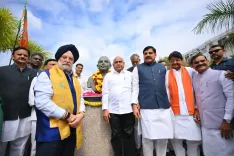
Gadkari hails GSLV-F18/NVS-03 launch, NavIC milestone
Synopsis
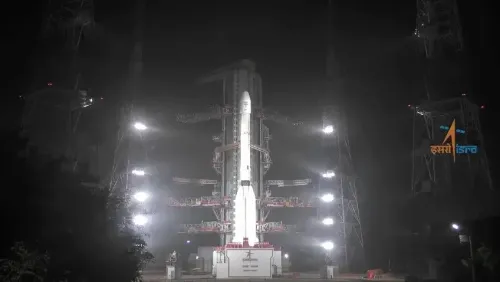
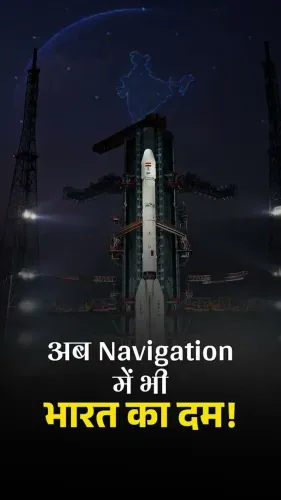
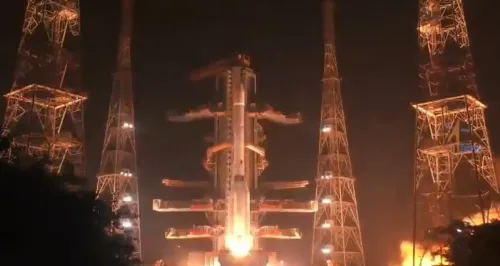
Union Minister Nitin Gadkari has congratulated ISRO on the successful GSLV-F18 launch carrying NVS-03, reinforcing India's NavIC constellation and its drive for satellite-navigation self-reliance.
Key Takeaways
GSLV-F18 successfully launched on 31 October 2026 , carrying navigation satellite NVS-03 for India's NavIC system.
Union Minister Nitin Gadkari hailed the launch as a milestone in India's technological self-reliance.
NavIC is India's indigenous regional navigation constellation, offering an alternative to GPS, GLONASS and BeiDou.
ISRO's navigation programme dates to 2013 , when IRNSS-1A became the first satellite in the constellation.
NavIC has strategic applications across defence, disaster relief, highway logistics, and commercial fleet management.
Mandatory NavIC integration in smartphones and vehicles is among the policy steps being watched for the near term.
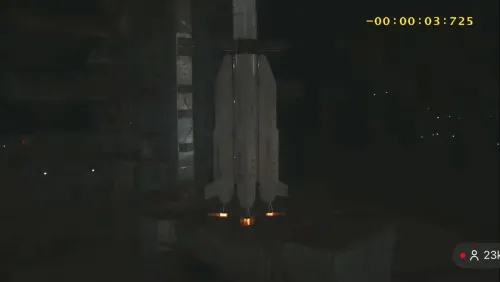
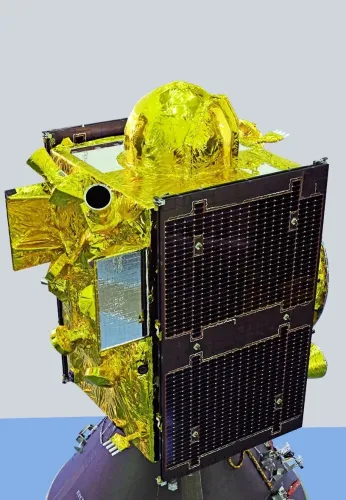
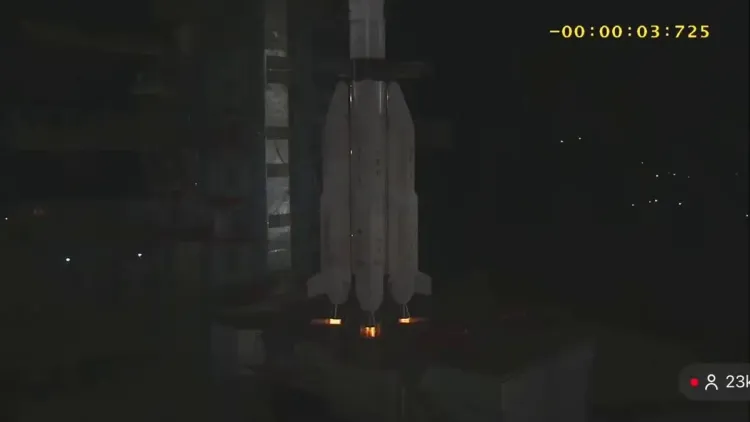
India's push for navigational independence just got a powerful new boost. Union Road Transport and Highways Minister Nitin Gadkari on Saturday, 31 October 2026, congratulated ISRO scientists and engineers on the successful launch of GSLV-F18, carrying the navigation satellite NVS-03 — the latest addition to India's homegrown NavIC constellation.
Gadkari, posting on X, described the achievement as 'another milestone in strengthening India's indigenous NavIC navigation system, advancing technological self-reliance and enhancing navigation capabilities.' He praised the 'remarkable dedication, innovation and scientific excellence' of India's space fraternity, noting that such achievements continue to elevate India's global standing and inspire future generations.
What GSLV-F18 and NVS-03 mean for NavIC
The NVS-03 satellite joins a constellation that ISRO has been steadily building since 2013, when the first IRNSS satellite — IRNSS-1A — lifted off to begin India's quest for a sovereign navigation network. NavIC, formally known as the Navigation with Indian Constellation, was designed from the ground up to provide accurate positioning services entirely independent of the American GPS, Russian GLONASS, or Chinese BeiDou systems. Each new satellite tightens coverage, boosts signal reliability, and edges the constellation closer to full operational strength. For a country of India's strategic and economic scale, that independence is not a luxury — it is a strategic imperative. Defence forces, disaster-relief teams, fishermen at sea, and long-haul truckers all benefit from a navigation backbone that no foreign power can switch off.Why a road minister is watching a rocket launch
Gadkari's congratulatory post is more than ceremonial. As the minister who oversees the country's vast highway and logistics network, he sits at the intersection where NavIC's civilian promise becomes most tangible. Accurate, indigenous navigation feeds directly into vehicle tracking, fleet management, toll automation, and the kind of smart-corridor infrastructure that his ministry has been scaling aggressively across India's national highway grid. A stronger NavIC constellation is, in practical terms, a stronger road network.India's long game in space-based self-reliance
ISRO's successive GSLV missions and the NVS satellite series form a coherent long-term strategy: build the constellation, harden it with next-generation satellites, and then mandate its integration across smartphones, commercial vehicles, and defence platforms. Policymakers have already signalled that NavIC chip integration in devices sold in India will become compulsory — a move that would create one of the world's largest captive navigation markets and give Indian industry a significant design edge. Saturday's launch keeps that timeline on track. With NVS-03 now in orbit, India's navigation infrastructure grows more resilient, its tech-sovereignty story more credible, and the pressure on device-makers and automotive OEMs to adopt NavIC more immediate than ever.Point of View
Logistics, and digital-mobility ecosystem. The message connects a rocket launch to a much larger policy arc: mandating indigenous navigation across devices and vehicles, reducing strategic dependence on foreign systems, and creating a domestic tech market. For the BJP government, each successful NavIC launch is a visible data point in the 'Aatmanirbhar Bharat' (self-reliant India) narrative — one that cuts across ministries and appeals to both nationalist sentiment and techno-economic strategy. The next test will be the pace at which regulatory mandates push NavIC from orbit into the hands of everyday users.
NationPress
31 Oct 2026
Frequently Asked Questions
What is the GSLV-F18 NVS-03 launch?
GSLV-F18 is an ISRO Geosynchronous Satellite Launch Vehicle mission that successfully placed the NVS-03 navigation satellite into orbit on 31 October 2026, adding to India's NavIC constellation.
What is NavIC and how is it different from GPS?
NavIC (Navigation with Indian Constellation) is India's own regional satellite navigation system, designed to provide positioning services independently of foreign systems like the American GPS or Russian GLONASS.
Why did Nitin Gadkari congratulate ISRO on a space launch?
As Union Road Transport and Highways Minister, Gadkari oversees logistics and highway infrastructure that directly benefits from robust indigenous navigation — making NavIC satellites relevant to his portfolio.
When did India start building the NavIC system?
ISRO launched the first Navigation with Indian Constellation satellite, IRNSS-1A, in 2013, beginning the long-term programme to build a fully indigenous navigation constellation.
Will NavIC be made mandatory in smartphones in India?
Policymakers have signalled moves toward mandatory NavIC chip integration in smartphones and commercial vehicles sold in India, though specific timelines remain under policy discussion.