Gadkari Hails Northeast as Bharat's Gateway to Southeast Asia
Synopsis
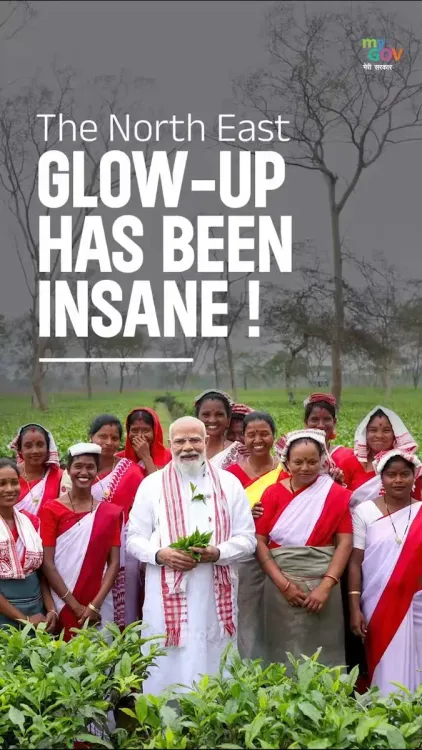
Marking twelve years of the Modi government, Road Transport Minister Nitin Gadkari has hailed Northeast India's transformation under the Ashtalakshmi vision, citing gains in connectivity, healthcare, digital access and peace, and positioning the region as Bharat's gateway to Southeast Asia.
Key Takeaways
Minister Nitin Gadkari posted on 20 June 2026 marking #12YearsOfRisingNorthEast under the Modi government.
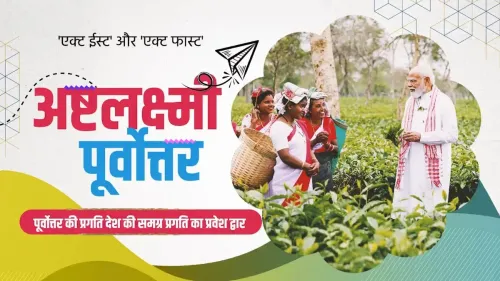
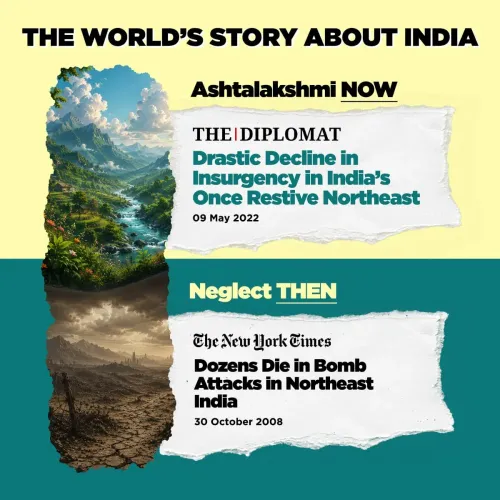
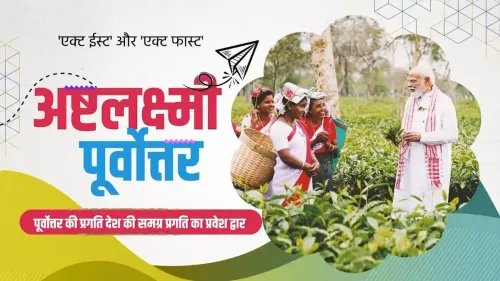
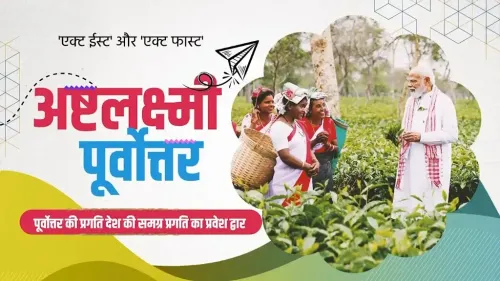
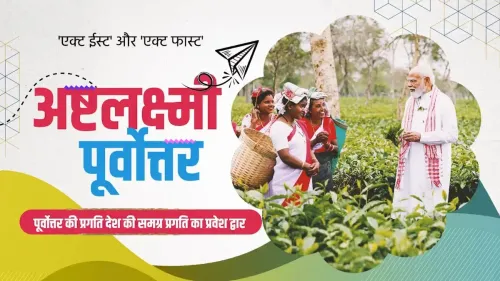
He invoked PM Modi's Ashtalakshmi concept, which frames each of the eight northeastern states as a form of prosperity.
The Act East Policy , launched in 2014 , designated the Northeast as India's land bridge to ASEAN nations.
Bharatmala Pariyojana (approved 2015 ) included dedicated highway corridors to improve connectivity within and beyond the Northeast.
Peace accords with armed groups in Assam , Nagaland and Manipur between 2014 and 2023 have supported conditions for investment.
The India-Myanmar-Thailand Trilateral Highway and future ASEAN-India Summit outcomes remain key markers of the region's gateway ambition.
Union Road Transport and Highways Minister Nitin Gadkari on Saturday, 20 June 2026, invoked Prime Minister Narendra Modi's 'Ashtalakshmi' vision to mark what he described as a transformative era for Northeast India, calling the region Bharat's gateway to Southeast Asia and highlighting gains in connectivity, healthcare, digital access and peace.
Context
Gadkari's post, tagged #12YearsOfRisingNorthEast, marks twelve years since the Modi government took office in 2014 and reoriented national policy toward the eight northeastern states. The minister described the region's journey 'from a distant frontier to the heart of India's growth story,' framing the anniversary as a moment of stocktaking on development outcomes.
The 'Ashtalakshmi' framing — coined by PM Modi — positions each of the eight northeastern states as a distinct form of Lakshmi, the goddess of prosperity, symbolising coordinated progress across economy, connectivity and social welfare. Gadkari's invocation of the concept signals the BJP's continued political and ideological investment in the region's development narrative.
Policy Backdrop
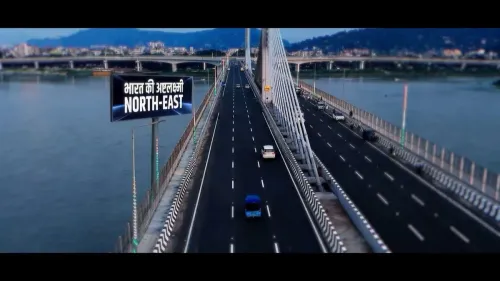
The policy architecture underpinning the Northeast's transformation dates to 2014, when the Act East Policy formally upgraded the earlier Look East Policy, designating the Northeast as the physical and economic land bridge to the Association of Southeast Asian Nations (ASEAN). Road, rail, air and digital corridors have since been advanced in tandem under this framework.
The Bharatmala Pariyojana, approved in 2015, included dedicated highway corridors and bridges aimed at reducing travel time within the Northeast and improving links to mainland India. Border area development and digital connectivity schemes expanded after 2016 to extend last-mile access to frontier districts that had historically been underserved.
A series of peace accords signed between 2014 and 2023 with armed groups in Assam, Nagaland and Manipur have been central to creating stable conditions for investment — an element Gadkari acknowledged by citing 'lasting peace' alongside infrastructure gains.
Stakeholders and Impact
The region's roughly 45 million residents stand as the primary beneficiaries of the connectivity push, with improved roads and digital access opening economic opportunities in border villages and urban centres alike. Cross-border traders and ASEAN business partners are also positioned to gain as the Northeast's role as a trade and transit corridor deepens.
Tourism and cultural exchange have emerged as secondary dividends, with better road and air access drawing visitors to the region's biodiversity corridors, heritage sites and festivals. Gadkari specifically cited 'trade, tourism and cultural exchange' as the three pillars through which the Northeast is engaging Southeast Asia.
What's Next
Attention will turn to the remaining phases of Bharatmala and any new multimodal corridors announced under the India-Myanmar-Thailand Trilateral Highway project, which would cement the Northeast's role as a physical link between South and Southeast Asia. Progress on that corridor and outcomes at the next ASEAN-India Summit on cross-border trade infrastructure will be closely watched as indicators of whether the policy ambition translates into operational connectivity.
With the BJP government now in its twelfth year and the Northeast featuring prominently in its political messaging, the pace of project completion and the durability of peace agreements will determine whether the 'gateway' framing moves from aspiration to measurable economic reality.
Point of View
Using the twelfth-year anniversary to consolidate the BJP's Northeast narrative ahead of state electoral cycles in the region. By anchoring the message in PM Modi's Ashtalakshmi framing rather than specific project metrics, the communication prioritises symbolic continuity over granular accountability. The Northeast has become a showcase for the BJP's 'development politics' model — combining infrastructure, conflict resolution and cultural identity into a unified electoral pitch. Whether the gateway rhetoric translates into verifiable trade and connectivity outcomes will increasingly be the benchmark by which both voters and strategic partners assess the policy's success.
NationPress
20 Jun 2026
Frequently Asked Questions
What is the Ashtalakshmi vision for Northeast India?
The Ashtalakshmi vision is PM Narendra Modi's framing of the eight northeastern states as eight forms of the goddess Lakshmi, symbolising coordinated development across economy, connectivity, healthcare and peace in the region.
What is the Act East Policy and how does it affect the Northeast?
The Act East Policy, launched in 2014, upgraded India's earlier Look East Policy and designated the Northeast as the physical and economic land bridge to ASEAN nations, driving road, rail, digital and trade connectivity investments in the region.
What is Bharatmala Pariyojana and its role in the Northeast?
Bharatmala Pariyojana, approved in 2015, is a national highway development programme that included dedicated corridors and bridges for the Northeast to reduce travel times internally and improve links with mainland India.
Why did Nitin Gadkari post about the Northeast on 20 June 2026?
Gadkari's post marked twelve years of the Modi government's Northeast development push, tagged #12YearsOfRisingNorthEast, highlighting gains in connectivity, healthcare, digital access and peace under the Ashtalakshmi framework.
How is Northeast India positioned as a gateway to Southeast Asia?
Through the Act East Policy and projects like the India-Myanmar-Thailand Trilateral Highway, the Northeast is being developed as a land corridor for trade, tourism and cultural exchange between India and ASEAN countries.