Gadkari Hosts BRICS Transport Delegations, Pushes Sustainable Connectivity
Synopsis
Union Minister Nitin Gadkari hosted BRICS transport delegations on 11 July 2026, reaffirming India's commitment to resilient, sustainable transport systems and deeper connectivity partnerships across the BRICS community under India's 2026 chairship.
Key Takeaways
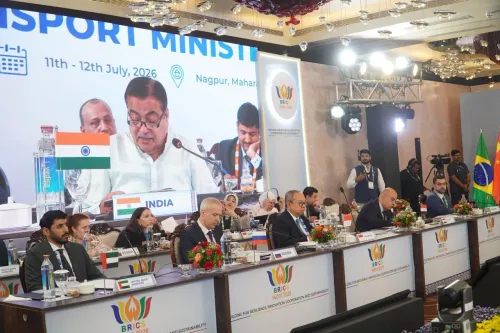
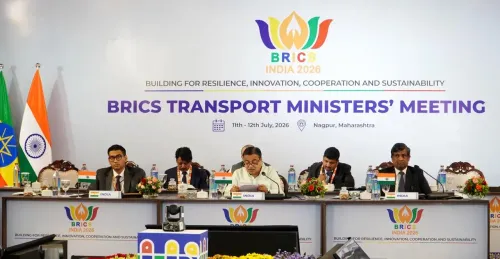
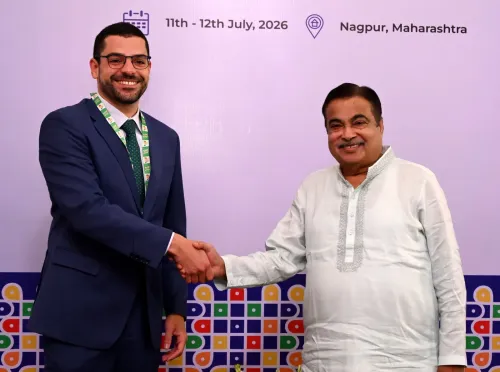
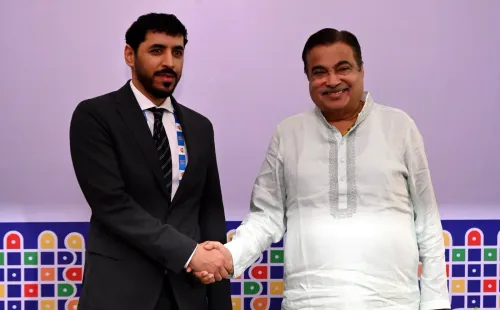
Nitin Gadkari welcomed ministerial delegations and senior representatives from BRICS member countries on 11 July 2026 .
India reaffirmed its commitment to transport cooperation through dialogue, innovation, and shared action at the BRICS platform.
Gadkari stressed building 'resilient, future-ready, and sustainable transport systems' to enhance connectivity and drive inclusive economic growth.
The meeting aligns with India's National Logistics Policy (2022) and its broader push for multimodal and green transport infrastructure.
Outcome documents and working groups on transport technology and standards are expected as part of the BRICS 2026 summit process.
India is using the BRICS forum to position its infrastructure and green mobility standards as a model for emerging economies.
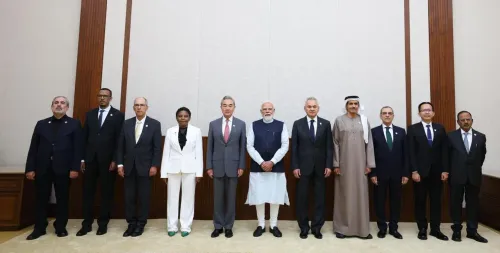
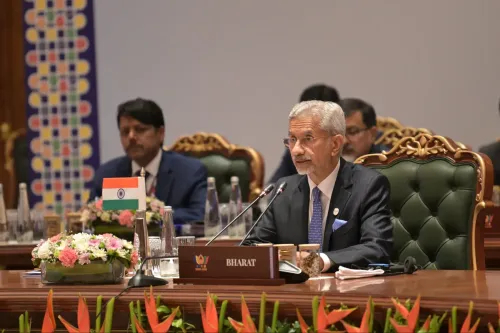
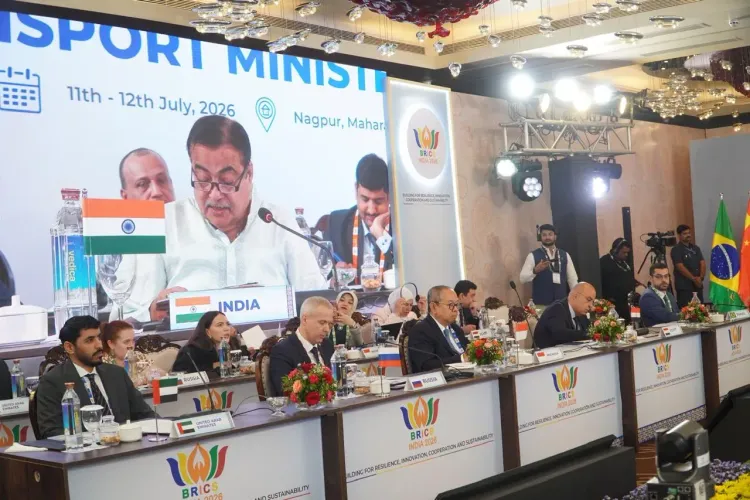
Union Road Transport and Highways Minister Nitin Gadkari on Saturday, 11 July 2026 welcomed ministerial delegations and senior representatives from BRICS member countries, reaffirming India's commitment to strengthening transport cooperation through dialogue, innovation, and shared action.
Context
Gadkari, posting on X, stated that he 'emphasised the collective vision of building resilient, future-ready, and sustainable transport systems that enhance connectivity, drive inclusive economic growth, and deepen partnerships across the BRICS community.' The meeting, held under the #BRICSIndia2026 banner, signals India's active use of its BRICS engagement to advance transport and infrastructure priorities on a multilateral stage.
The gathering brought together transport ministers and senior officials from across the expanded BRICS grouping — an organisation that has grown beyond its original five members of Brazil, Russia, India, China, and South Africa to include several new partner economies. Transport connectivity and logistics efficiency have increasingly become focal points in BRICS deliberations alongside trade and economic development.
Policy Backdrop
India has consistently leveraged BRICS platforms to project its infrastructure standards and green mobility ambitions. The country hosted the BRICS Summit in 2021, where multilateral cooperation on connectivity and sustainable infrastructure was a central theme. In 2022, the government launched the National Logistics Policy, aimed at reducing logistics costs and improving multimodal freight efficiency — priorities that dovetail directly with the transport agenda Gadkari articulated at the 2026 meeting.
Gadkari's ministry has overseen a significant expansion of India's national highway network, with tens of thousands of kilometres constructed or upgraded in recent years. His emphasis on 'resilient and future-ready' systems at the BRICS forum reflects the ministry's domestic push for expressways, multimodal logistics parks, and green mobility infrastructure, now being pitched as a model for partner economies.
Stakeholders and Impact
The primary stakeholders in this engagement are the transport ministries and logistics agencies of BRICS member states, who stand to benefit from shared standards, technology transfers, and coordinated investment frameworks. For India, closer transport ties within BRICS can support cross-border trade facilitation and position Indian firms — in road construction, logistics technology, and green vehicles — in emerging markets across the grouping.
Inclusive economic growth, a phrase Gadkari specifically highlighted, points to an agenda that goes beyond elite infrastructure corridors. It encompasses rural connectivity, last-mile freight solutions, and affordable mobility — areas where BRICS economies share common developmental challenges. The emphasis on 'shared action' suggests India is pushing for concrete working mechanisms, not merely aspirational declarations.
What's Next
Attention will now turn to the outcome documents and ministerial declarations expected from the broader BRICS 2026 summit process. Follow-up working groups on transport technology, safety standards, and green mobility financing are likely to be proposed. Whether these translate into binding frameworks or remain advisory in nature will determine the practical impact of the cooperation Gadkari has championed at this meeting.
For India, a strong BRICS transport declaration ahead of the full summit would reinforce its standing as a rule-shaper in multilateral infrastructure diplomacy — a role it has actively sought through platforms ranging from the G20 to bilateral connectivity agreements across South Asia and beyond.
Point of View
The meeting allows the government to demonstrate that its infrastructure story has international resonance. The real test will be whether ministerial-level consensus translates into working groups with teeth — or remains confined to communiqué language.
NationPress
11 Jul 2026
Frequently Asked Questions
What did Nitin Gadkari say at the BRICS transport meeting in 2026?
Gadkari welcomed ministerial delegations from BRICS member countries and emphasised the collective vision of building resilient, future-ready, and sustainable transport systems to enhance connectivity and drive inclusive economic growth across the BRICS community.
What is BRICS India 2026?
BRICS India 2026 refers to India's chairship of the BRICS grouping in 2026, during which India is hosting summits and ministerial meetings across various sectors, including transport and infrastructure, as part of its multilateral diplomatic agenda.
Why is transport cooperation important for BRICS countries?
BRICS economies share common challenges around logistics costs, cross-border connectivity, and sustainable mobility. Coordinated transport standards and investment frameworks can facilitate trade, reduce freight costs, and support inclusive economic development across member states.
What is India's National Logistics Policy?
The National Logistics Policy, launched in 2022, is a government initiative aimed at reducing India's logistics costs — among the highest globally as a share of GDP — and improving multimodal freight efficiency through better infrastructure, technology, and regulatory coordination.
What outcomes are expected from the BRICS 2026 transport ministerial meeting?
Ministerial declarations and outcome documents are expected, potentially including proposals for working groups on transport technology, safety standards, and green mobility financing, though specific outcomes had not been formally announced at the time of the meeting.