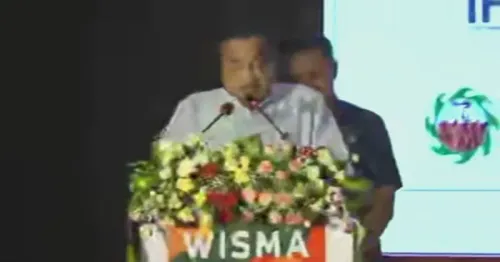
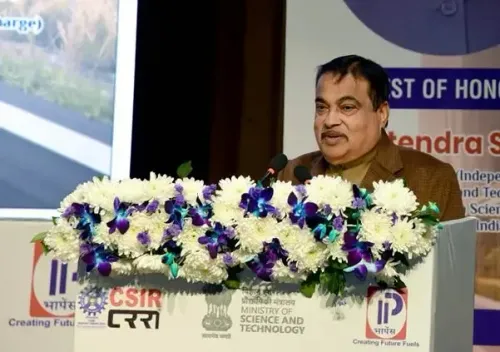
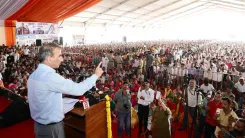
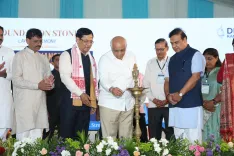
Gadkari addresses Biochar Seminar at Agrovision, Nagpur
Synopsis
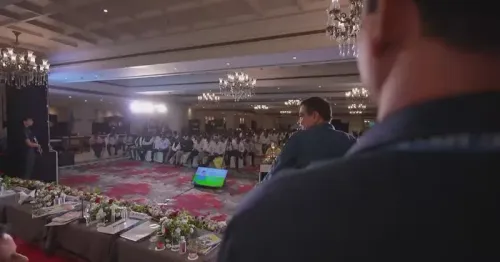
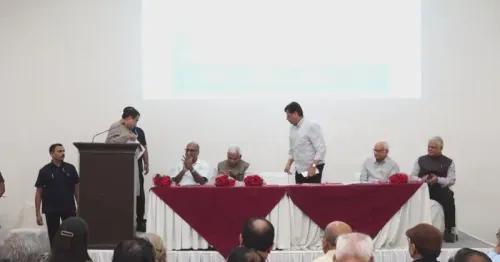
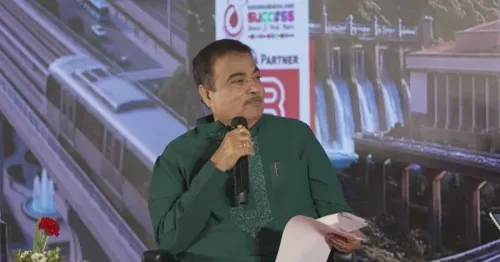
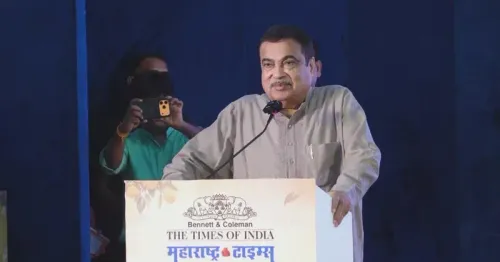
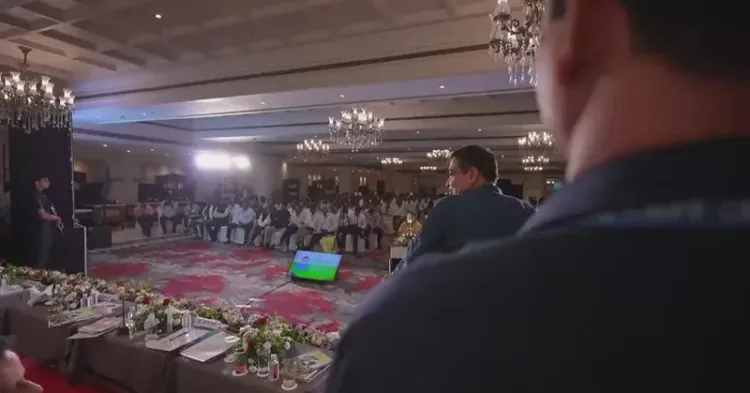
Union Minister Nitin Gadkari addressed a Biochar Generation Seminar by Agrovision Foundation in Nagpur on 26 September 2026, spotlighting pyrolysis-based soil amendment as a circular-economy tool for Vidarbha's farmers and a potential input for road-construction materials.
Key Takeaways
Nitin Gadkari addressed the Biochar Generation Seminar organised by Agrovision Foundation in Nagpur on 26 September 2026 .
Biochar is produced by heating agricultural biomass in low-oxygen conditions (pyrolysis) and improves soil water retention and nutrient levels.
Vidarbha's stubble-burning challenge makes biochar a dual-benefit solution — reducing open burning while enriching farmland.
Gadkari's road ministry has explored agri-industrial by-products in highway construction, giving him a cross-sectoral stake in biochar development.
Indian policy increasingly promotes agri-residue conversion as both a pollution-control measure and a rural income opportunity.
Follow-up signals to watch include pilot project announcements and potential integration of biochar into road-construction material standards.
From crop stubble to carbon sink — Union Road Transport and Highways Minister Nitin Gadkari took the stage at a Biochar Generation Seminar organised by the Agrovision Foundation in Nagpur on Saturday, 26 September 2026, spotlighting a soil-science solution that India's farming heartland urgently needs.
Biochar in Vidarbha: why this technology, why now
Biochar — the carbon-rich char produced when agricultural biomass is heated in low-oxygen conditions, a process called pyrolysis — has emerged as one of the more practical tools in India's climate-smart agriculture toolkit. For Vidarbha, a cotton-growing belt synonymous with agrarian distress and stubble-burning, the promise is twofold: farmers gain a soil amendment that improves water retention and nutrient availability, while the atmosphere avoids the carbon that open burning would otherwise release.
The Agrovision Foundation has been a consistent anchor for such conversations in the region, organising annual agro-technology events that bring together farmers, researchers, and policymakers in Nagpur. Gadkari's own political roots run deep in the city, making the event as much a homecoming as a policy forum.
Infrastructure meets agri-waste: Gadkari's cross-sector lens
Gadkari's presence at an agriculture seminar is less surprising than it first appears. India's road ministry has, in recent years, experimented with incorporating industrial and agricultural by-products into highway construction materials — from fly ash to recycled plastic. Biochar's structural properties have attracted interest as a potential additive in construction mixes, providing a direct policy bridge between the ministry he leads and the circular-economy agenda on the dais.
Indian policy has increasingly pushed for the conversion of agri-residues into value-added products, framing it as both a pollution-control measure and a rural income opportunity. A senior minister lending his platform to a biochar seminar signals that the conversation is moving from laboratory pilots toward mainstream policy discussion.
What farmers and processors are watching
For the farmers and agri-waste processors in the audience, the stakes are practical. Viable biochar markets depend on price support, supply-chain infrastructure, and regulatory clarity on whether the product qualifies under existing government schemes for organic inputs or carbon credits. Any follow-up announcements on pilot projects — or integration of biochar standards into road-construction norms — would give the technology real commercial runway.
The next annual Agrovision cycle will be the barometer. Whether today's seminar produces working-group commitments or remains an exchange of ideas is a question Vidarbha's farming community will be watching closely.
Point of View
From plastic waste to fly ash, and biochar fits that logic neatly. For a minister who has championed green fuels and waste-to-resource models, a biochar seminar is not a detour from his portfolio — it is an extension of it. The broader signal is that India's climate-smart agriculture push is gaining traction at the ministerial level, moving stubble-burning solutions up the policy priority stack ahead of another winter air-quality crisis. Whether the optics translate into regulatory or financial action for Vidarbha's farmers is the real test.
NationPress
26 Sept 2026
Frequently Asked Questions
What is biochar and how does it help farmers?
Biochar is a carbon-rich material produced by heating agricultural residues such as crop stalks in a low-oxygen environment — a process called pyrolysis. When added to soil it improves water retention, boosts nutrient availability, and locks carbon away instead of releasing it into the atmosphere.
What is the Agrovision Foundation?
Agrovision Foundation is a Maharashtra-based organisation that hosts annual agro-technology events and seminars in the Vidarbha region, bringing together farmers, researchers, and policymakers to discuss modern agricultural practices.
Why did a road minister attend an agriculture seminar on biochar?
Nitin Gadkari's road ministry has a history of incorporating agri-industrial by-products into highway construction. Biochar's structural properties have attracted interest as a potential construction additive, giving the ministry a direct cross-sector stake in its development.
How is biochar relevant to India's stubble-burning problem?
Instead of burning crop residue in the open — which releases smoke and greenhouse gases — pyrolysis converts the same biomass into biochar. This reduces air pollution, particularly in post-harvest seasons, while producing a soil-enriching product farmers can use or sell.
What should farmers and agri-waste processors watch for after this seminar?
Key follow-up signals include government announcements on biochar pilot projects, price-support or subsidy schemes for biochar production, and any move to include biochar in road-construction material standards — any of which would give the technology commercial viability.