Gadkari pays tribute to Chandra Shekhar Azad on birth anniversary
Synopsis
Union Minister Nitin Gadkari on 23 July 2026 offered a 'humble salute' to revolutionary freedom fighter Chandra Shekhar Azad on his birth anniversary. The tribute reflects the BJP-led government's consistent effort to honour armed independence-era icons in public memory alongside traditional leaders.
Key Takeaways
Nitin Gadkari , Union Road Transport and Highways Minister, posted a tribute to Chandra Shekhar Azad on 23 July 2026 , the revolutionary's birth anniversary.
Azad was born on 23 July 1906 and is celebrated for his role in the Kakori conspiracy and leadership of the Hindustan Socialist Republican Association .
Gadkari described Azad as a 'great revolutionary of the independence movement' and offered a 'humble salute' in his Hindi-language post on X.
The BJP-led government has consistently honoured revolutionary figures including Bhagat Singh and Subhas Chandra Bose as part of a broader cultural and historical outreach effort.
Annual central government tributes on 23 July have marked Azad's birth anniversary since at least the 2010s.
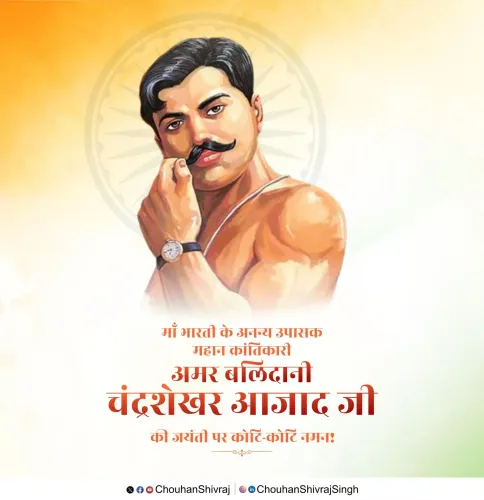
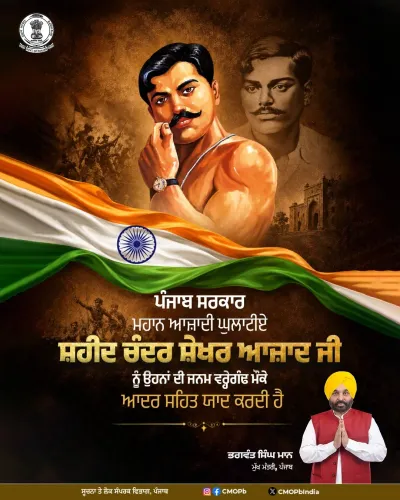
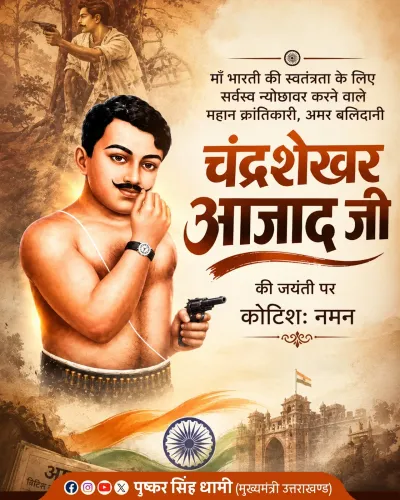
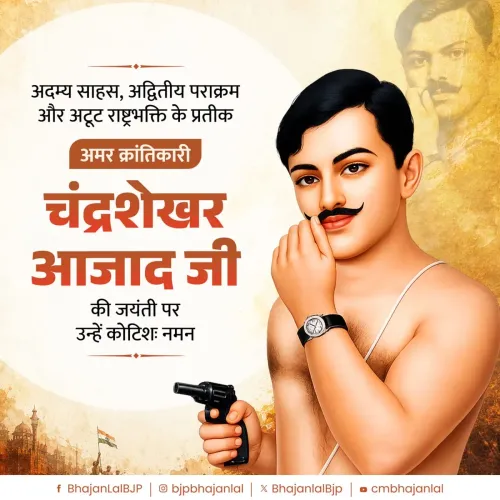
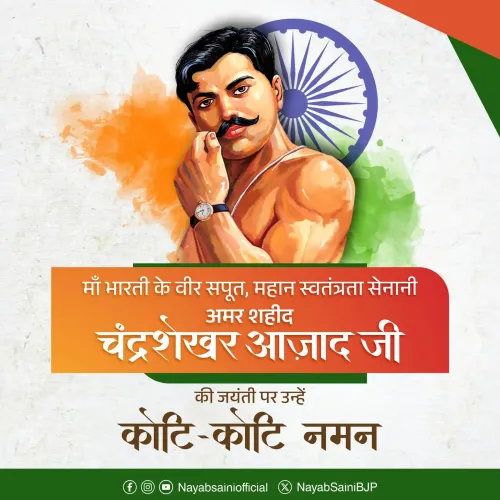
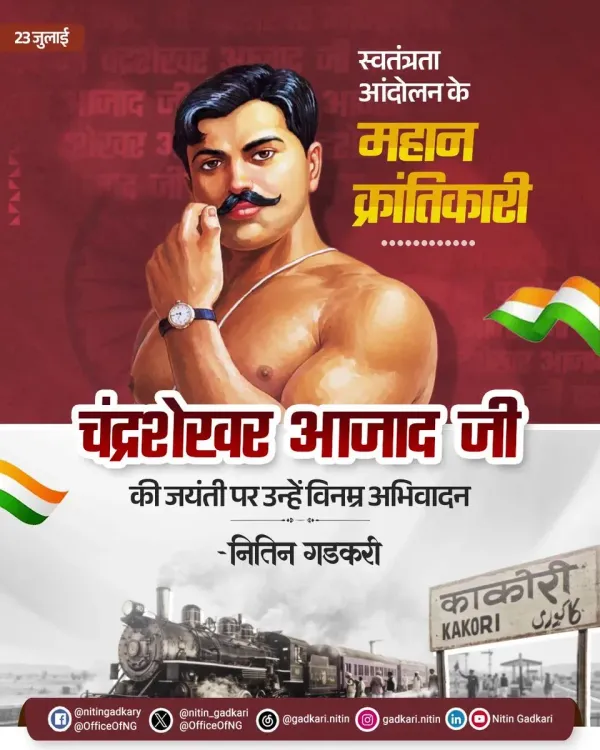
Union Road Transport and Highways Minister Nitin Gadkari on Thursday, 23 July 2026, paid tribute to revolutionary freedom fighter Chandra Shekhar Azad on his birth anniversary, offering what he called a 'humble salute' to the icon of India's independence movement.
Context
Posting on X in Hindi, Gadkari wrote: 'स्वतंत्रता आंदोलन के महान क्रांतिकारी चंद्रशेखर आजाद जी की जयंती पर उन्हें विनम्र अभिवादन' — ['A humble salute to the great revolutionary of the independence movement, Chandra Shekhar Azad, on his birth anniversary']. The post carried the hashtags #चंद्रशेखर_आजाद and #ChandraShekharAzad, amplifying the tribute across Hindi and English-speaking audiences on the platform.
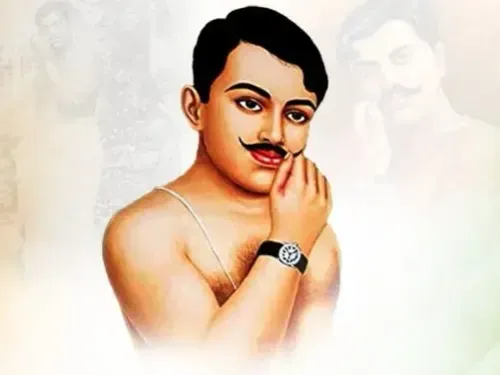
Chandra Shekhar Azad, born 23 July 1906, remains one of the most celebrated armed revolutionaries of India's independence struggle. He was a central figure in the Kakori conspiracy of 1925 and led the Hindustan Socialist Republican Association before dying in a police encounter at Alfred Park, Allahabad, on 27 February 1931, aged 24.
Policy Backdrop
Annual tributes to Azad on 23 July have been a consistent feature of central government commemorations since at least the 2010s. The BJP-led government has made a deliberate effort to place revolutionary figures such as Azad, Bhagat Singh, and Subhas Chandra Bose alongside the more traditionally Congress-associated leaders in official public memory and national narratives.
This pattern of ministerial social-media tributes on key anniversaries forms part of a broader cultural outreach strategy, presenting a wider spectrum of independence-era icons to the public. Gadkari, as a senior BJP leader and former party national president, is among the most prominent voices in this effort.
Stakeholders and Impact
The tribute resonates with nationalist organisations, history enthusiasts, and millions of Indian citizens who regard Azad as a symbol of uncompromising patriotism and sacrifice. His legacy is particularly strong in Uttar Pradesh, where both his revolutionary activities and his death at Allahabad — now Prayagraj — are deeply embedded in local memory and civic identity.
For the BJP, public remembrance of revolutionary figures serves a dual purpose: honouring genuine historical contributions while also broadening the party's ideological appeal beyond its core constituency. Social-media tributes by cabinet ministers carry institutional weight and help shape the official register of national heroes.
What's Next
Commemorative messaging on 23 July typically precedes or accompanies physical events — wreath-laying ceremonies, seminars, and cultural programmes — organised by state governments and nationalist organisations across the country. The Ministry of Road Transport and Highways has in the past considered infrastructure-naming proposals linked to freedom fighters; any such announcements connected to Azad's legacy in coming months would be consistent with that pattern. The anniversary also tends to renew public debate on the place of armed revolutionaries in India's official historical canon.
Point of View
Positioning the party as the custodian of a broader, more assertive reading of India's independence struggle. By issuing such tributes through senior cabinet ministers rather than only party handles, the government lends institutional authority to this historical reframing. The choice of Azad — a figure whose uncompromising, non-negotiating nationalism sits comfortably with the BJP's ideological brand — is hardly incidental. Over time, these repeated acts of public remembrance cumulatively reshape which figures occupy the centre of India's official historical imagination.
NationPress
23 Jul 2026
Frequently Asked Questions
When is Chandra Shekhar Azad's birth anniversary?
Chandra Shekhar Azad's birth anniversary falls on 23 July . He was born on 23 July 1906 and is remembered as one of India's foremost armed revolutionaries.
Why did Nitin Gadkari pay tribute to Chandra Shekhar Azad?
Nitin Gadkari paid tribute to mark Chandra Shekhar Azad's birth anniversary on 23 July 2026 , offering a 'humble salute' to the revolutionary on X as part of the government's annual commemorative practice.
Who was Chandra Shekhar Azad?
Chandra Shekhar Azad was a revolutionary freedom fighter who played a key role in the Kakori conspiracy of 1925 and led the Hindustan Socialist Republican Association . He died in a police encounter at Alfred Park, Allahabad , on 27 February 1931 .
Does the BJP regularly tribute revolutionary freedom fighters?
Yes. The BJP-led government has consistently issued public tributes to revolutionary figures including Bhagat Singh , Subhas Chandra Bose , and Chandra Shekhar Azad as part of a broader effort to present a wider spectrum of independence-era icons in official narratives.
What is Chandra Shekhar Azad's connection to Prayagraj?
Chandra Shekhar Azad was killed in a police encounter at Alfred Park in Allahabad — now known as Prayagraj — on 27 February 1931 . The park has since been renamed Chandra Shekhar Azad Park in his honour.